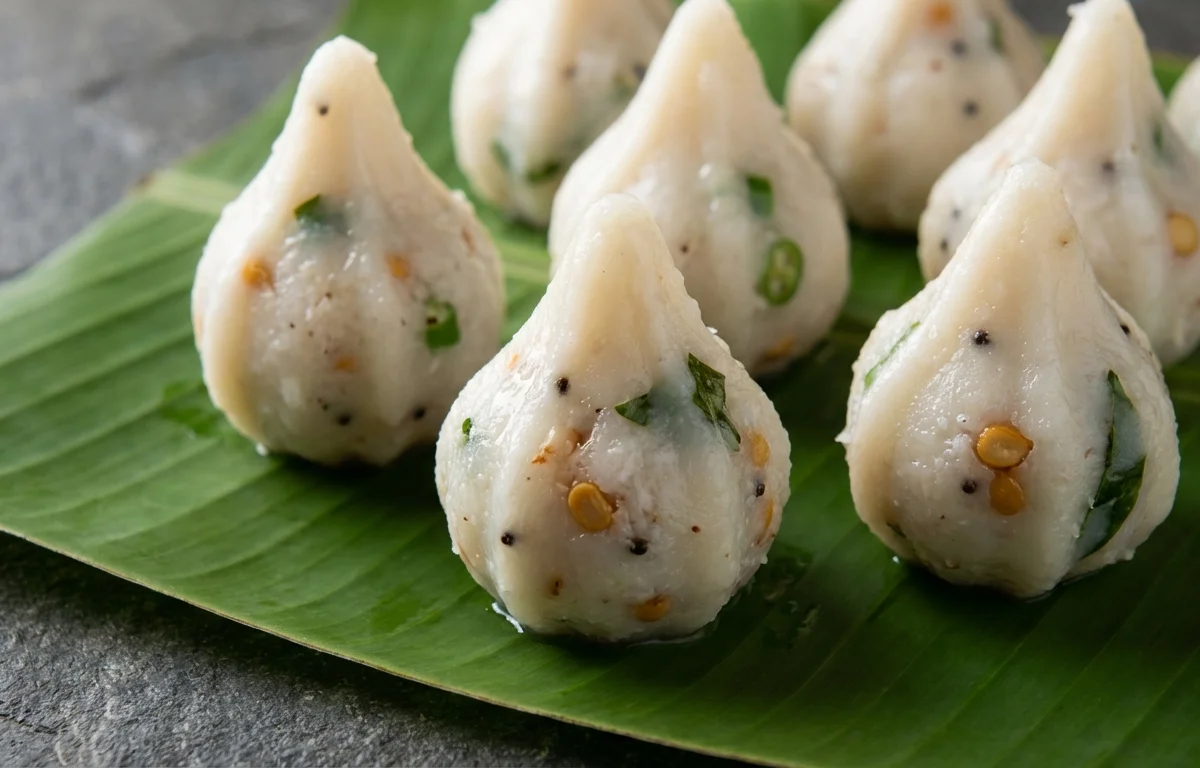
Uppu Kozhukattai
Soft, steamed rice flour dumplings with a delicate savory bite. These Tamil Nadu-style kozhukattai are studded with chana dal and fresh coconut, tempered with mustard seeds and curry leaves for a light yet satisfying snack.
For 4 servings
- prep
Soak the chana dal.
Wash the chana dal and soak in 1/2 cup of water for 30 minutes. Drain and set aside.
- prep
Prepare the steamer.
Fill the idli steamer with 2 cups of water and bring to a boil. Grease the idli plates lightly with a drop of oil.
TIPGreasing the plates ensures the dumplings don't stick. - temper · ~2 min
Make the tempering for the dough.
1.Heat oil in a pan over medium heat until shimmering.2.Add mustard seeds and let them splutter (30 seconds).3.Add urad dal and cumin seeds, saute until the dal turns golden (20 seconds).4.Add curry leaves, green chilies, ginger, and asafoetida. Saute for 1 minute until fragrant.TIPDon't let the urad dal burn — it should be just golden. - prep · ~4 min
Cook the dough mixture.
1.Pour 1.25 cups of water and salt into the same pan with the tempering.2.Add the drained chana dal and bring to a rolling boil.3.Lower the heat to minimum and slowly add the rice flour in a steady stream, stirring continuously to avoid lumps.4.Keep stirring until the mixture thickens into a soft, cohesive dough that leaves the sides of the pan (3-4 minutes).TIPStir vigorously — rice flour thickens quickly and can burn at the bottom. - mix · ~5 min
Finish the dough.
Turn off the heat. Add the grated coconut and mix well. Cover and let the dough cool until it's comfortable to handle but still warm.
TIPKnead the dough while it's still warm for a smoother texture. - prep · ~5 min
Shape the kozhukattai.
1.Grease your palms with a drop of oil.2.Pinch small lemon-sized portions of the dough.3.Roll each portion into a smooth, oval shape.4.Place the shaped dumplings on the greased idli plates, leaving space between them.TIPMake a slight indentation with your thumb in the center of each dumpling so they cook evenly. - steam · ~12 min
Steam the kozhukattai.
Place the idli plates in the steamer. Cover and steam on medium heat for 10 minutes. Turn off the heat and let them rest for 2 minutes before removing.
TIPA toothpick inserted should come out clean. Overcooking makes them hard. - serve
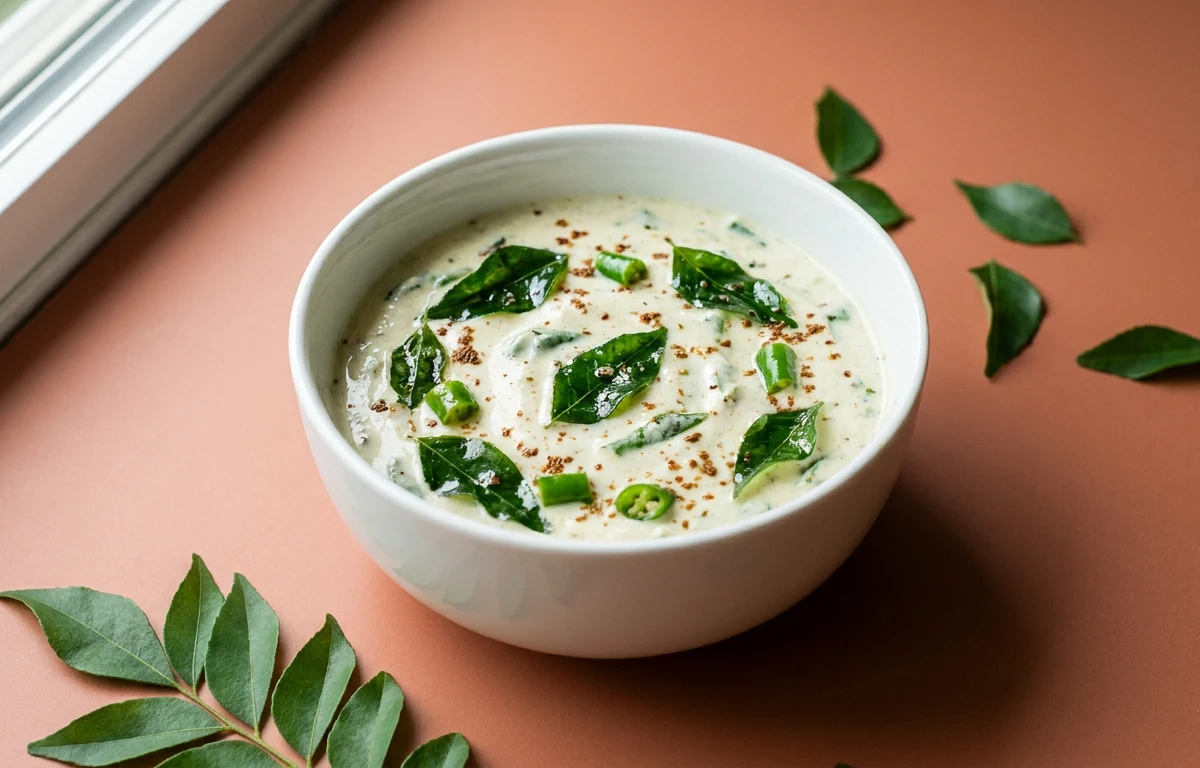
Serve hot with coconut chutney.
What to keep in mind.
6 tips from the recipe — small details that make a real difference to the final dish.
- 1Use fine rice flour for a smooth, non-grainy dough—coarse flour yields a crumbly texture.
- 2Knead the dough while it's still warm to ensure soft, pliable dumplings that hold shape.
- 3Grease your palms lightly with oil before shaping to prevent sticking and achieve a smooth finish.
- 4Make a small thumb impression on each dumpling for even cooking and a soft center.
- 5Rest the steamed kozhukattai for 2 minutes before removing to set the texture and avoid tearing.
- 6Soak chana dal for exactly 30 minutes—over-soaking makes them mushy; under-soaking leaves a hard bite.
Adapt it for your goals.
Spicy Sambhar Kozhukattai
Add 1/2 tsp sambhar powder and omit coconut for a tangy, earthy variation that pairs well with tomato chutney.
No Coconut VersionNo-Coconut Version
Skip the grated coconut and add 1 tbsp finely chopped coriander stems for a herby, vegan-friendly twist.
Paneer Stuffed KozhukattaiPaneer-Stuffed Kozhukattai
Stuff a small cube of crumbled paneer mixed with black pepper into each dumpling for a protein-packed surprise.
Why this is on our healthy list.
Gut-Friendly Fiber
Chana dal and rice flour provide dietary fiber that supports healthy digestion and sustained energy release.
Plant-Based Protein
The chana dal and urad dal contribute a moderate amount of plant protein, making this a satisfying snack.
Antioxidant Rich
Curry leaves and ginger offer natural antioxidants and anti-inflammatory properties, boosting overall wellness.
Frequently asked questions
Add water a teaspoon at a time if too dry; if sticky, dust with a little extra rice flour while kneading warm.