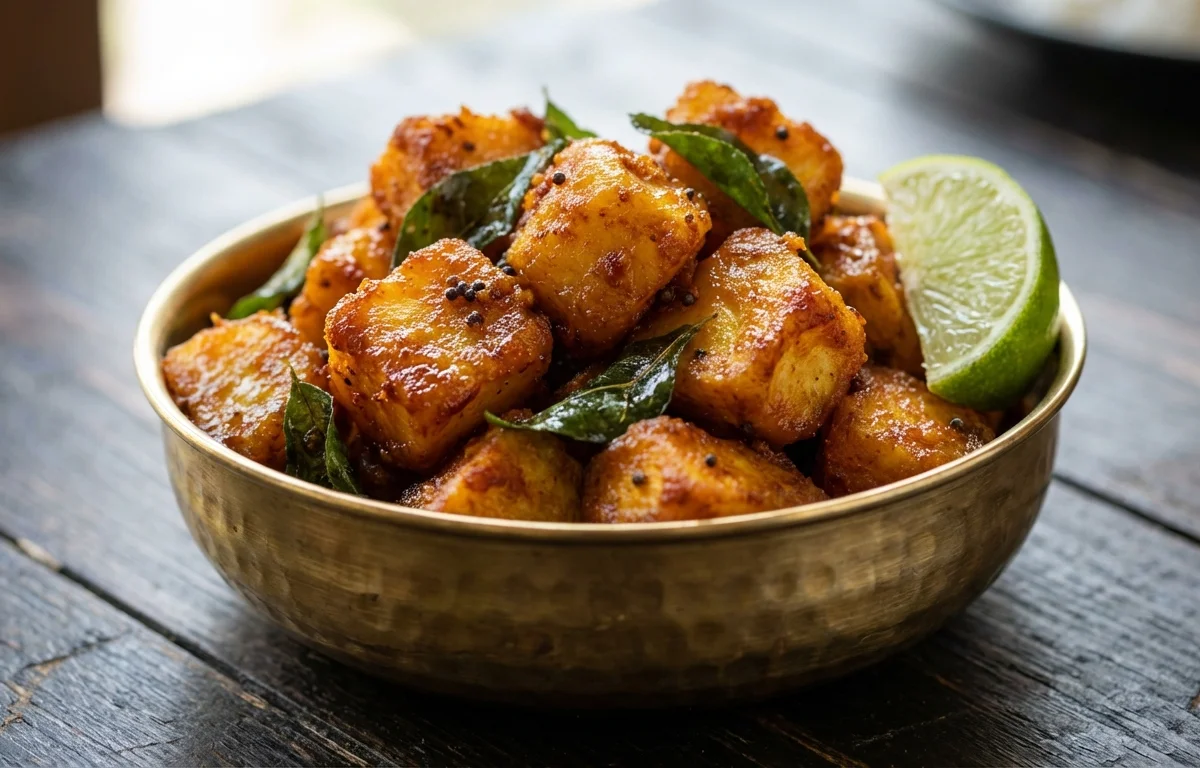
Yam Varuval
Crisp at the edges and soft inside, this South Indian yam fry is tossed with simple spices and pan-roasted until deeply flavorful. It makes a satisfying side with rice, rasam, or curd rice.
For 4 servings
- prep · ~10 min
Prep the yam and tamarind.
1.Peel the yam and cut it into thick bite-size cubes.2.Soak the tamarind in a little warm water and squeeze out the extract.3.Keep the yam pieces in water until ready to cook so they do not discolor.TIPOil your knife and hands lightly before peeling if the yam feels itchy. - boil · ~15 min
Boil the yam until just tender.
1.Add the yam, water, tamarind extract, turmeric powder, and 1 pinch of the salt to a pan.2.Bring to a boil over medium heat.3.Cook until the yam is just tender and holds its shape, about 10 to 12 minutes.4.Drain well and let the pieces sit for 2 minutes so excess moisture evaporates.TIPDo not overcook the yam or it will break while frying. - mix · ~3 min
Season the yam.
Transfer the drained yam to a bowl. Add red chili powder, coriander powder, black pepper, rice flour, and the remaining salt. Toss gently until the pieces are evenly coated.
- temper · ~2 min
Make the tempering.
1.Heat oil in a wide pan over medium heat.2.Add mustard seeds and let them splutter.3.Add curry leaves and fry for a few seconds until fragrant.TIPUse a wide pan so the yam roasts evenly instead of steaming. - fry · ~15 min
Pan-fry the yam until crisp.
1.Add the seasoned yam in a single layer.2.Cook on medium heat for 4 to 5 minutes without stirring too much.3.Turn the pieces gently and continue cooking until golden and crisp on the edges, 8 to 10 minutes more.4.Flip once or twice as needed for even browning.TIPLet the crust form before turning to keep the pieces intact. - serve
Serve the yam varuval hot.
What to keep in mind.
7 tips from the recipe — small details that make a real difference to the final dish.
- 1Boil the yam only until a knife slides in with slight resistance; overcooked pieces will crumble in the pan.
- 2Drain thoroughly and let the yam steam-dry before adding spices, or the rice flour coating will turn pasty.
- 3Toss the cooked yam gently with the masala so the cubes stay intact and get an even crust.
- 4Use a wide, heavy pan and keep the yam in a single layer to encourage roasting instead of steaming.
- 5After adding the yam to the tempering, leave it undisturbed for a few minutes so the edges brown properly.
- 6If elephant foot yam makes your hands itch, rub a little oil on your palms and knife before peeling and cutting.
- 7Leftovers re-crisp best in a hot tawa or skillet; avoid microwaving if you want to keep the edges crisp.
Adapt it for your goals.
Low-oil
Roast the coated yam on a well-seasoned tawa or in an air fryer with less oil for a lighter version that still gets crisp edges.
extra spicyExtra-spicy
Increase red chili powder and black pepper for a sharper, hotter varuval that pairs especially well with curd rice.
garlicGarlic
Add a few crushed garlic cloves after the mustard splutters for a more aromatic fry with deeper savory notes.
coconut finishCoconut-finish
Sprinkle a little fresh grated coconut at the end for a softer South Indian style and mild sweetness against the spices.
Why this is on our healthy list.
Fiber-Rich Root Vegetable
Elephant foot yam is a hearty tuber that can help make the meal more filling and satisfying, especially as a side with rice-based dishes.
Lighter Than Deep-Fried Sides
This varuval gets crisp through pan-roasting with a modest amount of oil, making it a lighter alternative to fully deep-fried vegetable fries.
Digestive Support from Spices
Tamarind, black pepper, curry leaves, and coriander add flavor while also bringing traditional digestive-friendly elements to the dish.
Frequently asked questions
Tamarind helps mellow the yam's itchiness and adds a light tang that balances the earthy flavor before the final roasting.