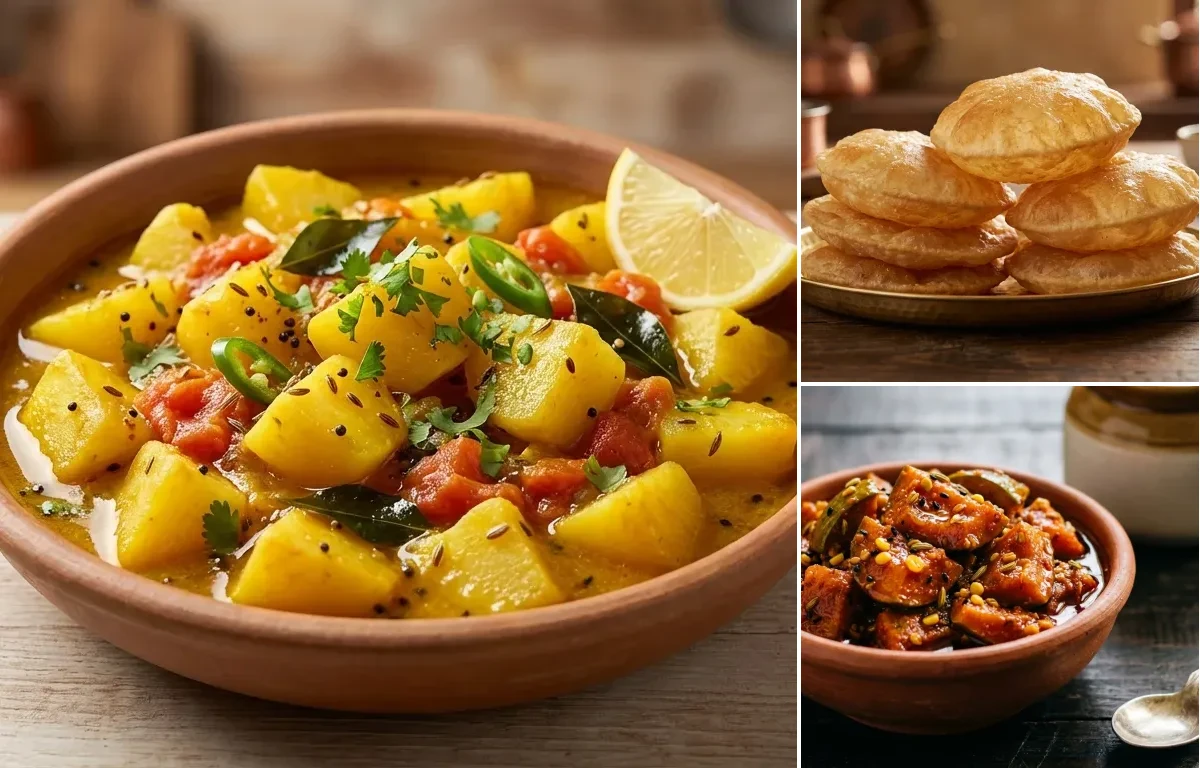
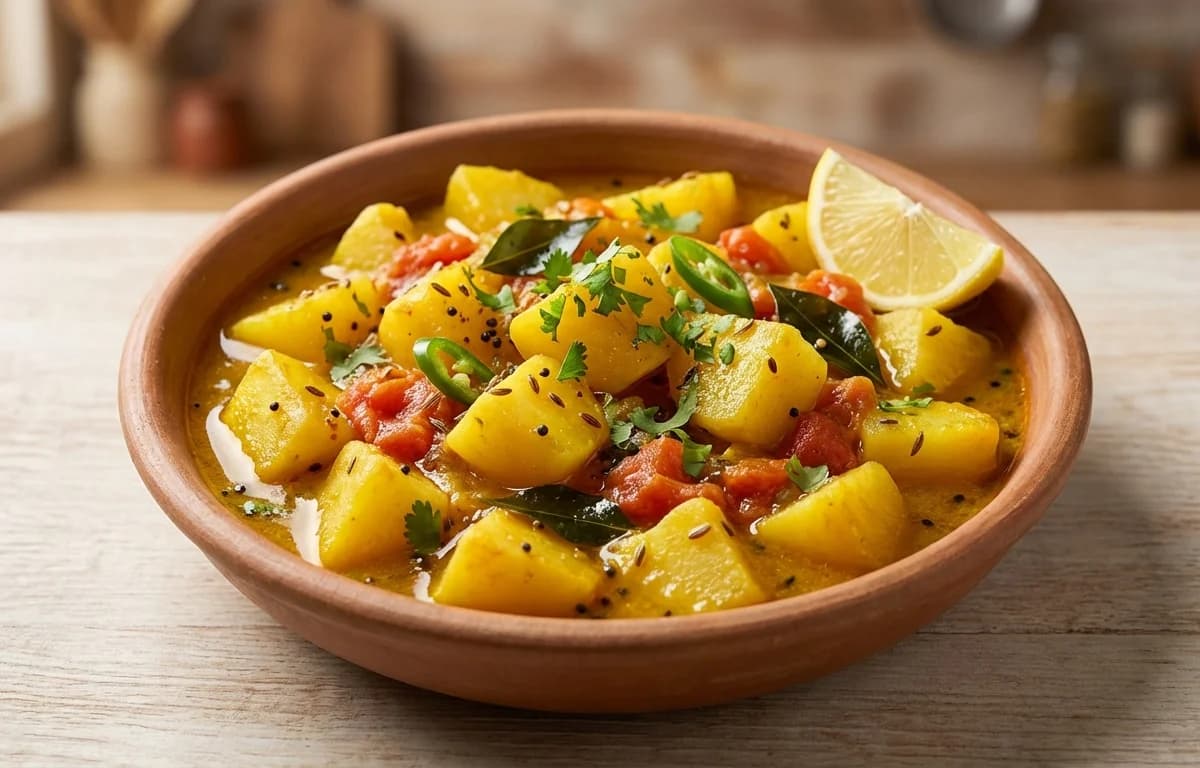
Tender potatoes simmered in a tangy tomato base with classic Gujarati spices. This simple, comforting curry is a staple in many households and pairs perfectly with hot rotis or puris.
Golden, puffy, and irresistibly crisp, these deep-fried Indian breads are a festive favorite. Made from a simple whole wheat dough, they pair perfectly with savory curries like chole or a sweet shrikhand.
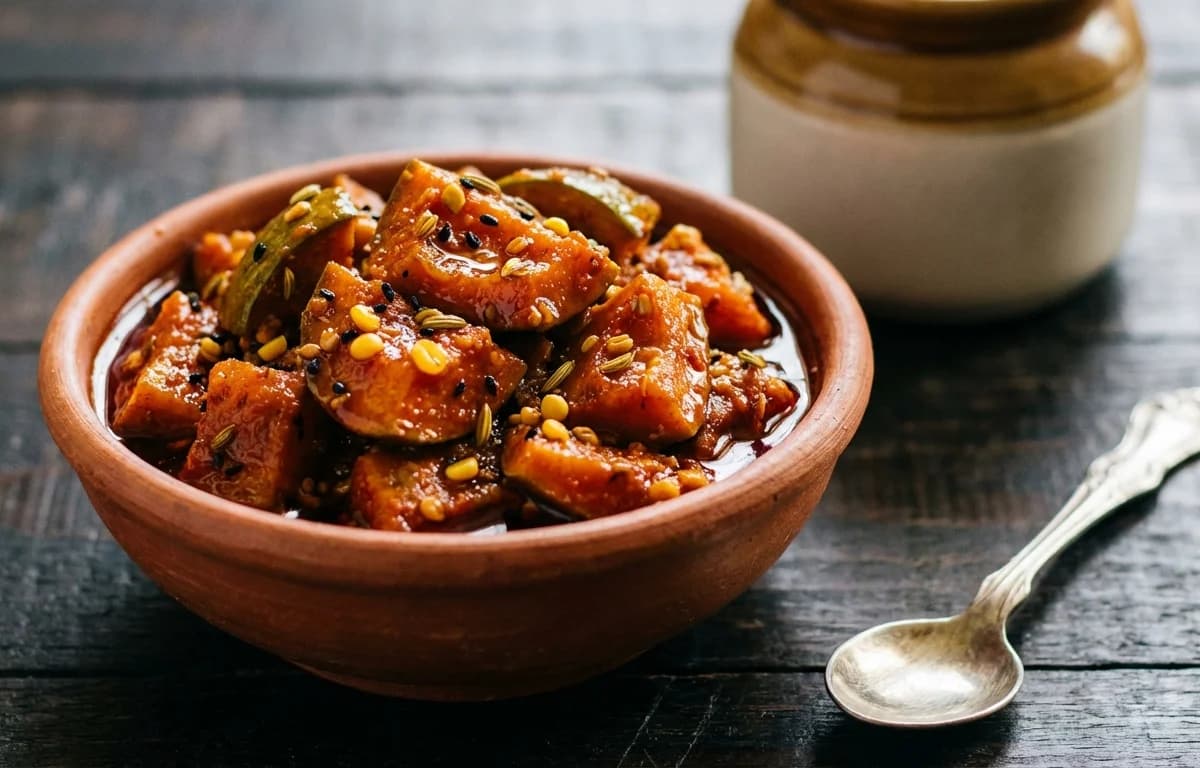
A classic North Indian condiment, 'Aam ka Achar' is made with raw, tangy mangoes, a robust blend of aromatic spices, and pungent mustard oil. This traditional sun-cured pickle is the perfect spicy and sour accompaniment to any meal, from dal-rice to stuffed parathas.
Prep45 min
Cook10 min
Ferment10080 min
About Aloo Shaak, Puri and Mango Pickle
Perfectly spiced Aloo nu Shaak with fluffy puri – an energy-giving comfort food that kids love!
This gujarati dish is perfect for dinner. With 696.92 calories and 12.96g of protein per serving, it's a nutritious choice for your meal plan.
Other Cuisines to Explore
Discover authentic meals from cuisines around the world.
2 tsp Coriander Cumin Powder (Also known as Dhana Jeeru)
1 tsp Salt (Adjust to taste)
1 tsp Sugar (Adjust for a balanced sweet and tangy flavor)
0.5 cup Water (Use hot water for faster cooking)
1 tbsp Lemon Juice (Freshly squeezed)
2 tbsp Coriander Leaves (Finely chopped, for garnish)
Instructions
1
Prepare the Tempering (Vaghar)
Heat oil in a heavy-bottomed pan or kadai over medium heat.
Once the oil is hot, add the mustard seeds and allow them to crackle for about 30 seconds.
Add the cumin seeds and asafoetida (hing). Sauté for another 15-20 seconds until the cumin seeds sizzle and become fragrant.
2
Sauté Aromatics and Tomatoes
Add the slit green chilies and grated ginger to the pan. Sauté for 30 seconds, being careful not to burn the ginger.
Add the finely chopped tomatoes and cook for 4-5 minutes, stirring occasionally. Continue cooking until the tomatoes turn soft, mushy, and you see oil separating from the mixture.
3
Add Spices and Potatoes
Reduce the heat to low. Add the turmeric powder, Kashmiri red chili powder, and coriander-cumin powder. Stir and cook for 1 minute until the raw smell of the spices disappears.
Add the diced potatoes and salt. Mix thoroughly to ensure the potatoes are evenly coated with the spice masala.
4
Simmer the Shaak
Pour in the water and add the sugar. Stir well to combine.
Bring the mixture to a boil, then reduce the heat to low-medium. Cover the pan with a lid and let it simmer for 12-15 minutes.
Stir occasionally to prevent the potatoes from sticking to the bottom. Cook until the potatoes are tender and can be easily pierced with a fork.
5
Finish and Garnish
Once the potatoes are fully cooked, turn off the heat.
Stir in the fresh lemon juice. Let the shaak rest for 5 minutes to allow the flavors to meld.
Garnish with freshly chopped coriander leaves and serve hot.
426cal
9gprotein
47gcarbs
24gfat
Ingredients
2 cup Atta (Also known as whole wheat flour.)
2 tbsp Rava (Use fine semolina (sooji) for extra crispiness.)
1 tsp Salt (Adjust to taste.)
1 tbsp Ghee (Can be substituted with a neutral oil.)
0.75 cup Lukewarm Water (Add gradually as needed to form a stiff dough.)
3 cup Vegetable Oil (For deep frying. Use a high smoke point oil like canola or sunflower.)
Instructions
1
Prepare the Dough
In a large mixing bowl, combine the atta, rava, and salt. Whisk to mix everything evenly.
Add the ghee to the flour mixture. Using your fingertips, rub the ghee into the flour until it resembles coarse breadcrumbs. This process, known as 'moin', is key for a flaky texture.
Gradually add lukewarm water, a little at a time, while mixing. Knead to form a stiff and firm dough. It should be noticeably tighter than a chapati dough to prevent it from absorbing too much oil during frying.
2
Knead and Rest the Dough
Transfer the dough to a clean work surface and knead for 5-7 minutes until it is smooth and firm.
Cover the dough with a damp cloth or place it in a container with a lid. Let it rest for at least 20-30 minutes. This step is crucial for relaxing the gluten, which makes rolling easier and the puris softer inside.
3
Shape and Roll the Puris
After resting, knead the dough again for one minute to make it smooth.
Divide the dough into 16-20 small, equal-sized balls. Roll each ball between your palms until smooth and crack-free.
Lightly grease your rolling pin and rolling surface with a drop of oil. Avoid using dry flour for dusting, as it can burn in the hot oil and affect its quality and color.
Take one dough ball and roll it into an even circle, about 3-4 inches in diameter and 2-3 mm thick. Ensure the thickness is uniform to help it puff up perfectly.
4
Fry the Puris
Heat the oil for deep-frying in a kadai or deep pan over medium-high heat. The ideal temperature is 180-190°C (355-375°F). To test, drop a tiny piece of dough into the oil; it should sizzle and rise to the top quickly without changing color too fast.
Gently slide a rolled puri into the hot oil. It will sink briefly before floating to the surface.
Using a slotted spoon, gently press down on the center of the puri as it fries. This pressure helps trap steam inside, causing it to puff up beautifully.
Once puffed (this takes about 10-15 seconds), flip it over and fry the other side for another 10-15 seconds until it's a light golden brown.
Fry one or two puris at a time to maintain the oil temperature and avoid overcrowding the pan.
5
Drain and Serve
Remove the fried puri with the slotted spoon, allowing excess oil to drip back into the pan.
Place the puris on a wire rack or a plate lined with paper towels to drain any remaining oil.
Repeat the frying process for all the dough balls.
Serve immediately while hot and puffy with your favorite accompaniments like Aloo Sabzi, Chole, or Shrikhand.
1 kg Raw Mangoes (Use a firm, sour, pickling variety like Ramkela or Rajapuri)
2 cup Mustard Oil (To be heated to smoking point and then cooled completely)
0.75 cup Salt (Use non-iodized or sea salt for best results)
5 tbsp Red Chili Powder (Adjust to your spice preference)
2 tbsp Turmeric Powder
4 tbsp Fennel Seeds (Also known as Saunf)
4 tbsp Split Mustard Seeds (Also known as Rai ki Dal)
2 tbsp Fenugreek Seeds (Also known as Methi Dana)
2 tsp Nigella Seeds (Also known as Kalonji)
1 tsp Asafoetida (Also known as Hing)
Instructions
1
Prepare the Mangoes (Day 1)
Wash the raw mangoes thoroughly. Wipe them completely dry with a clean kitchen towel. It is critical that there is no moisture.
Cut the mangoes into 1-inch cubes, discarding the inner stone but keeping the peel on.
Place the mango pieces in a large, dry glass or ceramic bowl. Add 1/2 cup of the salt and all the turmeric powder.
Mix well to coat every piece. Cover the bowl with a cloth or a loose lid and let it sit at room temperature for 24 hours. The mangoes will release a significant amount of water.
2
Dry the Mangoes (Day 2)
After 24 hours, drain all the water released by the mangoes. You can discard this brine.
Spread the mango pieces in a single layer on a clean cloth or a large tray.
Let them dry under a fan or in a shady, well-ventilated area for 4-5 hours until the surface moisture has evaporated. They should feel dry to the touch but not hard.
3
Prepare the Spice Mix and Oil
While the mangoes are drying, gently dry roast the fennel seeds and fenugreek seeds in a pan on low heat for 1-2 minutes until fragrant. Let them cool completely.
Grind the roasted seeds along with the split mustard seeds into a coarse powder using a spice grinder or mortar and pestle.
In a large, dry mixing bowl, combine this coarsely ground spice mix, red chili powder, nigella seeds, asafoetida, and the remaining 1/4 cup of salt.
In a separate pan, heat the mustard oil until it reaches its smoking point (you'll see faint white fumes). Turn off the heat and let it cool down completely to room temperature. This step is crucial to mellow the oil's raw pungency.
4
Combine and Bottle the Pickle
Add the dried mango pieces to the bowl containing the spice mix. Toss well until each piece is thoroughly coated.
Pour about 1.5 cups of the completely cooled mustard oil over the mango-spice mixture. Mix everything thoroughly with a clean, dry spoon.
Carefully transfer the pickle into a sterilized, completely dry glass or ceramic jar (a 'barnī'). Pack it down gently to remove air pockets.
5
Mature the Pickle (7-10 Days)
Cover the mouth of the jar with a clean piece of muslin cloth and secure it with a string. This allows moisture to escape while keeping dust out.
Place the jar in direct sunlight for 7 to 10 days. Shake the jar gently or stir with a dry spoon once every day to redistribute the oil and spices.
After 3-4 days, the mango pieces will have softened and settled. Pour the remaining 0.5 cup of cooled mustard oil over the top to create a protective layer that submerges the mangoes.
After the sunning period, the mangoes will have softened and absorbed the flavors. The pickle is now ready. Replace the muslin cloth with an airtight lid and store in a cool, dry place. It can last for over a year.