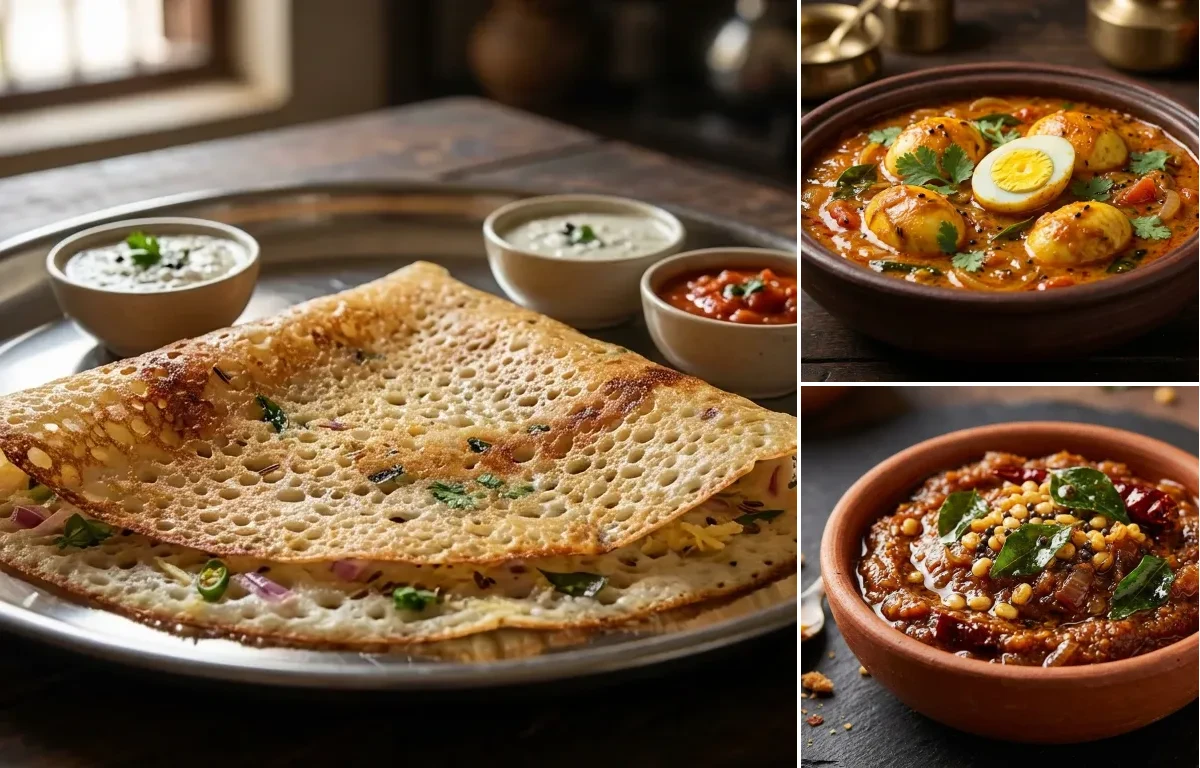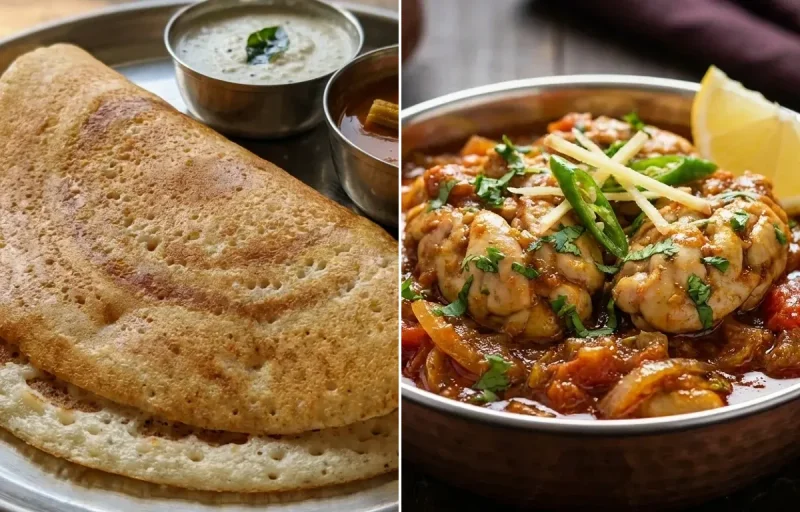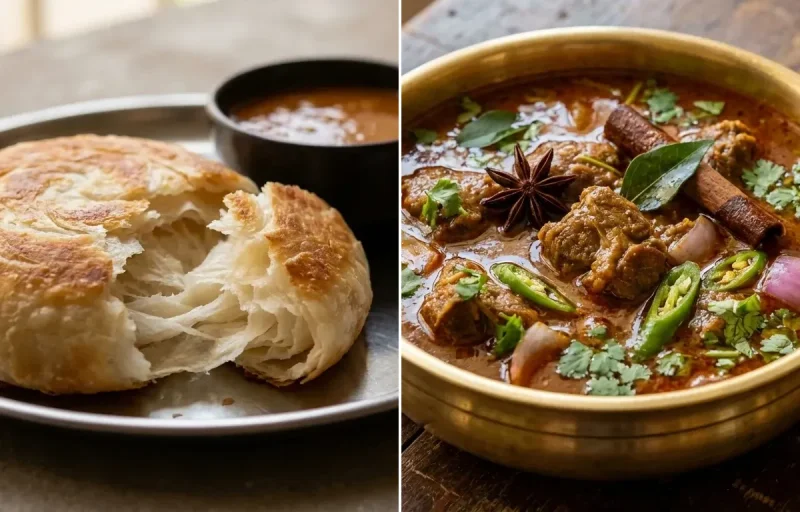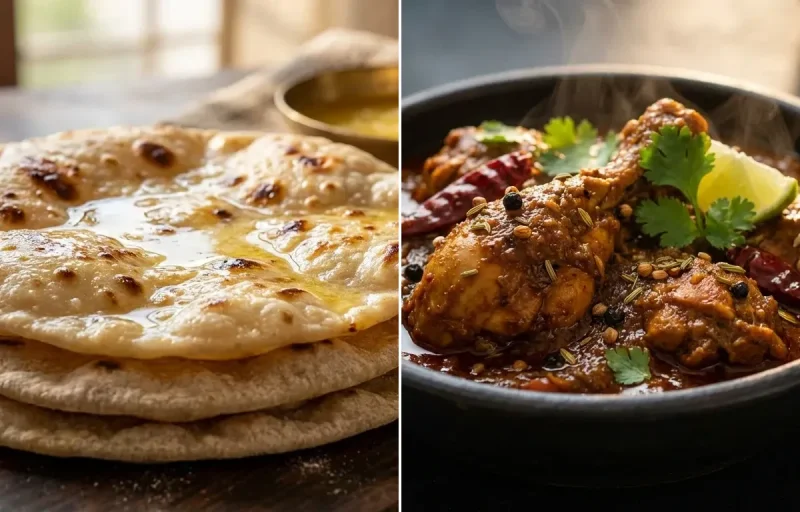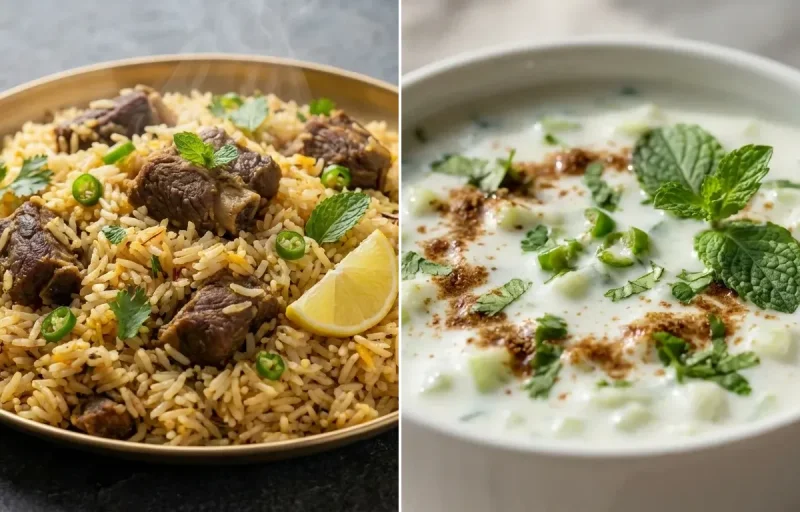
A classic South Indian delight, this crispy, lacey crepe is made from semolina and rice flour. It's incredibly quick to prepare since there's no fermentation needed. Perfect for a speedy breakfast or light dinner, served with coconut chutney and sambar.
Prep15 min
Cook25 min
Soak20 min
Servings4
Serving size: 1 serving
307cal
8gprotein
55gcarbs
Ingredients
1 cup Fine Rava (Also known as fine semolina or sooji. Do not use coarse rava.)
0.5 cup Rice Flour (Provides crispiness to the dosa.)
0.25 cup Maida (Also known as all-purpose flour. Provides binding.)
0.25 cup Curd (Slightly sour curd or plain yogurt works best for a tangy flavor.)
1 medium Onion (Finely chopped.)
2 piece Green Chili (Finely chopped. Adjust to your spice preference.)
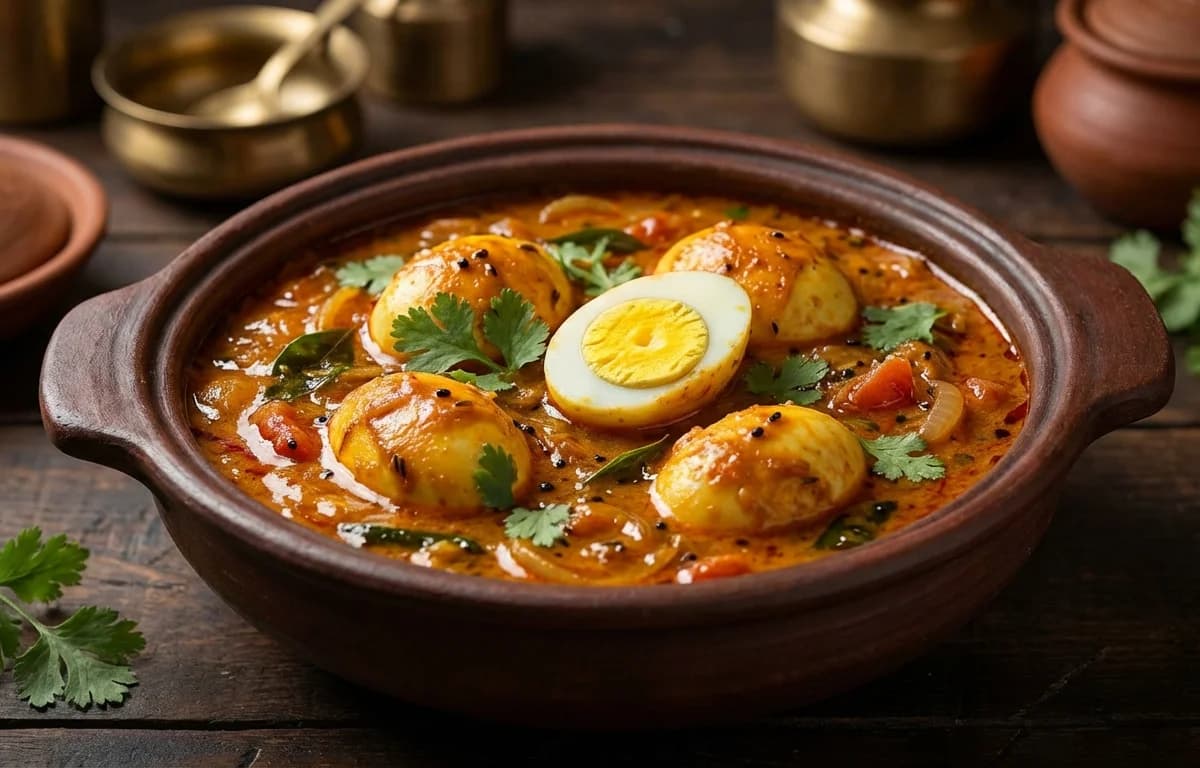
Hard-boiled eggs simmered in a fragrant and spicy South Indian gravy. This flavorful curry, enriched with coconut milk and aromatic spices, is a perfect companion for rice, appam, or parotta.
Prep15 min
Cook30 min
Servings4
Serving size: 1 serving(2 eggs and about 1 cup of curry)
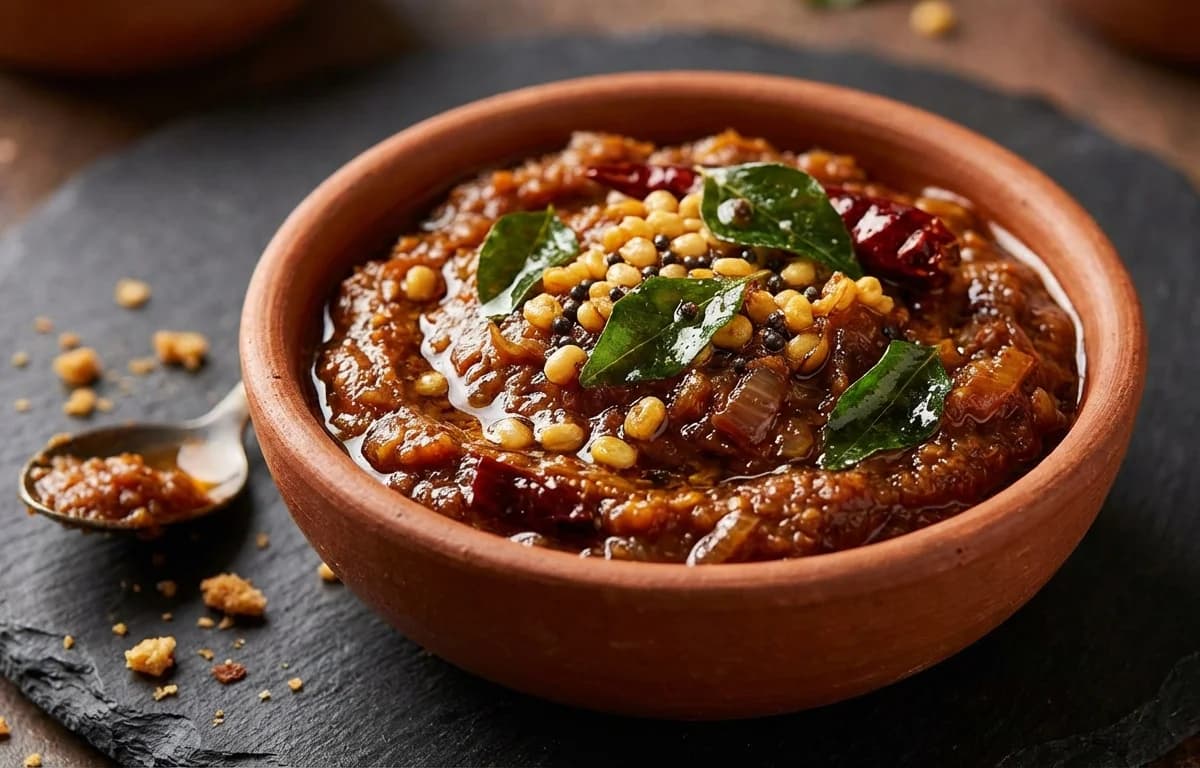
A vibrant and spicy South Indian condiment made by sautéing onions, red chilies, and lentils, then grinding them into a thick paste. The perfect accompaniment for idli, dosa, or uttapam.
Crispy Rava Dosai with aromatic, protein-packed Muttai Curry & tangy Onion Chutney – an energy-giving treat!
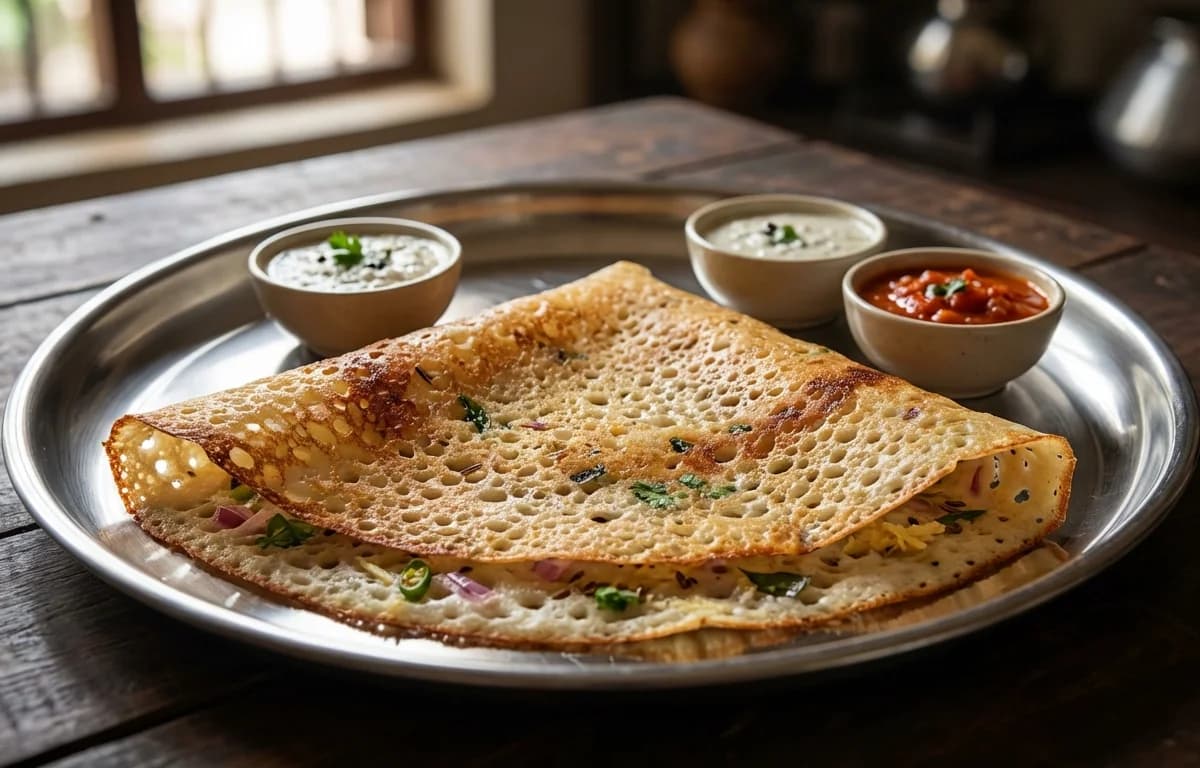
This tamil dish is perfect for dinner. With 892.35 calories and 27.97g of protein per serving, it's a nutritious choice for your meal plan.
6gfat
Black Peppercorns
(Coarsely crushed for best flavor.)
10 leaf Curry Leaves (Finely chopped.)
2 tbsp Coriander Leaves (Finely chopped.)
1.5 tsp Salt (Adjust to taste.)
4.5 cup Water (Approximately. Adjust for a very thin, watery consistency.)
4 tsp Ghee (Or oil, for cooking the dosas.)
Instructions
1
Prepare the Batter
In a large mixing bowl, combine the fine rava, rice flour, and maida. Whisk them together to ensure they are evenly mixed.
Add the curd, salt, cumin seeds, crushed peppercorns, grated ginger, chopped green chilies, coriander leaves, and curry leaves to the dry flour mixture.
Gradually pour in about 4 cups of water while whisking continuously to prevent any lumps from forming. The batter should be very thin and flowing, similar to the consistency of thin buttermilk.
2
Rest the Batter (30 minutes)
Cover the bowl and let the batter rest for at least 30 minutes. This crucial step allows the rava to absorb water and swell, which is essential for achieving the perfect crispy texture.
3
Final Batter Adjustment
After resting, the batter will have thickened. Stir it well from the bottom.
Add the remaining 0.5 to 1 cup of water, or more as needed, to bring the batter back to its original very thin, watery consistency.
Stir in the finely chopped onions just before you are ready to make the dosas. Adding them earlier can make them release water and alter the batter's consistency.
4
Heat the Tawa (Griddle)
Place a non-stick or well-seasoned cast-iron tawa over medium-high heat. The tawa must be very hot to create a lacy, crispy dosa.
To check if the tawa is ready, sprinkle a few drops of water on it. If they sizzle and evaporate immediately, the temperature is perfect.
Lightly grease the hot tawa with a few drops of ghee or oil using a paper towel or half an onion.
5
Pour and Cook the Dosa (3-4 minutes per dosa)
Always stir the batter vigorously from the bottom before making each dosa, as the flours settle very quickly.
Take a ladleful of the thin batter. From a height of about 8-10 inches, pour the batter onto the hot tawa, starting from the outer edge and moving towards the center in a circular motion. This technique creates the signature lacy pattern.
Fill any large gaps with a little more batter, but do not spread it with the back of the ladle like a regular dosa.
Drizzle about 1/2 tsp of ghee or oil around the edges and over the holes in the dosa.
6
Crisp and Serve
Cook on medium heat for about 3-4 minutes. Rava dosa is cooked only on one side, so do not flip it.
The dosa is ready when the bottom turns golden brown and crisp, and the edges begin to lift away from the tawa.
Carefully fold the dosa in half using a spatula and remove it from the tawa.
Repeat the process for the remaining batter, stirring well each time before pouring.
Serve immediately with coconut chutney and sambar for the best taste and texture.
438cal
16gprotein
16gcarbs
36gfat
Ingredients
8 large Eggs
3 tbsp Coconut Oil
1 tsp Mustard Seeds
0.5 tsp Fennel Seeds
1 sprig Curry Leaves
2 medium Onion (finely chopped)
2 whole Green Chili (slit lengthwise)
1.5 tbsp Ginger Garlic Paste
3 medium Tomatoes (pureed)
0.5 tsp Turmeric Powder
1.5 tsp Kashmiri Red Chili Powder (adjust to your spice preference)
2 tsp Coriander Powder
1 cup Water (for the gravy)
1.5 tsp Salt (or to taste)
1 cup Coconut Milk (thick, first press)
1 tsp Garam Masala
3 tbsp Coriander Leaves (chopped, for garnish)
Instructions
1
Prepare the Eggs
Place eggs in a saucepan, cover with cold water by at least an inch. Bring to a rolling boil over high heat.
Once boiling, turn off the heat, cover the pan, and let the eggs sit for 10-12 minutes.
Drain the hot water and transfer the eggs to an ice bath or run under cold water until cool enough to handle.
Peel the eggs carefully and make 2-3 shallow slits on each one with a knife. This helps them absorb the gravy flavors. Set aside.
2
Start the Curry Base (Tadka)
Heat coconut oil in a wide, heavy-bottomed pan or kadai over medium heat.
Once the oil is hot, add the mustard seeds and let them splutter completely.
Add the fennel seeds and curry leaves. Sauté for about 30 seconds until the curry leaves turn crisp and aromatic.
3
Sauté Aromatics
Add the finely chopped onions to the pan. Sauté for 8-10 minutes, stirring frequently, until they are soft and golden brown.
Add the slit green chilies and ginger-garlic paste. Cook for another 1-2 minutes until the raw smell disappears.
2.5 tbsp sesame oil (Divided use: 2 tbsp for sautéing, 0.5 tbsp for tempering)
2 medium onion (Roughly chopped, about 300g)
1 medium tomato (Roughly chopped, about 120g)
5 whole dried red chilies (Use Byadgi or Kashmiri for good color and moderate heat. Adjust to taste.)
1 tbsp chana dal
1.5 tbsp urad dal (Divided use: 1 tbsp for sautéing, 0.5 tbsp for tempering)
1 tsp tamarind paste (Or a small marble-sized ball of whole tamarind, deseeded)
1 tsp jaggery powder (Optional, to balance the flavors)
1 tsp salt (Adjust to taste)
3 tbsp water (As needed for grinding)
0.5 tsp mustard seeds (For tempering)
1 sprig curry leaves (About 8-10 leaves, for tempering)
0.25 tsp asafoetida (Also known as Hing, for tempering)
Instructions
1
Heat 2 tablespoons of sesame oil in a pan over medium heat. Add the chana dal, 1 tablespoon of urad dal, and the dried red chilies. Sauté for 1-2 minutes until the dals turn light golden and become aromatic. Be careful not to burn them.
2
Add the roughly chopped onions and a pinch of salt. Continue to sauté for 6-8 minutes, stirring occasionally, until the onions soften and turn translucent with slightly browned edges. This caramelization is key to the chutney's flavor.
3
Add the chopped tomatoes and cook for another 4-5 minutes until they become soft and mushy, and the oil starts to separate from the mixture.
4
Turn off the heat and allow the mixture to cool down completely to room temperature. This step is crucial to prevent steam from building up in the grinder, which can be dangerous.
5
Once cooled, transfer the mixture to a grinder or blender jar. Add the tamarind paste, jaggery powder (if using), and the remaining salt. Grind to a smooth or slightly coarse paste, adding 2-3 tablespoons of water, one at a time, only as needed to facilitate grinding. The chutney should be thick.
6
Transfer the ground chutney to a serving bowl. Now, prepare the tempering (tadka). Heat the remaining 0.5 tablespoon of oil in a small pan. Add the mustard seeds and let them splutter. Then, add 0.5 tablespoon of urad dal, curry leaves, and asafoetida. Sauté for 30-40 seconds until the dal turns golden.
Reduce the heat to low. Add the turmeric powder, Kashmiri red chili powder, and coriander powder. Stir for 30 seconds to toast the spices without burning them.
Add the tomato puree and salt. Mix well, increase the heat to medium, and cook for 6-8 minutes.
Continue cooking, stirring occasionally, until the masala thickens and you see oil separating from the sides of the pan.
5
Simmer the Curry
Pour in 1 cup of water, stir well to combine, and bring the gravy to a gentle boil.
Reduce the heat to low. Gently slide the slit hard-boiled eggs into the gravy.
Pour in the thick coconut milk. Stir gently to incorporate it into the gravy. Do not let the curry boil vigorously after adding coconut milk to prevent curdling.
6
Finish and Serve
Let the curry simmer on the lowest heat for 5-7 minutes, allowing the eggs to absorb the flavors.
Sprinkle the garam masala over the top and give it a final, gentle stir.
Garnish with freshly chopped coriander leaves. Let it rest for 5 minutes before serving.
Serve hot with appam, idiyappam, parotta, or steamed rice.
Immediately pour the hot tempering over the chutney. Mix well before serving. Enjoy with hot idlis, dosas, or uttapam.