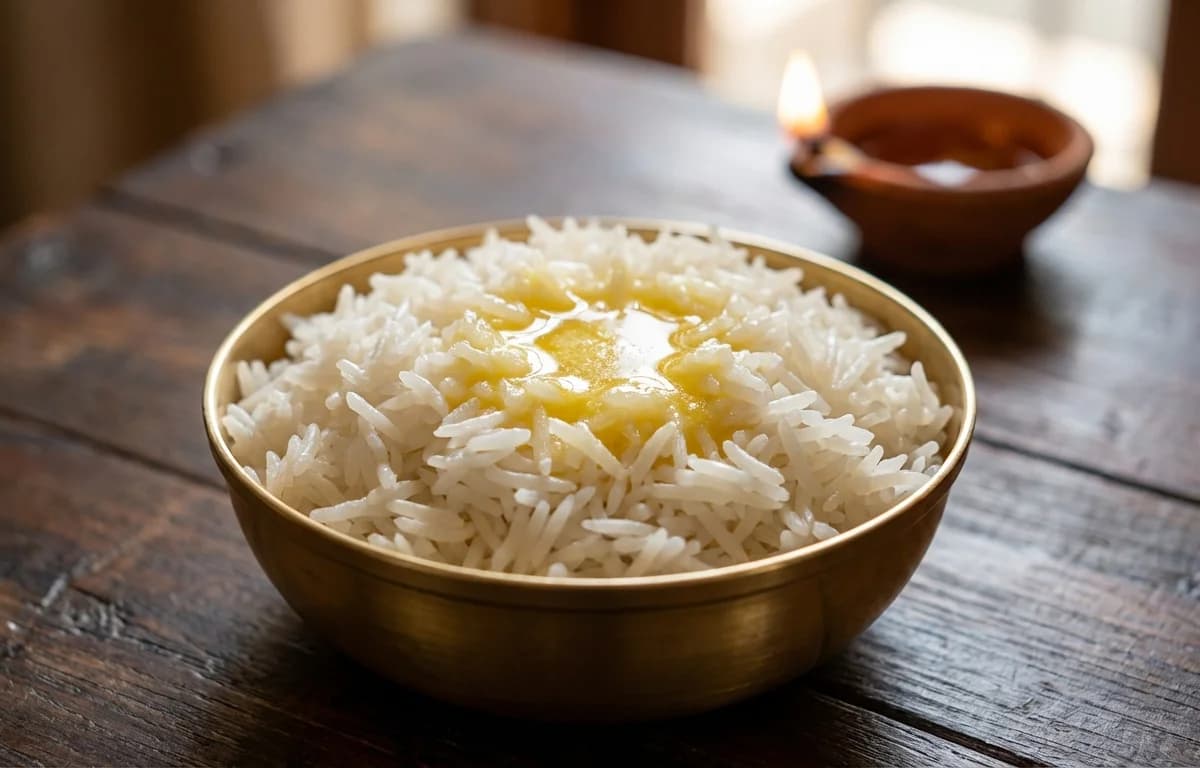
A comforting and simple Maharashtrian porridge made from steamed rice flour. Lightly spiced with green chilies and cumin, this gluten-free dish is a traditional breakfast favorite, ready in under 20 minutes. Its soft, savory texture makes it an easily digestible and wholesome meal.
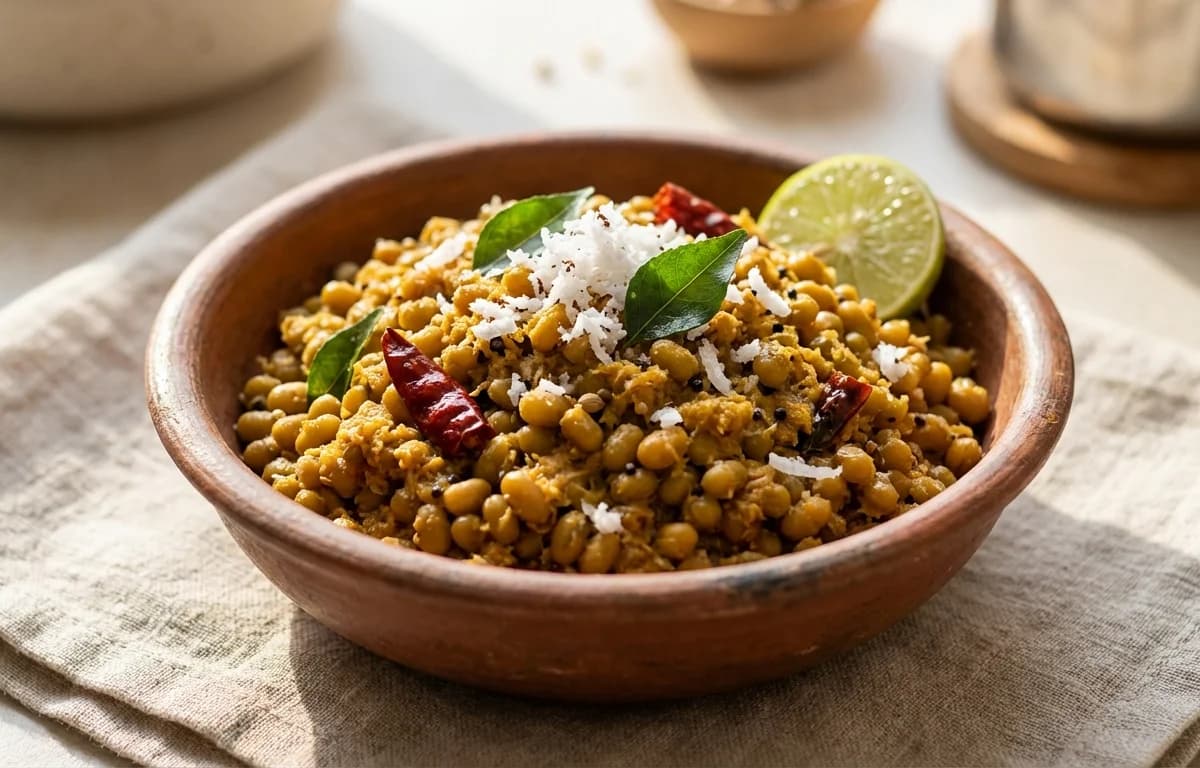
A traditional Goan vegetarian dish featuring whole green moong beans cooked in a semi-dry coconut masala. It has a unique blend of sweet, sour, and spicy flavors from jaggery, tamarind, and fresh spices. A perfect side for rice and dal.
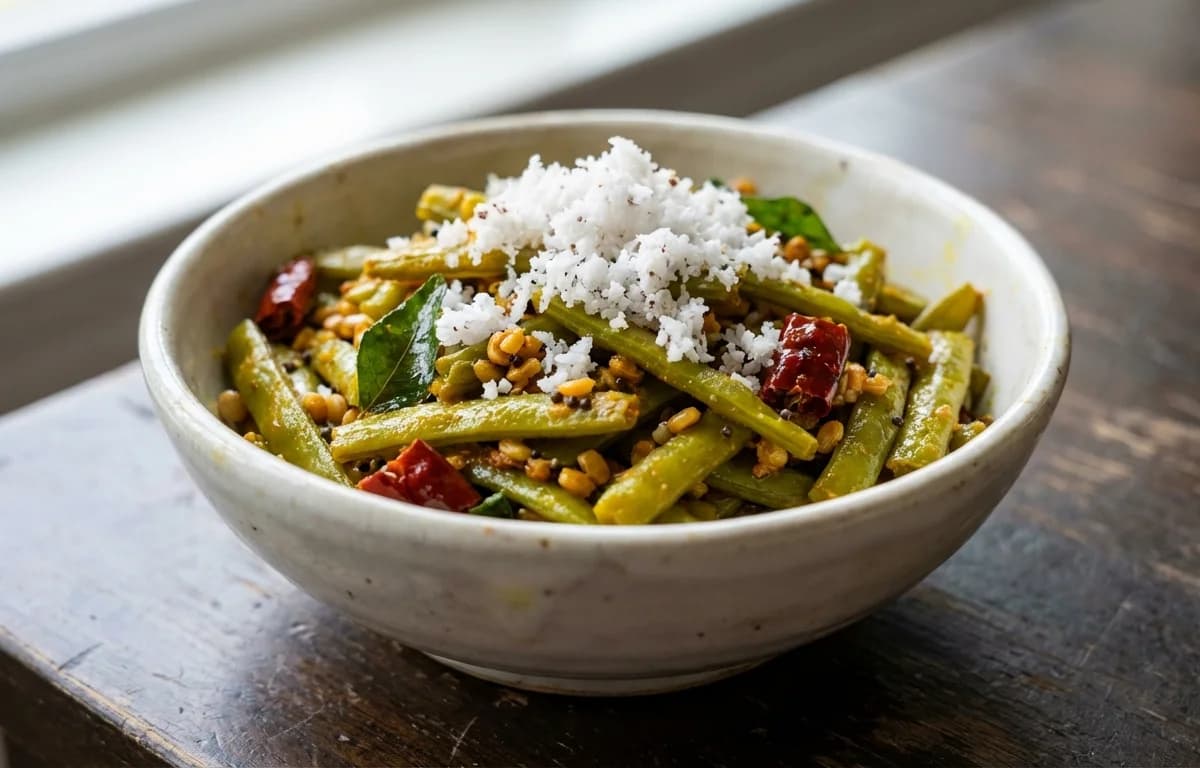
A unique and flavorful Konkani stir-fry made with turkey berries (sundakkai). The slight bitterness of the berries is perfectly balanced with sweet jaggery, tangy tamarind, and fresh coconut. A traditional side dish from Mangalore.
Prep15 min
Cook20 min
Soak15 min
About Ukda Sheet, Moong Sukke and Mitkesanga Upkari
Protein-packed sprouted moong curry with steamed rice & long bean stir-fry. A fiber-rich, perfectly spiced homestyle meal!
This konkani dish is perfect for lunch. With 744.9599999999999 calories and 19.090000000000003g of protein per serving, it's a nutritious choice for your meal plan.
Other Cuisines to Explore
Discover authentic meals from cuisines around the world.
2 tbsp Coriander Leaves (Freshly chopped, for garnish)
Instructions
1
Prepare the Rice Flour Slurry
In a medium-sized mixing bowl, combine the rice flour, 2.5 cups of water, and salt.
Whisk thoroughly until you have a smooth, lump-free, thin batter. Set this aside.
2
Prepare the Tempering (Tadka)
Heat ghee in a heavy-bottomed pan or kadai over medium heat.
Once the ghee is hot, add the mustard seeds and allow them to splutter completely, which should take about 30 seconds.
Add the cumin seeds and let them sizzle for a few seconds.
Add the hing, finely chopped green chilies, and curry leaves. Sauté for another 30-40 seconds until the curry leaves turn crisp and fragrant.
3
Cook the Ukda Sheet
Reduce the heat to low. Give the rice flour slurry a quick stir again, as the flour tends to settle at the bottom.
While stirring the tempering in the pan with one hand, slowly and steadily pour the slurry with the other. This continuous stirring is crucial to prevent lumps.
Keep stirring constantly for 2-3 minutes. The mixture will begin to thicken rapidly and turn from a liquid to a soft, porridge-like consistency.
Once thickened, cover the pan with a lid and let it cook on the lowest possible heat for 5-7 minutes. This steaming process cooks the rice flour completely.
The Ukda Sheet is cooked when it becomes non-sticky, glossy, and starts to leave the sides of the pan.
4
Garnish and Serve
Turn off the heat. Fluff the cooked mixture gently with a spatula.
Garnish with freshly grated coconut and chopped coriander leaves.
Serve immediately while hot. It can be enjoyed on its own or with a side of pickle or chutney.
4
Serving size: 1 serving
340cal
12gprotein
42gcarbs
15gfat
Ingredients
1 cup Whole Green Moong (Rinsed and soaked overnight)
3 cup Water (For pressure cooking the moong)
0.5 tsp Turmeric Powder
1 tsp Salt (Divided, or to taste)
1 cup Freshly Grated Coconut (Can use frozen, thawed coconut)
4 pcs Byadgi Chilies (Adjust quantity based on desired spice level)
1.5 tbsp Coriander Seeds
1 tsp Tamarind Paste
1 tbsp Jaggery (Grated or powdered)
2 tbsp Coconut Oil (Essential for authentic Goan flavor)
1 tsp Mustard Seeds
10 pcs Curry Leaves
0.25 tsp Hing (Use gluten-free hing to make the dish fully gluten-free)
1 pcs Onion (Medium-sized, finely chopped)
Instructions
1
Cook the Moong Beans
Drain the water from the overnight-soaked moong beans.
In a pressure cooker, combine the soaked moong, 3 cups of fresh water, turmeric powder, and 0.5 tsp of salt.
Pressure cook on medium heat for 3-4 whistles, or for about 15 minutes, until the beans are cooked through but still hold their shape. They should not be mushy.
Let the pressure release naturally. Set the cooked moong aside.
2
Prepare the Coconut Masala Paste
In a small, dry pan over low heat, lightly roast the Byadgi chilies and coriander seeds for 1-2 minutes until they become fragrant. Be careful not to burn them.
Transfer the roasted spices to a grinder jar. Add the freshly grated coconut, tamarind paste, and grated jaggery.
Add 3 tablespoons of water and grind to a coarse, thick paste. The texture should not be perfectly smooth.
3
Assemble the Sukke
Heat coconut oil in a heavy-bottomed pan or kadai over medium heat.
300 g Turkey Berries (Also known as mitkesanga or sundakkai)
2 cup Water (For soaking the berries)
1 tsp Salt (For soaking the berries)
2 tbsp Coconut Oil (Authentic flavor, but any neutral oil works)
1 tsp Mustard Seeds
1 tsp Urad Dal (Split and skinned black gram lentils)
1 sprig Curry Leaves (About 10-12 leaves)
0.25 tsp Turmeric Powder
0.75 cup Fresh Grated Coconut (For the masala paste)
4 pcs Byadgi Red Chilies (Adjust to your spice preference)
1 tsp Tamarind Paste
1 tbsp Grated Jaggery (Adjust for desired sweetness)
Instructions
1
Prepare the Turkey Berries
Using a small pestle or the back of a heavy spoon, gently crush each turkey berry just enough to break the skin. Do not mash them.
In a medium bowl, combine 2 cups of water and 1 tsp of salt. Add the crushed berries and let them soak for at least 15 minutes. This step is crucial for reducing their bitterness.
After soaking, drain the berries completely and rinse them well under fresh running water. Set aside.
2
Grind the Coconut Masala
In a small blender or grinder jar, add the fresh grated coconut, dried red chilies, and tamarind paste.
Add 3 tablespoons of water and grind to a coarse paste. The texture should not be perfectly smooth.
3
Prepare the Tempering (Tadka)
Heat the coconut oil in a kadai or heavy-bottomed pan over medium heat.
Once the oil is hot, add the mustard seeds and allow them to splutter, which takes about 30 seconds.
Add the urad dal and sauté for about 1 minute until it turns a light golden brown.
Add the mustard seeds and allow them to splutter completely, which takes about 30 seconds.
Add the curry leaves and hing. Sauté for a few seconds until aromatic.
Add the finely chopped onion and sauté for 5-7 minutes until it turns soft and translucent.
Add the ground coconut masala paste to the pan. Stir-fry for 4-5 minutes, until the raw smell of the masala disappears and oil begins to separate at the edges.
4
Combine and Simmer
Add the cooked moong beans along with any remaining cooking liquid to the pan.
Add the remaining 0.5 tsp of salt, or adjust to your taste. Mix everything gently to combine without mashing the beans.
Cover the pan and let it simmer on low heat for 5-7 minutes. This allows the moong to absorb the flavors of the masala and the dish to reach a semi-dry consistency.
Turn off the heat. Serve hot.
Add the curry leaves and sauté for another 20 seconds until they become crisp and fragrant.
4
Cook the Upkari
Add the drained turkey berries and turmeric powder to the pan. Stir-fry for 2-3 minutes.
Pour in 1/2 cup of water, cover the pan with a lid, and reduce the heat to medium-low. Cook for 7-8 minutes, or until the berries are tender.
Uncover and add the ground coconut masala, grated jaggery, and 3/4 tsp of salt. Mix thoroughly to coat the berries.
Continue to cook uncovered for another 5-6 minutes, stirring occasionally, until the raw aroma of the masala disappears and the mixture becomes semi-dry.
Taste and adjust the salt or jaggery if needed. Serve hot.