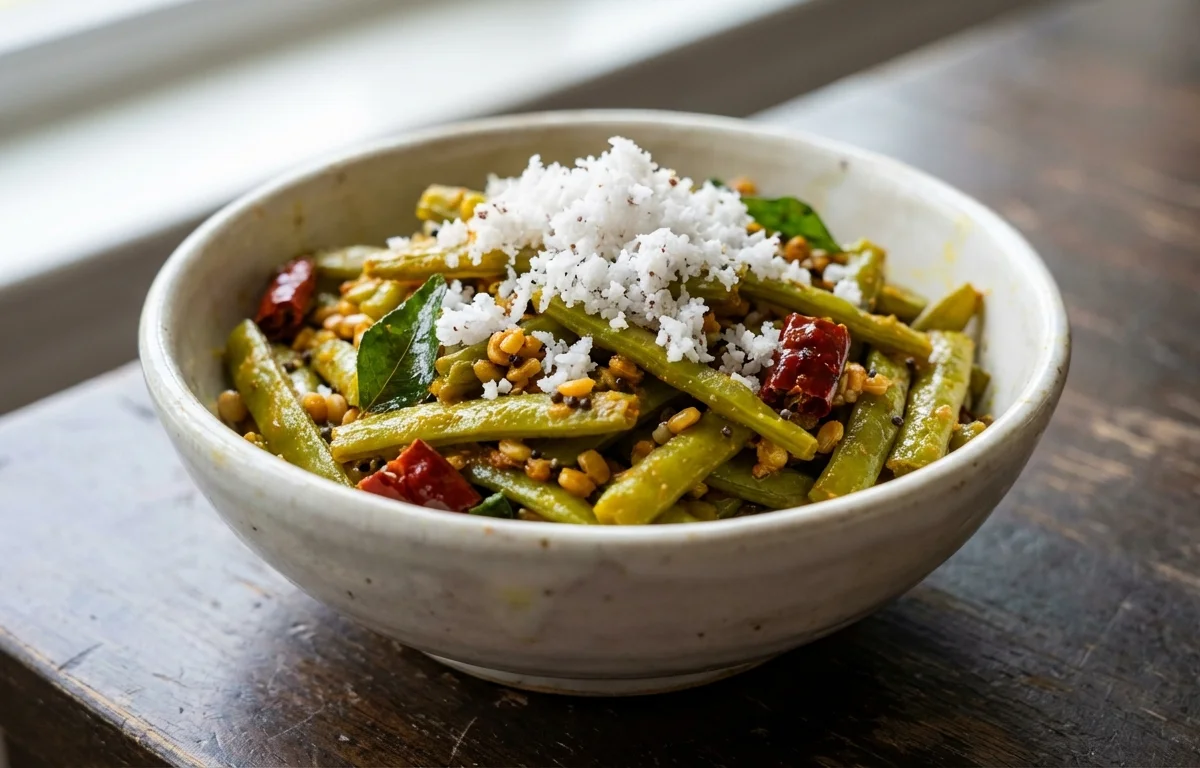
Mitkesanga Upkari
A simple Konkani-style stir-fry made with tender drumstick leaves, lightly seasoned and finished with fresh coconut. It is earthy, gently spiced, and works beautifully as a small side with rice and dal.
For 4 servings
- prep · ~15 min
Prep the leaves and other ingredients.
1.Pick the drumstick leaves from the thick stems and discard any tough bits.2.Wash the leaves well in 2 changes of water and drain completely.3.Chop the onion finely, slit the green chilies, and grate the coconut if needed. - temper · ~2 min
Make the tempering.
1.Heat the oil in a pan over medium heat.2.Add mustard seeds and let them splutter.3.Add urad dal and cook until lightly golden.4.Add curry leaves and green chilies and cook for a few seconds.TIPKeep the heat moderate so the urad dal turns golden, not dark brown. - saute · ~3 min
Cook the onion.
Add the chopped onion and sauté for 2 to 3 minutes until soft and lightly translucent. Stir in the turmeric powder.
- saute · ~7 min
Cook the drumstick leaves.
Add the drumstick leaves and salt. Mix well, sprinkle in the water, cover, and cook on low heat until the leaves wilt and turn tender.
TIPDo not add too much water; upkari should stay lightly moist, not wet. - garnish
Finish with coconut.
Add the grated coconut and mix for 1 minute just until heated through. Turn off the heat.
- serve
Serve hot as a side.
What to keep in mind.
7 tips from the recipe — small details that make a real difference to the final dish.
- 1Drain the washed moringa leaves very well so the upkari cooks tender, not soggy.
- 2Pick only tender leaves and discard thick stems, or the stir-fry can taste fibrous and slightly harsh.
- 3Let the mustard fully splutter before adding urad dal so the tempering tastes rounded, not raw.
- 4Cook the urad dal only to light golden; if it darkens too much, it can turn bitter in this mild dish.
- 5Keep the pan covered on low heat with just a sprinkle of water, since moringa leaves need gentle steaming.
- 6Add the fresh coconut at the very end and cook briefly to preserve its sweetness and soft texture.
- 7This upkari is best eaten fresh, but leftovers can be refrigerated for a day and reheated gently without extra water.
Adapt it for your goals.
No-onion
Skip the onion for a more austere, traditional-style version that lets the moringa and coconut stand out more clearly.
spicierSpicier
Add an extra green chili or a few broken dried red chilies in the tempering if you want sharper heat with rice and dal.
garlicGarlic
Add a lightly crushed garlic clove after the urad dal for a deeper, more robust flavor that pairs well with the earthy leaves.
low coconutLow-coconut
Reduce the coconut slightly for a leaner side dish with a more pronounced moringa taste and less sweetness.
Why this is on our healthy list.
Leafy Green Goodness
Drumstick leaves bring the benefits of a nutrient-dense leafy green while keeping the dish light and simple.
Healthy Plant Fats
Fresh coconut adds satisfying natural fats and body, helping the stir-fry feel fuller without heavy gravy.
Lightly Cooked Side
Because it uses minimal oil and very little water, this upkari stays relatively light compared with richer vegetable sides.
Frequently asked questions
Tender leaves are best. Mature leaves can be tougher and more bitter, so remove stems carefully and cook a bit longer if that is all you have.