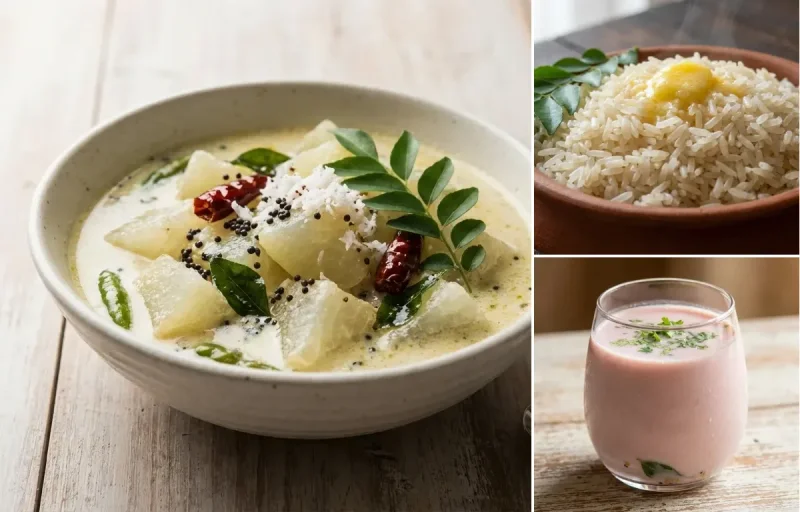
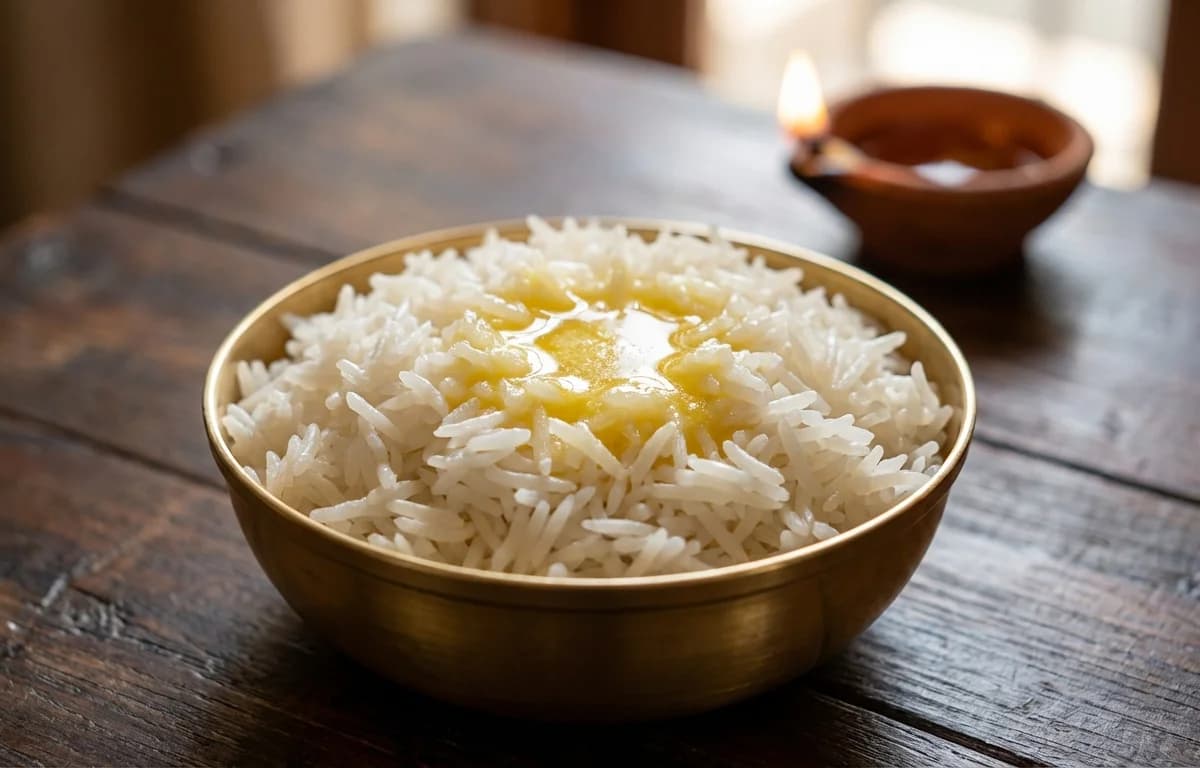
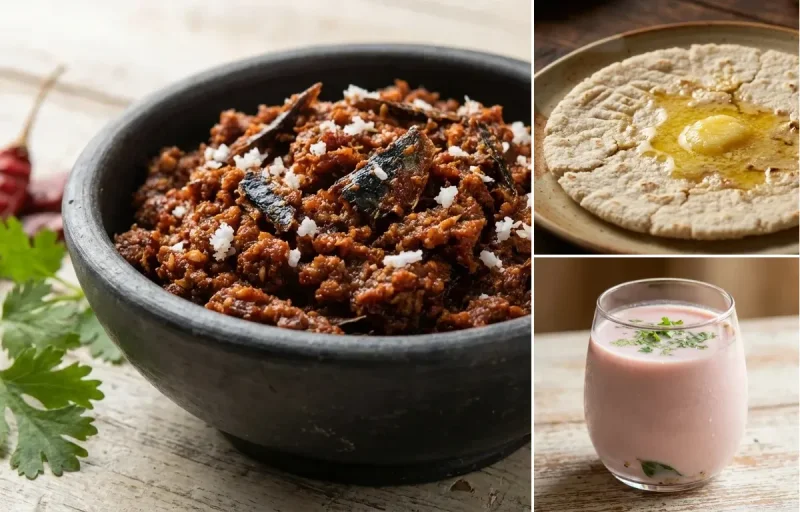
A comforting and simple Maharashtrian porridge made from steamed rice flour. Lightly spiced with green chilies and cumin, this gluten-free dish is a traditional breakfast favorite, ready in under 20 minutes. Its soft, savory texture makes it an easily digestible and wholesome meal.
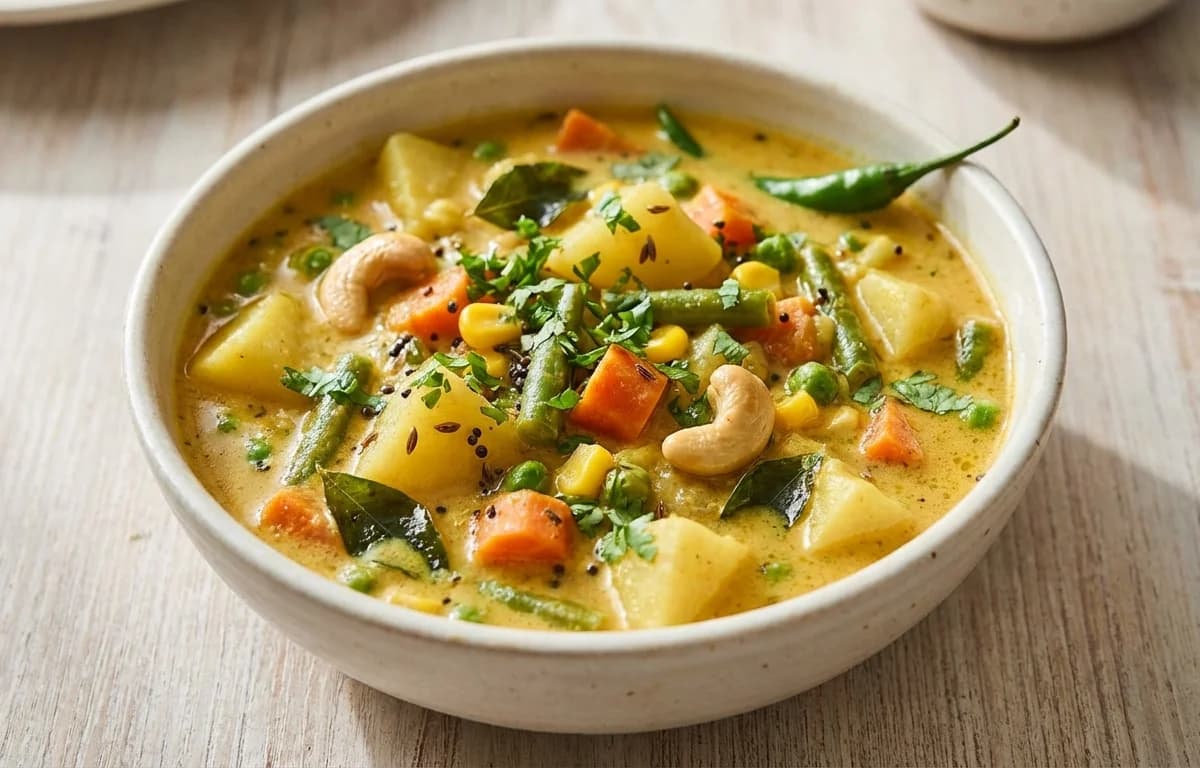
A creamy and mild Goan mixed vegetable curry made with coconut milk. This comforting stew features a medley of seasonal vegetables and is perfect with steamed rice or sannas.
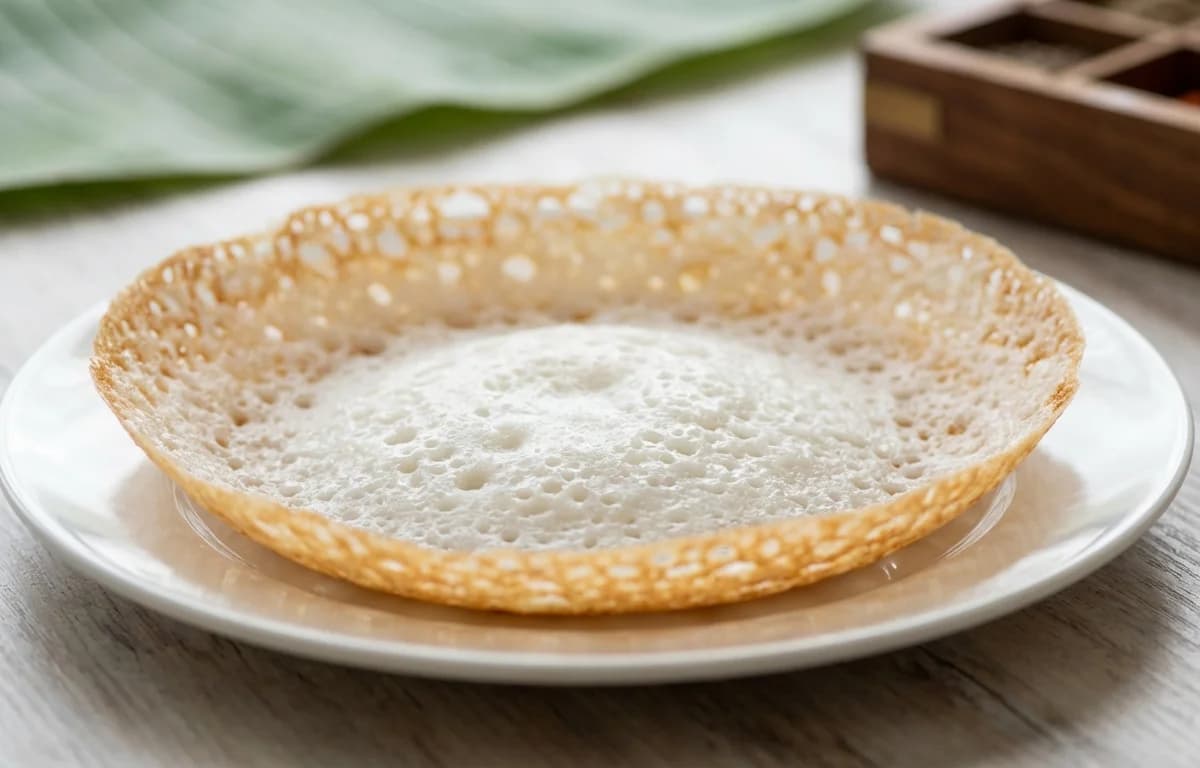
Soft, lacy pancakes from Kerala with crispy edges and a spongy center. This fermented rice and coconut classic is naturally vegan and gluten-free, pairing wonderfully with vegetable stew or egg curry.
Prep20 min
Cook25 min
Soak360 min
Ferment600 min
About Ukda Sheet, Valval and Kerala Appam
Aromatic Ukda Sheet with creamy, fiber-rich Valval and soft Appam - a soul-satisfying, gut-friendly feast!
This konkani dish is perfect for lunch. With 935.78 calories and 17.15g of protein per serving, it's a nutritious choice for your meal plan.
Other Cuisines to Explore
Discover authentic meals from cuisines around the world.
2 tbsp Coriander Leaves (Freshly chopped, for garnish)
Instructions
1
Prepare the Rice Flour Slurry
In a medium-sized mixing bowl, combine the rice flour, 2.5 cups of water, and salt.
Whisk thoroughly until you have a smooth, lump-free, thin batter. Set this aside.
2
Prepare the Tempering (Tadka)
Heat ghee in a heavy-bottomed pan or kadai over medium heat.
Once the ghee is hot, add the mustard seeds and allow them to splutter completely, which should take about 30 seconds.
Add the cumin seeds and let them sizzle for a few seconds.
Add the hing, finely chopped green chilies, and curry leaves. Sauté for another 30-40 seconds until the curry leaves turn crisp and fragrant.
3
Cook the Ukda Sheet
Reduce the heat to low. Give the rice flour slurry a quick stir again, as the flour tends to settle at the bottom.
While stirring the tempering in the pan with one hand, slowly and steadily pour the slurry with the other. This continuous stirring is crucial to prevent lumps.
Keep stirring constantly for 2-3 minutes. The mixture will begin to thicken rapidly and turn from a liquid to a soft, porridge-like consistency.
Once thickened, cover the pan with a lid and let it cook on the lowest possible heat for 5-7 minutes. This steaming process cooks the rice flour completely.
The Ukda Sheet is cooked when it becomes non-sticky, glossy, and starts to leave the sides of the pan.
4
Garnish and Serve
Turn off the heat. Fluff the cooked mixture gently with a spatula.
Garnish with freshly grated coconut and chopped coriander leaves.
Serve immediately while hot. It can be enjoyed on its own or with a side of pickle or chutney.
Serving size: 1 serving
330cal
6gprotein
26gcarbs
25gfat
Ingredients
12 pieces Cashew Nuts (Whole, unsalted)
0.25 cup Warm Water (For soaking and grinding cashews)
2 tbsp Coconut Oil
1 tsp Mustard Seeds
1 tsp Cumin Seeds
2 pieces Green Chillies (Slit lengthwise)
10 leaves Curry Leaves
150 g Potato (Approx. 1 medium, peeled and cubed)
100 g Carrot (Approx. 1 medium, peeled and cubed)
1 cup Thin Coconut Milk (Second extract or diluted canned coconut milk)
0.5 cup Water (For cooking vegetables)
100 g French Beans (Trimmed and chopped into 1-inch pieces)
0.5 cup Sweet Corn Kernels (Fresh or frozen)
0.5 cup Green Peas (Frozen)
1 tsp Salt (Adjust to taste)
1 tsp Jaggery (Grated, or use sugar)
1 cup Thick Coconut Milk (First extract or full-fat canned coconut milk)
2 tbsp Coriander Leaves (Freshly chopped, for garnish)
Instructions
1
Prepare the cashew paste. Soak the cashew nuts in 1/4 cup of warm water for 15 minutes. After soaking, transfer the cashews along with the water to a blender and grind to a very smooth, creamy paste. Set aside.
2
Make the tempering. Heat coconut oil in a medium-sized pot or kadai over medium heat. Add the mustard seeds and allow them to splutter completely, which takes about 30 seconds. Add the cumin seeds and let them sizzle for another 20 seconds. Finally, add the slit green chillies and curry leaves, and sauté for 30 seconds until fragrant.
3
Cook the hard vegetables. Add the cubed potatoes and carrots to the pot. Sauté for 2 minutes. Pour in the thin coconut milk and 1/2 cup of water. Bring the mixture to a boil, then reduce the heat to a simmer, cover the pot, and cook for 8-10 minutes until the potatoes are about halfway tender.
4
Add the remaining vegetables. Add the chopped french beans, sweet corn, and green peas to the pot. Stir well, cover again, and continue to cook for another 5-7 minutes until all the vegetables are tender but still retain a slight bite.
5
Thicken and season the curry. Stir in the prepared cashew paste, salt, and grated jaggery. Mix everything gently and let it simmer for 2-3 minutes, allowing the gravy to thicken slightly.
6
Finish with thick coconut milk. Reduce the heat to the lowest setting. Pour in the thick coconut milk and stir gently to combine. Heat the curry through for 2-3 minutes. It's crucial not to let it come to a rolling boil, as this can cause the coconut milk to curdle.
1.5 cup Raw Rice (Pachari or any short-grain variety works best)
2 tbsp Urad Dal
0.25 cup Cooked Rice (Leftover plain white rice is ideal for softness)
1 cup Grated Coconut (Fresh or frozen (thawed))
2 tsp Sugar (Helps with fermentation and browning)
0.25 tsp Instant Yeast
1 tsp Salt (Adjust to taste)
1.5 cup Water (For grinding, add more if needed)
1 tbsp Vegetable Oil (For greasing the pan)
Instructions
1
Soak Rice and Dal
Rinse the raw rice and urad dal together under cool running water until the water runs clear.
Place them in a large bowl and cover with at least 3 inches of fresh water.
Let them soak for 5 to 6 hours.
2
Grind the Batter
Drain the soaking water completely from the rice and dal.
Transfer the soaked grains to a high-speed blender.
Add the grated coconut, cooked rice, and 1 cup of water.
Blend on high speed for 3-4 minutes, scraping down the sides occasionally, until you have a completely smooth, fine batter. There should be no grit when you rub it between your fingers.
Add the remaining 1/2 cup of water, or more as needed, to achieve a smooth, flowing consistency, slightly thinner than pancake batter.
3
Ferment the Batter
Pour the batter into a large, non-reactive bowl (ensure it's only half-full to allow room for rising).
Garnish and serve. Turn off the heat, garnish with freshly chopped coriander leaves. Serve the Valval hot with steamed rice, sannas (Goan steamed rice cakes), or chapatis.
Stir in the sugar, salt, and instant yeast until well combined.
Cover the bowl with a lid or plastic wrap and place it in a warm, draft-free spot for 8 to 12 hours, or overnight.
The batter is ready when it has doubled in volume, is light and airy, and has a pleasant, slightly sour fermented aroma.
4
Cook the Appams
After fermentation, gently stir the batter once or twice. Do not overmix, as this will deflate the air bubbles that make the appam spongy.
Heat an appam pan (appachatti) over medium heat. Lightly grease it with a few drops of oil using a paper towel.
Pour one ladleful (about 1/3 cup) of batter into the center of the hot pan.
Immediately lift the pan off the heat and, holding both handles, gently swirl it in a circular motion to spread the batter thinly along the sides, leaving a thicker, spongy center.
Place the pan back on the stove, reduce the heat to low-medium, cover with a lid, and cook for 2-3 minutes.
The appam is done when the center is cooked through and full of tiny holes, and the edges are golden brown and crispy. Do not flip the appam.
Carefully remove the appam from the pan using a spatula.
5
Serve
Repeat the process with the remaining batter, greasing the pan lightly between appams if necessary.
Serve the hot, fresh appams immediately with your favorite curry, such as Kerala Vegetable Stew (Ishtu) or Egg Curry.