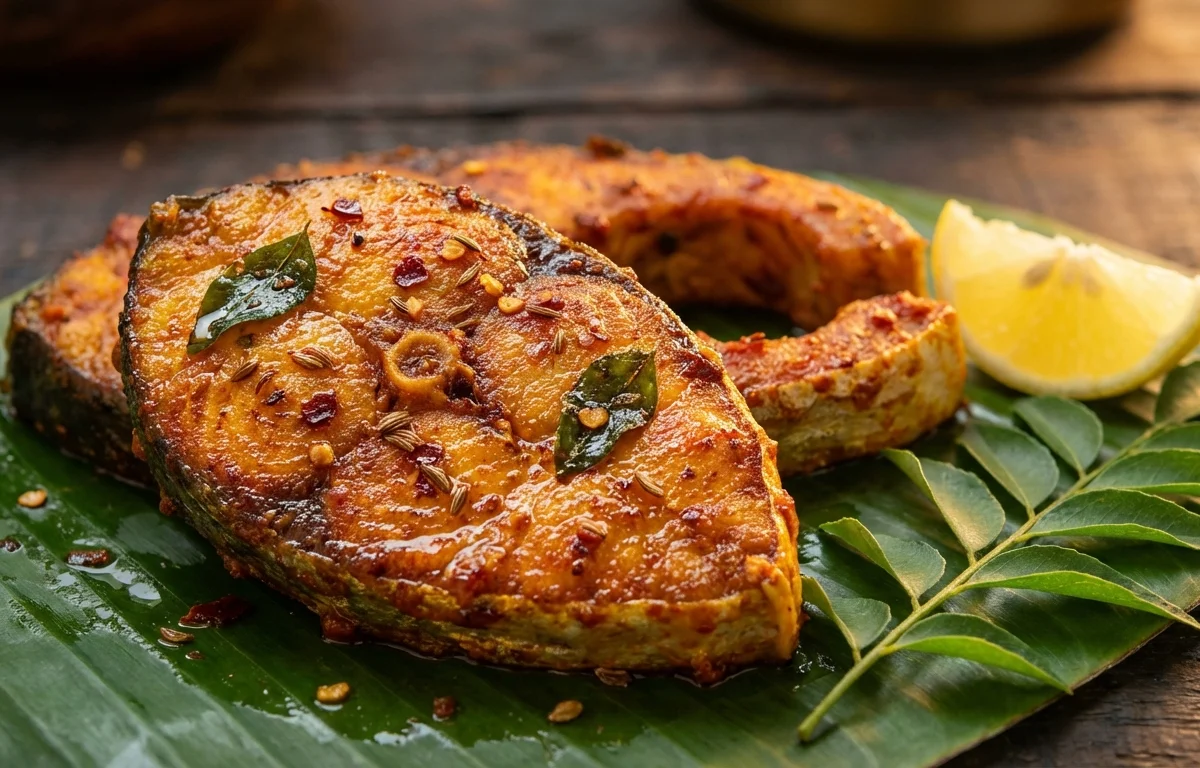
Anjal Masala Fry
Thick, succulent slices of king fish coated in a fiery, tangy masala paste and pan-fried until the edges turn perfectly crisp. A beloved coastal Karnataka classic that brings the taste of the sea straight to your plate, best enjoyed with a squeeze of lime and simple boiled rice.
For 4 servings
- prep · ~15 min
Clean and marinate the fish.
1.Pat the fish slices completely dry with a kitchen towel.2.In a bowl, mix red chili powder, turmeric, ginger-garlic paste, lemon juice, rice flour, and salt into a thick paste.3.Apply the masala paste evenly over both sides of each fish slice and let them rest for 15 minutes.TIPPatting the fish dry ensures the masala sticks and you get a crisp crust. - fry · ~10 min
Pan-fry the marinated fish.
1.Heat coconut oil in a cast iron tawa or heavy frying pan over medium heat.2.Once the oil is shimmering, gently place the marinated fish slices in the pan without overcrowding.3.Fry for 4-5 minutes until the underside is deep red and crisp, then carefully flip using a flat spatula.4.Add curry leaves to the hot oil around the fish and fry the other side for another 4-5 minutes until cooked through and crisp.TIPDon't move the fish for the first 4 minutes — it needs uninterrupted contact to form a crust. - serve
Serve the Anjal Masala Fry immediately.
Transfer the fried fish to a serving plate. Garnish with fresh onion rings and lemon wedges. Serve hot with steamed rice or as a standalone starter.
What to keep in mind.
6 tips from the recipe — small details that make a real difference to the final dish.
- 1Use a cast iron tawa for even heat and a superior crust on the fish.
- 2Resist the urge to flip the fish early; let it sear undisturbed for a crisp crust.
- 3If the fish is very thick, cover the pan for the last 2 minutes to ensure the center cooks through.
- 4Fry the curry leaves in the hot oil until crisp—they add a fragrant, nutty flavor to the dish.
- 5Pat fish slices bone-dry before marinating; moisture is the enemy of a crispy coating.
- 6Leftover Anjal Fry can be stored in the fridge for a day; reheat in a dry pan to restore crispness.
Adapt it for your goals.
Air-Fryer Anjal Fry
Brush the marinated fish lightly with oil and air-fry at 200°C for 12–14 minutes, flipping halfway. This reduces oil use while still delivering a crispy exterior.
Mangalorean Style Rawa FryMangalorean-Style Rawa Fry
Replace rice flour with fine semolina (rawa) for an extra-crunchy, golden crust often preferred in Mangalorean fish fry recipes.
Why this is on our healthy list.
Rich in Omega-3 Fatty Acids
King mackerel is packed with omega-3s, which support heart health, reduce inflammation, and promote brain function.
Anti-Inflammatory Spices
Turmeric and ginger in the masala provide curcumin and gingerol, natural compounds known to fight inflammation and aid digestion.
Frequently asked questions
Yes, but choose firm, oily fish like seer fish (surmai), pomfret, or salmon to stand up to the bold masala and frying without falling apart.