Assamese Mustard Fish Curry
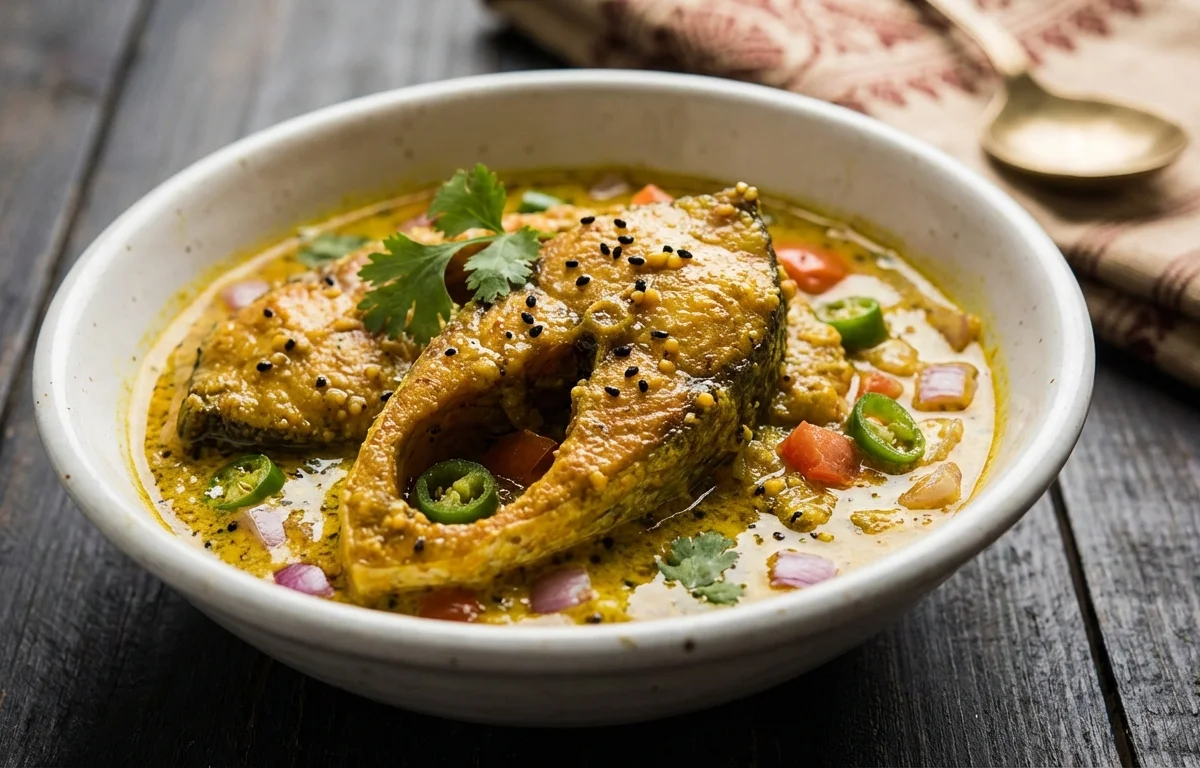
Fresh fish simmered in a sharp mustard gravy with green chilies and a light touch of spices makes this Assamese favorite bright, comforting, and perfect with plain steamed rice.
For 4 servings
- prep · ~15 min
Soak the mustard and season the fish.
1.Soak the mustard seeds in a little warm water for 15 minutes.2.Rub the fish pieces with half of the turmeric powder and half of the salt.3.Set the fish aside while the mustard softens.TIPDo not soak mustard too long or the paste can turn bitter. - mix · ~3 min
Grind the mustard paste.
1.Drain the soaked mustard seeds.2.Grind them with 2 green chilies and a little water to a smooth paste.3.Strain the paste if you want a smoother curry.TIPUse cold or just warm water while grinding to keep the mustard flavor sharp, not bitter. - fry · ~5 min
Lightly fry the fish.
1.Heat mustard oil in a pan until it just begins to smoke lightly, then lower the heat.2.Add the fish pieces in a single layer.3.Fry lightly on both sides until just sealed, about 1 to 2 minutes per side.4.Remove the fish carefully and keep aside.TIPDo not fully cook the fish here; it will finish in the gravy and stay tender. - temper · ~1 min
Make the base for the curry.
1.In the same pan, keep about 1 tbsp oil.2.Add nigella seeds and let them sizzle for a few seconds.3.Add the slit green chilies and the remaining turmeric powder. - simmer · ~4 min
Cook the mustard gravy.
Stir in the mustard paste and add the remaining water. Add the remaining salt and bring the curry to a gentle simmer over medium-low heat for 3 to 4 minutes, stirring often so the mustard does not catch at the bottom.
TIPKeep the heat gentle after adding mustard paste; a hard boil can make it bitter. - simmer · ~6 min
Finish the fish in the curry.
Slide the fried fish pieces into the simmering gravy. Cover and cook for 5 to 6 minutes, until the fish is tender and the mustard sauce smells rounded and cooked through.
- serve
Serve hot with steamed rice.
What to keep in mind.
7 tips from the recipe — small details that make a real difference to the final dish.
- 1Drain the soaked mustard before grinding so the paste stays sharp rather than washed-out.
- 2Grind the mustard as smooth as possible; coarse bits can make the curry taste harsh and gritty.
- 3Heat mustard oil until it just smokes, then reduce the heat to tame its raw pungency before frying the fish.
- 4Lightly fry only until the fish is sealed; over-frying now will make it break and dry out in the gravy.
- 5Keep the mustard gravy at a gentle simmer, not a rolling boil, or the sauce can turn bitter.
- 6Slide the fish into the pan and avoid frequent stirring; swirl the pan gently to keep the pieces intact.
- 7This curry tastes best fresh, but if storing, cool quickly and refrigerate up to 1 day so the mustard flavor stays bright.
Adapt it for your goals.
Low-oil
Skip the fish frying and poach the seasoned fish directly in the mustard gravy for a lighter version with a softer texture.
boneless filletBoneless-fillet
Use firm boneless fish fillets if you want easier serving; reduce the final simmer slightly so the pieces do not overcook.
extra spicyExtra-spicy
Add more green chilies to the paste and tempering for a hotter curry that still keeps the clean Assamese mustard profile.
silky gravySilky-gravy
Strain the ground mustard paste before cooking for a smoother sauce and a more delicate mouthfeel.
Why this is on our healthy list.
Protein-Rich Main Dish
Fish makes this curry satisfying and protein-forward, helping turn a simple rice meal into a balanced main course.
Lightly Spiced and Minimal
With mustard, turmeric, chilies, and nigella as the main flavorings, the dish stays clean-tasting without heavy cream or rich gravies.
Turmeric and Mustard Benefits
Turmeric and mustard seeds add plant compounds along with bold flavor, making the curry both vibrant and ingredient-driven.
Frequently asked questions
Mustard usually turns bitter if it is soaked too long, ground poorly, or boiled hard. Use a short soak, grind smooth, and simmer gently.