
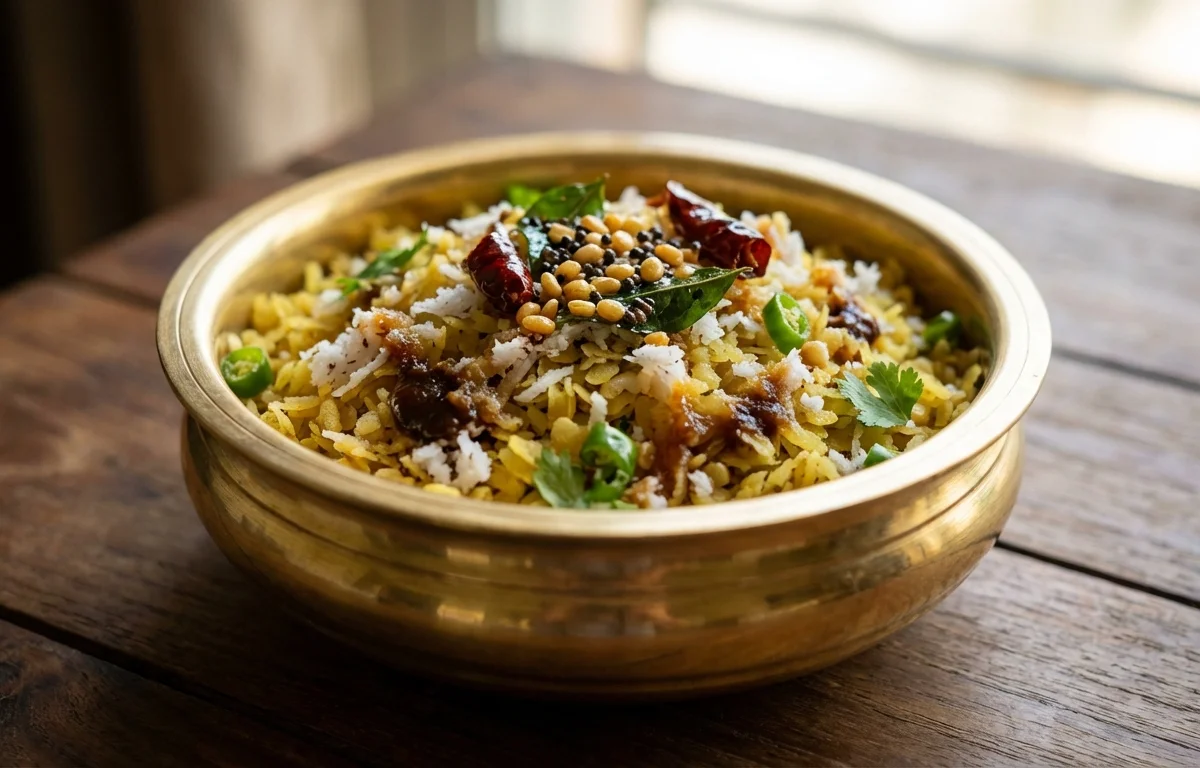
Bajil
A delightful sweet, spicy, and tangy snack from Mangalore made with flattened rice, jaggery, and coconut. This no-cook dish comes together in minutes and is a perfect breakfast or evening treat.
For 4 servings
Prepare the Poha: Place the thin poha in a large colander. Rinse it under cold running water for no more than 10-15 seconds. Immediately shake the colander well to drain all excess water. Set aside to let it soften slightly for 5 minutes. Do not soak the poha.
Create the Masala Base: In a large mixing bowl, combine the grated fresh coconut, jaggery powder, tamarind paste, finely chopped green chilies, turmeric powder, and salt. Use your fingertips to mix and gently squeeze the ingredients together for about 2 minutes. This process helps release moisture from the coconut and melds the sweet, sour, and spicy flavors.
Combine Poha and Masala: Add the drained poha to the coconut-jaggery mixture. Use a light hand or a spatula to gently toss everything together until the poha is evenly coated. Be careful not to mash the poha. Let it rest for another 5 minutes for the flavors to absorb.
Prepare the Tempering (Tadka): Heat coconut oil in a small pan (tadka pan) over medium heat. Once hot, add the mustard seeds and let them splutter completely (about 30 seconds). Add the urad dal and sauté for about 1 minute until it turns a light golden brown. Add the broken dried red chili, curry leaves, and hing. Sauté for another 20-30 seconds until the curry leaves are crisp and fragrant.
Final Mixing and Serving: Immediately pour the hot tempering over the poha mixture. Mix gently until well combined. Garnish with freshly chopped coriander leaves and serve at once for the best texture and flavor.
What to keep in mind.
5 tips from the recipe — small details that make a real difference to the final dish.
- 1Only use thin poha (paper aval) for this recipe. Thick poha will not soften properly and will result in a hard, chewy texture.
- 2The key to perfect bajil is a very quick rinse of the poha. Over-washing or soaking will make it clump together and turn mushy.
- 3Feel free to adjust the amount of jaggery, tamarind, and green chilies to match your personal preference for sweet, sour, and spicy flavors.
- 4Mixing the coconut-jaggery masala with your hands is crucial, as the warmth and pressure help meld the flavors together beautifully.
- 5For the best experience, serve the bajil immediately after adding the hot tempering. This ensures the poha is soft and the tempering adds a delightful warmth and crunch.
Adapt it for your goals.
Add Crunch
Add 2 tablespoons of roasted peanuts or cashews along with the tempering for extra crunch and texture.
Savory VersionSavory Version
To make a purely savory version (known as 'Uppu Kurchida Bajil'), omit the jaggery and increase the amount of green chilies and salt to taste. You can also add finely chopped onions.
GarnishGarnish
Garnish with a squeeze of fresh lime juice just before serving for an extra tangy kick.
Sweetness AlternativeSweetness Alternative
For a different flavor profile, you can substitute jaggery with an equal amount of finely chopped dates.
Why this is on our healthy list.
Provides Instant Energy
Poha is rich in healthy carbohydrates, which are the body's primary source of fuel. This makes Bajil an excellent snack for a quick energy boost.
Good Source of Healthy Fats
The use of fresh coconut and coconut oil provides medium-chain triglycerides (MCTs), which are easily digestible fats that can be used for energy.
Aids Digestion
Poha is light on the stomach and easy to digest. The fiber from coconut also contributes to good digestive health and regular bowel movements.
Rich in Iron
Jaggery is a natural, unrefined sweetener that is a good source of iron, which is essential for preventing anemia and maintaining healthy blood cells.
Frequently asked questions
It is essential to use only thin poha, also known as paper aval or nylon poha. Thick poha is meant for cooked dishes like Kanda Poha and will not soften enough with this no-cook method, resulting in a hard texture.


