
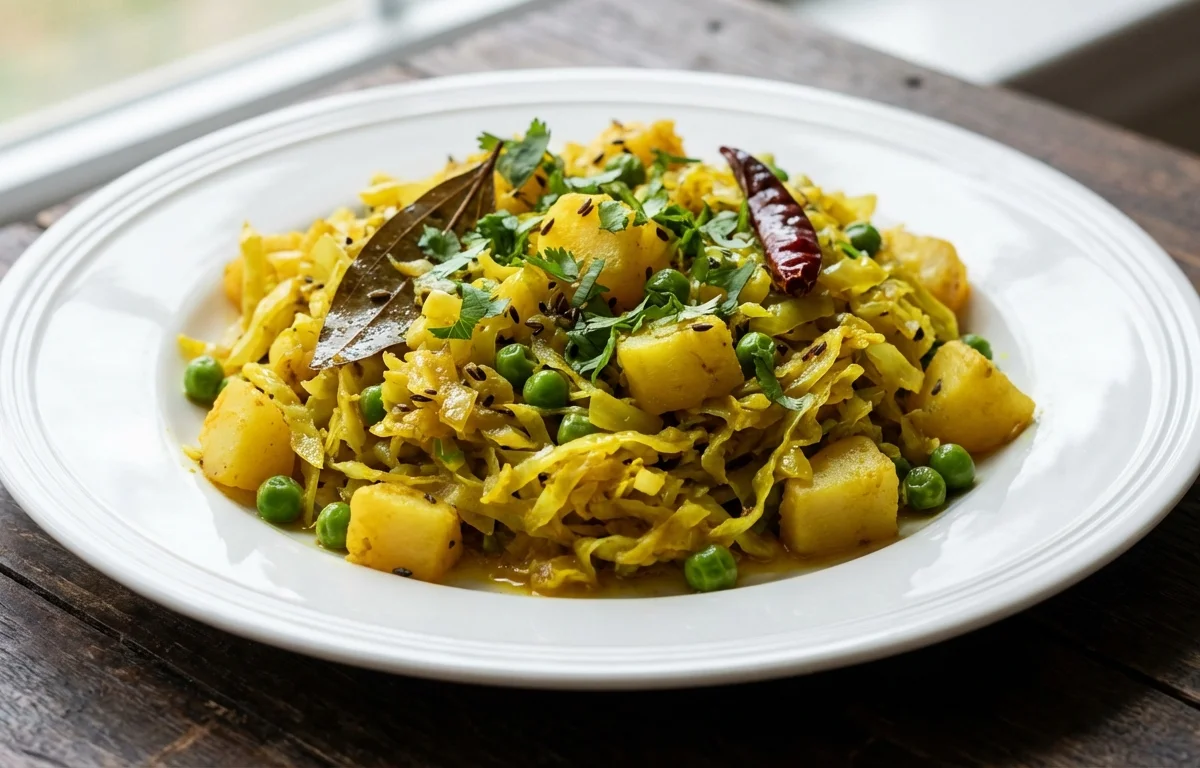
Bandhakobi Bhaji
A light and fragrant Bengali-style dry cabbage stir-fry kissed with the warmth of panch phoron and the earthy aroma of roasted peanuts. Every shred of cabbage turns subtly sweet and tender, with an occasional bite from slit green chilies. This everyday dish comes together in minutes and sits beautifully alongside steamed rice and dal.
For 4 servings
- prep
Prep the cabbage.
Discard the outer leaves and hard core of the cabbage. Slice the head in half and shred thinly into long, fine strips. Rinse well and let the water drain completely so the bhaji doesn't turn mushy.
TIPPat the shredded cabbage dry with a clean kitchen towel — excess water will steam it instead of frying. - temper · ~1 min
Temper the panch phoron.
Heat oil in a kadai over medium heat. Once the oil shimmers, add the panch phoron and let it sizzle until the seeds pop and turn fragrant, about 30 seconds. Add the slit green chilies and stir for another 10 seconds.
TIPDon't step away — panch phoron burns quickly and turns bitter. - saute
Stir-fry the cabbage.
Add the shredded cabbage to the kadai. Sprinkle turmeric powder, salt, and sugar over the top. Give everything a quick toss so the seasoning coats the cabbage evenly. Pour in 2 tablespoons of water.
- simmer · ~10 min
Cover and cook until tender.
Lower the heat, cover the kadai with a lid, and let the cabbage cook in its own steam for 8–10 minutes. Open the lid once halfway through and give it a gentle stir. The cabbage is done when it becomes soft, sweet, and all the moisture has evaporated.
TIPStir gently — you want the shreds to stay intact, not turn into a mash. - mix
Finish with crushed peanuts.
Uncover the kadai and let any remaining moisture dry up for a minute over low heat. Turn off the flame, scatter the crushed roasted peanuts over the bhaji, and fold them in gently.
- serve
Serve warm.
Transfer the bandhakobi bhaji to a serving bowl. It goes beautifully with steamed rice and moong dal, or as part of a larger Bengali lunch spread with roti on the side.
TIPThe flavors settle and the sweetness emerges even more after a few minutes.
What to keep in mind.
6 tips from the recipe — small details that make a real difference to the final dish.
- 1Use a sharp knife or mandoline to shred the cabbage into very thin, even strips for tender results.
- 2Thoroughly drain and pat-dry the shredded cabbage to prevent a watery, mushy bhaji.
- 3Watch the panch phoron closely when tempering; it burns in seconds and turns bitter.
- 4Add the sugar even if the cabbage seems sweet — it balances the heat and enhances the dish's signature Bengali touch.
- 5Do not overcook; the cabbage should be tender but still hold its shape, with no standing liquid.
- 6Crush the roasted peanuts coarsely — fine powder won't provide the pleasant crunch in every bite.
Adapt it for your goals.
Low-oil
Reduce oil to 1 teaspoon and add 1 tablespoon of water when tempering; the cabbage steams without frying, lowering fat while keeping flavor.
high proteinHigh-protein
Add 1/4 cup of steamed chickpeas along with the peanuts at the end for a more filling, protein-rich version.
jainJain
Replace onion and garlic (none in base) is fine; simply omit the peanuts and use a pinch of asafoetida in the tempering for a Jain-friendly version.
Why this is on our healthy list.
Rich in Fiber
Cabbage is a great source of dietary fiber, which aids digestion and promotes gut health.
Good Source of Vitamin C
Cabbage provides a substantial amount of vitamin C, supporting immune function and skin health.
Frequently asked questions
Yes, but red cabbage is firmer and slightly more bitter; increase cooking time by 2–3 minutes and add an extra pinch of sugar to balance.



-curry.webp)
.webp)