
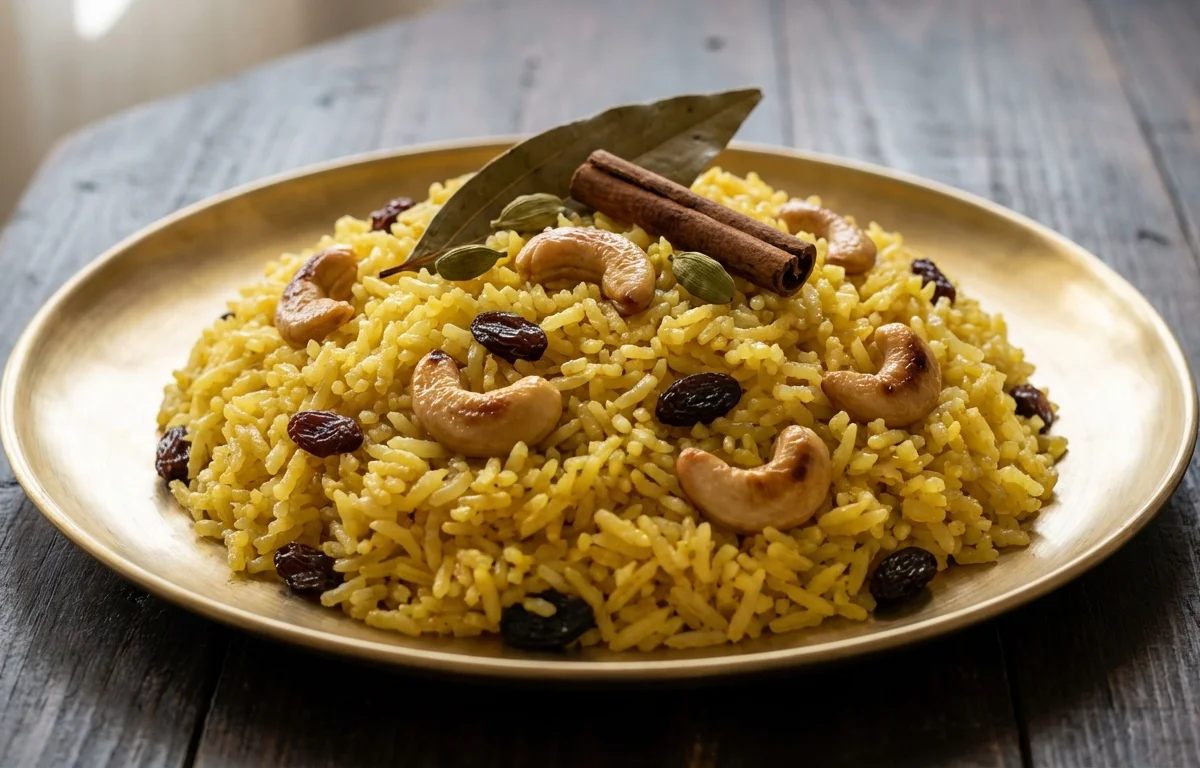
Basanti Pulao
Fragrant Bengali sweet pulao with ghee, gobindobhog or basmati rice, whole spices, saffron-tinted milk, and a gentle touch of sugar. It cooks up fluffy, golden, and festive, pairing beautifully with rich curries or a simple paneer dish.
For 4 servings
- prep · ~20 min
Soak the rice and saffron.
1.Wash the gobindobhog rice gently until the water runs mostly clear.2.Soak the rice in fresh water for 20 minutes, then drain well.3.Soak the saffron in warm milk and set it aside. - saute · ~4 min
Fry the nuts and whole spices in ghee.
1.Heat ghee in a heavy pan over medium heat.2.Add the cashews and raisins and cook until the cashews turn light golden and the raisins puff up.3.Remove them to a plate, leaving the ghee in the pan.4.Add bay leaf, green cardamom, cloves, and cinnamon and cook for 20 to 30 seconds until fragrant.TIPKeep the heat moderate so the raisins puff without burning and the spices release flavor without turning bitter. - saute · ~3 min
Coat the rice with ghee and color.
Add the drained rice to the pan and stir very gently for 2 to 3 minutes so every grain is coated with ghee. Sprinkle in the turmeric powder and mix lightly without breaking the grains.
- boil · ~3 min
Add water, sugar, and salt.
Pour in the hot water, then add sugar and salt. Stir once gently, bring the liquid to a boil, and let it bubble for 1 to 2 minutes.
- steam · ~15 min
Cover and cook the pulao.
1.Lower the heat to very low once most of the surface water starts reducing.2.Pour the saffron milk over the rice.3.Scatter the fried cashews and raisins on top.4.Cover tightly and cook for 12 to 15 minutes until the rice is tender and the liquid is absorbed.TIPDo not stir after adding the liquid, or the delicate rice may turn sticky. - rest · ~10 min
Let the pulao rest off the heat.
Turn off the heat and keep the pan covered for 10 minutes so the grains finish steaming and firm up.
- serve
Fluff gently and serve warm.
What to keep in mind.
7 tips from the recipe — small details that make a real difference to the final dish.
- 1Drain the soaked gobindobhog rice very well before sautéing so the grains coat in ghee instead of steaming.
- 2Fry cashews only to light golden; they darken further after you remove them from the hot ghee.
- 3Use a heavy-bottomed pan with a tight lid so the sweetened rice cooks evenly without catching at the bottom.
- 4Once the hot water goes in, stir just once; repeated stirring can break the short grains and make the pulao sticky.
- 5Pour the saffron milk over the top at the low-heat stage rather than mixing hard, so the rice keeps distinct golden streaks.
- 6Resting the pulao covered for 10 minutes is key; the grains firm up and fluff much better after the carryover steam settles.
- 7Leftovers reheat best with a teaspoon of water or milk sprinkled on top, covered, so the rice softens without drying out.
Adapt it for your goals.
Low-sugar
Reduce the sugar for a less sweet pulao that pairs especially well with rich kosha mangsho or spicy paneer dishes.
basmatiBasmati
Use basmati if gobindobhog is unavailable for a longer-grained, fluffier pulao with a slightly different but still fragrant profile.
veganVegan
Swap ghee for a neutral oil or vegan butter and use warm plant milk for the saffron soak to keep the festive flavor dairy-free.
richer festiveRicher-festive
Add a few more fried nuts and a pinch more saffron for a more luxurious version suitable for celebratory meals.
Why this is on our healthy list.
Gentle energy from rice
The rice provides an easy, comforting carbohydrate base, making this a satisfying side for festive meals.
Nuts and dried fruit add variety
Cashews and raisins contribute some healthy fats, texture, and natural sweetness beyond the added sugar.
Spice-based aroma with less heaviness
Whole cardamom, cloves, cinnamon, bay leaf, saffron, and turmeric build deep flavor without needing heavy sauces.
Frequently asked questions
Yes. Basmati works well, but the texture will be less soft and traditional than gobindobhog, so watch the water and cooking time carefully.



-curry.webp)
.webp)