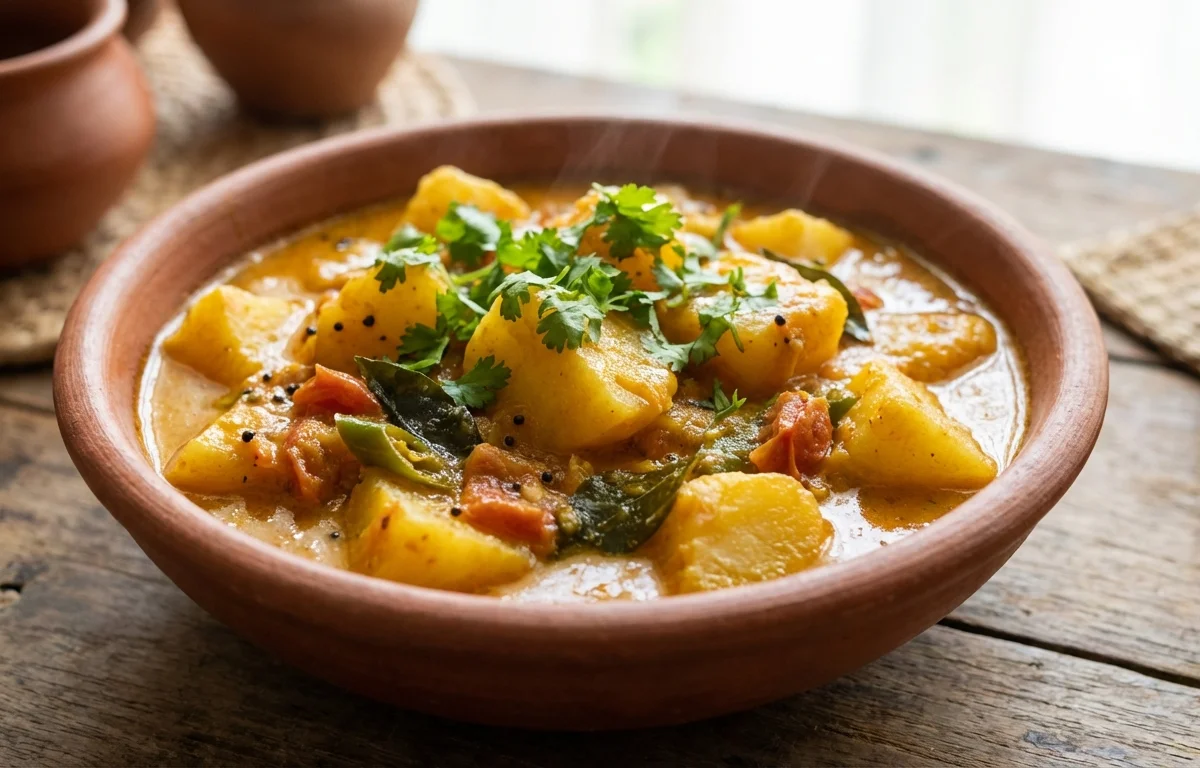
Batate Vagu
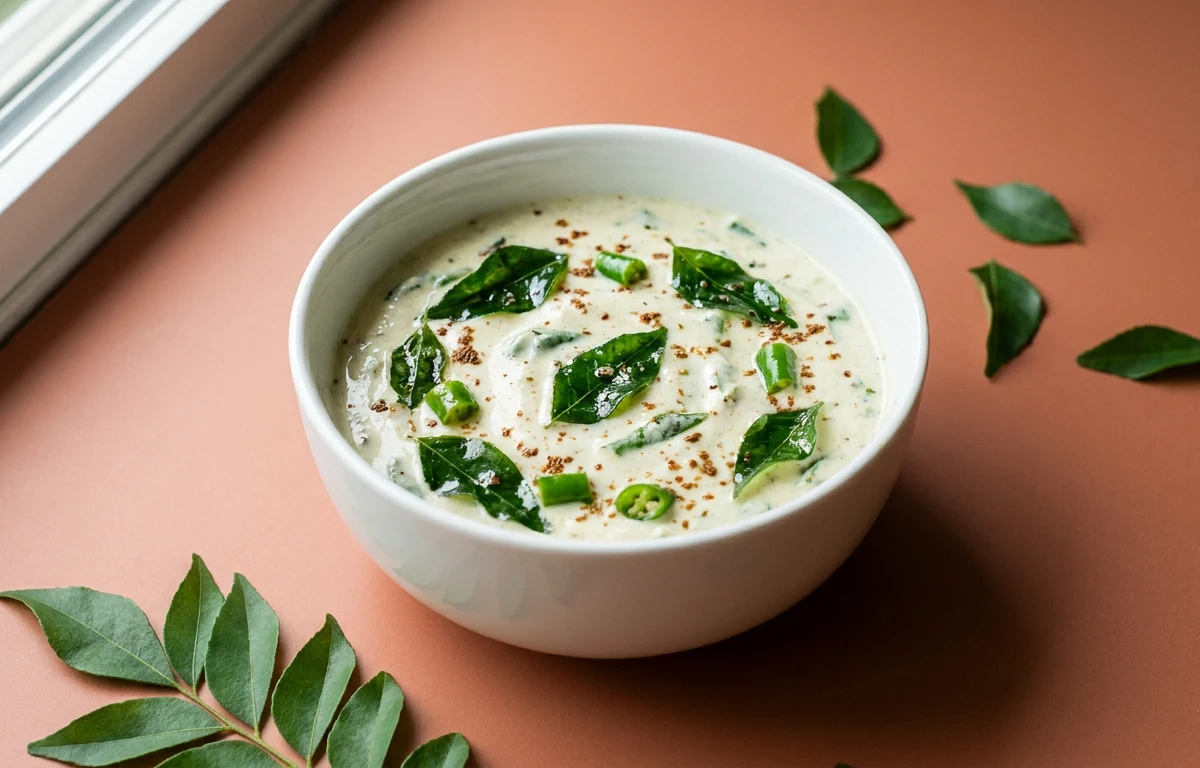
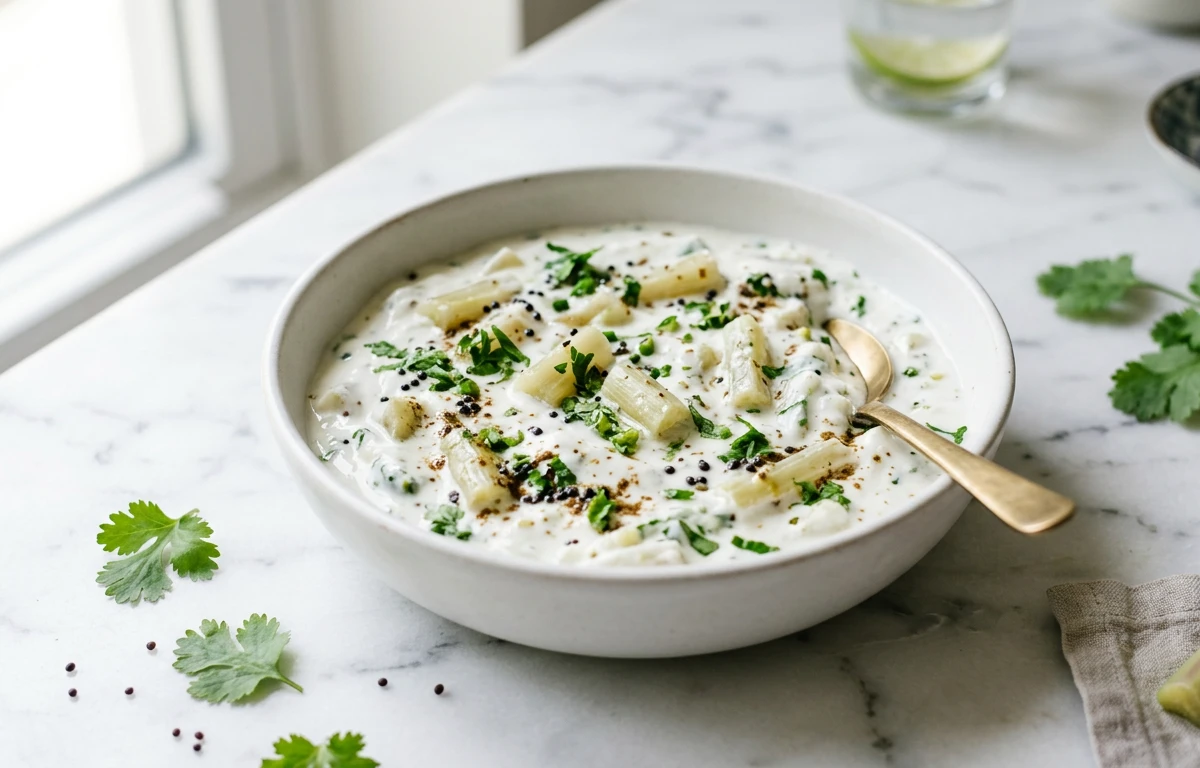
A soulful Konkani-style potato curry with a nutty coconut base, brightened with tamarind and finished with a fragrant tempering of mustard seeds and curry leaves. This GSB kitchen staple is mildly spiced, slightly tangy, and comes together in under 30 minutes—perfect with rice or dosa.
For 4 servings
- boil · ~15 min
Boil the potatoes until tender.
1.Add cubed potatoes to a pot or pressure cooker with 3 cups water.2.Boil or pressure cook for 2 whistles until fork-tender.3.Drain the water and set the potatoes aside.TIPDon't overcook the potatoes — they should hold their shape when mixed into the gravy. - mix · ~3 min
Make the coconut-tamarind paste.
1.In a mixer grinder, add grated coconut and tamarind paste.2.Add ½ cup water and grind to a smooth, fine paste.3.Set the paste aside until the tempering is ready.TIPGrind the coconut really fine for a creamy gravy texture. A coarse paste won't blend well. - temper · ~3 min
Make the tempering.
1.Heat coconut oil in a deep pan over medium heat.2.Add mustard seeds and let them splutter (30 sec).3.Add urad dal and sauté until golden (20 sec).4.Add dried red chilies and curry leaves, fry until fragrant (15 sec).5.Add slit green chilies and sauté for 10 seconds.TIPUse medium heat — high heat burns the mustard seeds and urad dal before they pop. - simmer · ~8 min
Cook the coconut gravy.
1.Lower the heat and pour in the ground coconut-tamarind paste.2.Add salt and ½ cup water. Stir well to combine.3.Bring the gravy to a gentle simmer and cook for 5-7 minutes until the raw coconut smell disappears.4.Stir occasionally to prevent sticking. The gravy will thicken slightly.TIPNever let the coconut gravy boil vigorously — a gentle simmer keeps the flavors intact and prevents splitting. - mix · ~5 min
Add the potatoes and finish cooking.
1.Gently fold the boiled potato cubes into the simmering gravy.2.Let the curry simmer for another 4-5 minutes so the potatoes absorb the flavors.3.Adjust water if the gravy is too thick — it should coat the potatoes nicely.TIPBe gentle when mixing the potatoes so they don't break apart and turn mushy. - serve · ~2 min
Rest briefly and serve hot.
Turn off the heat and let the curry rest for 2 minutes. The flavors settle and deepen on standing. Serve hot with steamed rice or dosa.
What to keep in mind.
7 tips from the recipe — small details that make a real difference to the final dish.
- 1Use fresh grated coconut for the best creamy texture and authentic Konkani flavor.
- 2Boil potatoes until just fork-tender so they hold their shape when folded into the gravy.
- 3Grind the coconut-tamarind paste very fine for a silky, lump-free gravy base.
- 4Keep the heat at medium for tempering to avoid burning the mustard seeds and urad dal.
- 5Never let the coconut gravy boil vigorously — a gentle simmer prevents splitting and retains aroma.
- 6Fold the potatoes gently into the gravy to avoid breaking them into mush.
- 7Let the curry rest for 2 minutes off heat before serving — the flavors deepen and meld together.
Adapt it for your goals.
Low-oil
Reduce coconut oil to 1 teaspoon and dry-roast the urad dal before adding to the tempering for a lighter dish without compromising the authentic flavor.
high proteinHigh-protein
Add 1 cup of cooked chana dal (split chickpeas) along with the potatoes for extra protein and a heartier texture.
jainJain
Omit the urad dal and use a pinch of asafoetida (hing) in the tempering instead — this keeps the dish Jain-friendly while preserving the savory depth.
veganVegan
This recipe is naturally vegan, but ensure the tamarind paste contains no additives — swap tamarind with raw mango pulp for a different tangy twist.
spicierSpicier
Add 1 teaspoon of red chili powder or crush Kashmiri dried red chilies into the tempering for a bolder heat without overwhelming the coconut base.
Why this is on our healthy list.
Rich in Fiber from Potatoes
Potatoes with their skin provide dietary fiber that supports digestion and satiety. Even without skin, they offer B vitamins and potassium.
Healthy Fats from Coconut
Coconut provides medium-chain triglycerides (MCTs), which are easily metabolized for quick energy and may support metabolic health when consumed in moderation.
Antioxidant Boost from Curry Leaves
Curry leaves are rich in antioxidants like carbazole alkaloids and vitamin C, which help combat oxidative stress.
Digestive Aid from Tamarind
Tamarind is a natural digestif — its tartness stimulates saliva and bile production, aiding in the breakdown of starches and fats.
Frequently asked questions
Yes, thawed frozen grated coconut works well. Grind it with a little warm water to achieve a creamy paste similar to fresh.