
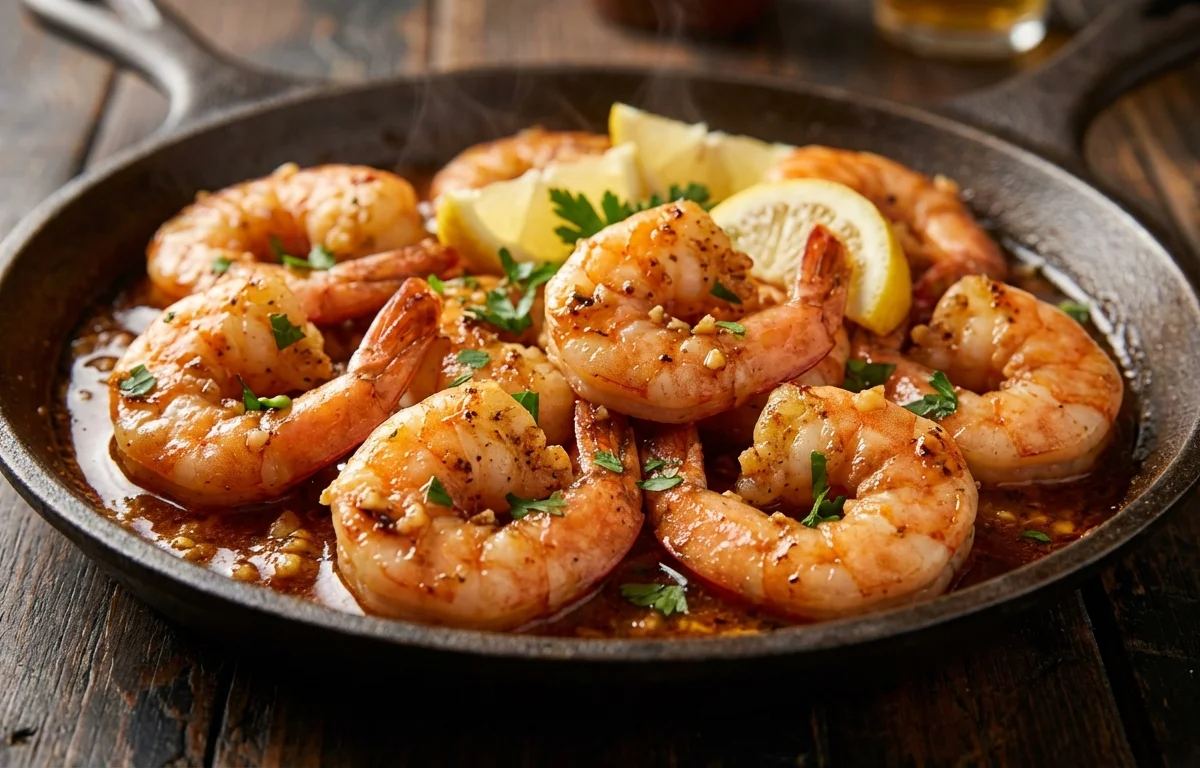
BBQ Shrimp
Plump, juicy shrimp swimming in a buttery, peppery, New Orleans-style sauce. This isn't your average backyard barbecue—these shrimp are cooked on the stovetop in a rich, Worcestershire-spiked butter sauce that begs to be sopped up with crusty French bread.
For 4 servings
- prep
Season the shrimp.
Pat the shrimp dry with paper towels. Toss them with the black pepper, smoked paprika, cayenne, and a pinch of salt until evenly coated.
TIPLeaving the shells on protects the shrimp from overcooking and adds immense flavor to the sauce. - saute · ~2 min
Sauté the garlic and aromatics.
1.Heat the olive oil and 2 tablespoons of butter in a large skillet over medium heat.2.Once the butter melts and foams, add the minced garlic and bay leaves. Cook until fragrant, about 1 minute.3.Stir in the rosemary and cook for another 30 seconds. - saute · ~5 min
Sear the shrimp.
1.Increase the heat to medium-high. Add the seasoned shrimp to the skillet in a single layer.2.Cook for about 2 minutes per side, just until they turn pink and start to curl.3.Do not overcrowd the pan; work in batches if needed to get a good sear.TIPA proper sear on the shells is where the deep, smoky flavor comes from—don't rush this step. - simmer · ~4 min
Build the BBQ butter sauce.
1.Reduce the heat to low. Add the Worcestershire sauce and lemon juice to the skillet.2.Start adding the remaining cold butter, 1 or 2 pieces at a time, swirling the pan constantly to emulsify.3.Once all butter is incorporated, simmer gently for 2-3 minutes until the sauce is slightly thickened and glossy.TIPKeep the heat low when adding the butter. If it gets too hot, the sauce will break and become greasy instead of creamy. - serve
Serve immediately with crusty bread.
Spoon the shrimp and plenty of the buttery sauce into shallow bowls. Garnish with fresh parsley. Serve with thick slices of crusty French bread for dipping and sopping up every last drop of the sauce.
What to keep in mind.
7 tips from the recipe — small details that make a real difference to the final dish.
- 1Leaving the shells on the shrimp protects the delicate meat from overcooking and infuses the sauce with deep seafood flavor.
- 2Pat the shrimp very dry before seasoning to ensure a proper sear instead of steaming in the pan.
- 3Use cold butter added piece by piece off the heat to create a stable emulsion for a silky, creamy sauce.
- 4Work in batches if needed when searing the shrimp — overcrowding drops pan temperature and prevents browning.
- 5For the most aromatic sauce, use freshly ground black pepper and grate it coarse right before cooking.
- 6Serve immediately after finishing the sauce; this dish does not reheat well as the shrimp will toughen and the sauce may break.
- 7Leftover sauce (if any) can be refrigerated for up to 2 days and used as a dipping sauce or tossed with pasta.
Adapt it for your goals.
Low-oil
Reduce the butter to 8 tablespoons and replace 4 tablespoons with unsalted chicken or vegetable stock for a lighter sauce with the same peppery kick.
high proteinHigh-protein
Add 200g of sliced andouille or smoked sausage along with the garlic in step 2 for a heartier, protein-packed meal.
low carb / ketoLow-carb / keto
Serve the shrimp and sauce over steamed broccoli, cauliflower rice, or zucchini noodles instead of French bread to keep it low-carb.
dairy freeDairy-free
Substitute the butter with a high-quality plant-based butter or ghee for a dairy-free version that still emulsifies beautifully.
Why this is on our healthy list.
Rich in Lean Protein
Shrimp provide high-quality, low-fat protein that supports muscle maintenance and repair without excess calories.
Good Source of Selenium
Shrimp are naturally rich in selenium, an antioxidant mineral that supports thyroid function and immune health.
Contains Anti-Inflammatory Spices
Black pepper, cayenne, and paprika contain compounds like piperine and capsaicin that may help reduce inflammation.
Provides Vitamin B12
Shrimp are an excellent natural source of vitamin B12, essential for nerve health and red blood cell formation.
Frequently asked questions
Yes, the shells protect the delicate flesh from overcooking and add tremendous flavor to the sauce. Removing them would result in drier shrimp and a less flavorful sauce.


