
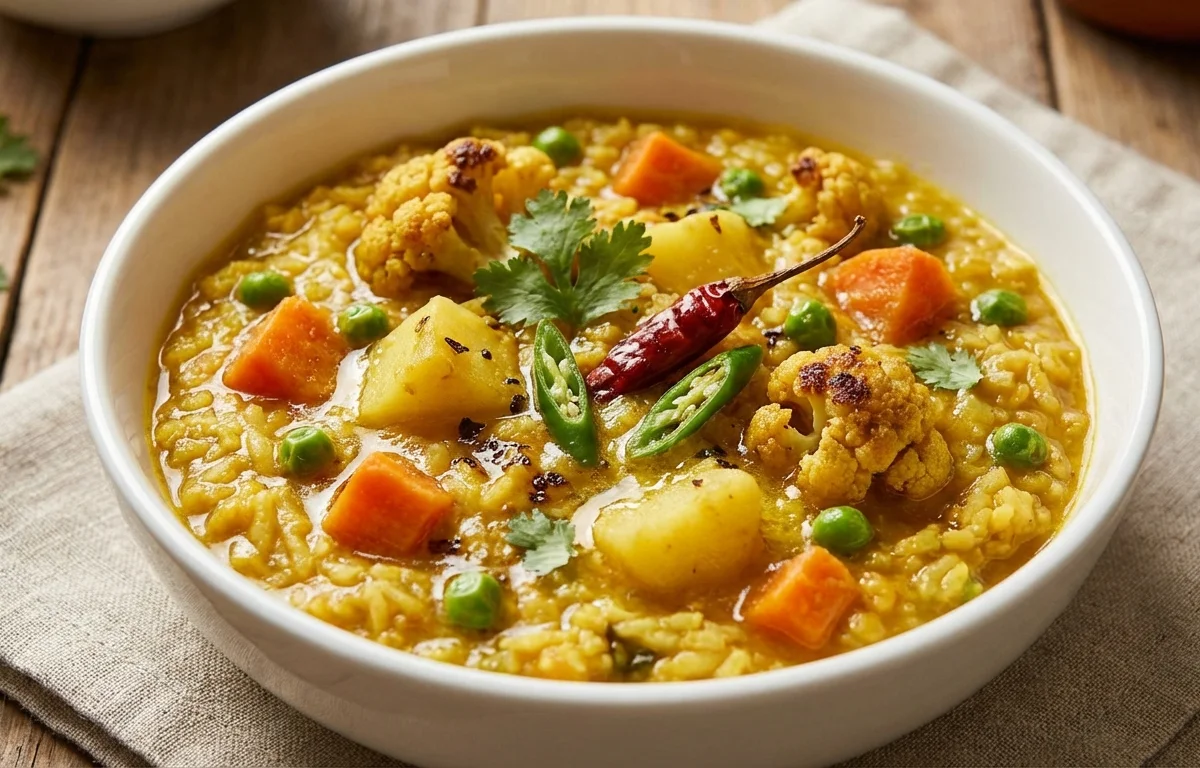
Bengali Sobji Khichuri
A warm, comforting one-pot meal of roasted moong dal and fragrant gobindobhog rice, cooked with a medley of seasonal vegetables in a light, aromatic gravy. This Bengali classic is mildly spiced with whole garam masala, ginger, and a generous splash of ghee, making it the ultimate comfort food for rainy days and festive lunches.
For 4 servings
- prep
Wash and soak the rice.
Wash the gobindobhog rice in running water 2-3 times until the water runs clear. Drain and set aside in a bowl.
- roast · ~4 min
Dry roast the moong dal.
Heat a heavy-bottom pan over low heat. Add the moong dal and dry roast, stirring continuously, until it turns light golden and releases a nutty aroma. This takes about 3-4 minutes. Set aside to cool slightly, then wash and drain.
TIPStay close and stir constantly — moong dal burns quickly and turns bitter if left unattended. - prep
Prepare all the vegetables.
1.Peel the potato and cut into 1-inch cubes.2.Cut the cauliflower into medium florets.3.Peel and dice the carrot into small pieces.4.Slit the green chilies lengthwise. - temper · ~3 min
Make the tempering.
1.Heat oil and 1 tbsp ghee in a pressure cooker over medium heat.2.Add bay leaves, cinnamon stick, green cardamom, and cloves. Sauté for 30 seconds until fragrant.3.Add cumin seeds and let them splutter.4.Add ginger paste and sauté until the raw smell disappears, about 1 minute. - saute · ~3 min
Sauté the vegetables lightly.
1.Add the cubed potatoes, cauliflower florets, and diced carrots to the pressure cooker.2.Sprinkle turmeric powder, cumin powder, and salt.3.Stir to coat the vegetables evenly with the spices and sauté for 2-3 minutes.TIPA light sauté locks in flavor without making the vegetables too soft before pressure cooking. - pressure cook · ~20 min
Pressure cook the khichuri.
1.Add the washed rice, roasted dal, green peas, and slit green chilies to the cooker.2.Pour in 4 cups of hot water and stir everything well.3.Close the pressure cooker lid and cook on medium-high heat.4.Wait for 2 whistles, then lower the flame and cook for another 2 minutes.5.Turn off the heat and let the pressure release naturally.TIPUsing hot water reduces the cooking time and maintains the temperature inside the pressure cooker. - assemble · ~5 min
Finish with ghee and rest.
1.Open the pressure cooker once all pressure has released naturally.2.Drizzle the remaining 1 tablespoon of ghee over the hot khichuri.3.Stir gently to mix without mashing the vegetables and dal completely.4.Cover and let it rest for 5 minutes.TIPResting helps the khichuri set and absorb any remaining moisture for a perfect grainy-but-creamy texture. - garnish
Garnish with fresh coriander and serve hot.
Serve directly from the cooker or transfer to a serving bowl. Garnish generously with chopped coriander leaves. Pairs beautifully with begun bhaja, pickles, or a simple squeeze of lemon.
What to keep in mind.
6 tips from the recipe — small details that make a real difference to the final dish.
- 1Dry roast the moong dal until fragrant but not brown to avoid bitterness.
- 2Use hot water in the pressure cooker to speed up cooking and retain heat.
- 3Let the pressure release naturally for a creamier, well-blended texture.
- 4Rest the khichuri for 5 minutes after cooking to let it absorb excess moisture.
- 5Adjust water quantity based on desired consistency — less water for a thicker khichuri.
- 6Slit the green chilies instead of chopping to infuse heat without overpowering bites.
Adapt it for your goals.
Vegan
Replace ghee with coconut oil or a neutral vegetable oil for a fully plant-based version. The coconut oil adds a subtle sweetness that complements the ginger and cumin.
vegetable swapVegetable swap
Substitute cauliflower and carrots with chopped spinach, zucchini, or pumpkin for seasonal variety. Adjust cooking time if using quick-cooking greens.
spicierSpicier
Increase green chilies to 5-6 and add 1/2 tsp red chili powder along with the turmeric for a more pronounced heat. Great for those who like a fiery kick.
protein boostProtein boost
Add 1/2 cup of paneer cubes or cooked chicken pieces after the tempering step for extra protein. Adjust salt and spices accordingly.
grain freeGrain-free
Replace gobindobhog rice with quinoa or cauliflower rice for a lighter, low-carb option. Quinoa may require a slightly shorter cooking time.
Why this is on our healthy list.
Rich in Plant Protein
Moong dal provides a good source of plant-based protein, making this dish a satisfying and muscle-friendly meal, especially for vegetarians.
High in Fiber
The combination of moong dal and seasonal vegetables like cauliflower, carrot, and green peas contributes dietary fiber that supports digestion and satiety.
Low in Fat with Ghee Moderation
This khichuri uses only a modest amount of ghee and oil, offering a lower-fat alternative to richer Indian dishes while still delivering authentic flavor.
Packed with Micronutrients
Carrots provide beta-carotene, cauliflower supplies vitamin C, and green peas add iron and folate, creating a nutrient-dense one-pot meal.
Frequently asked questions
Mushy khichuri usually comes from too much water or over-cooking. Stick to the 4:1 water-to-rice-and-dal ratio and avoid too many whistles — 2 whistles plus 2 minutes low heat is ideal.



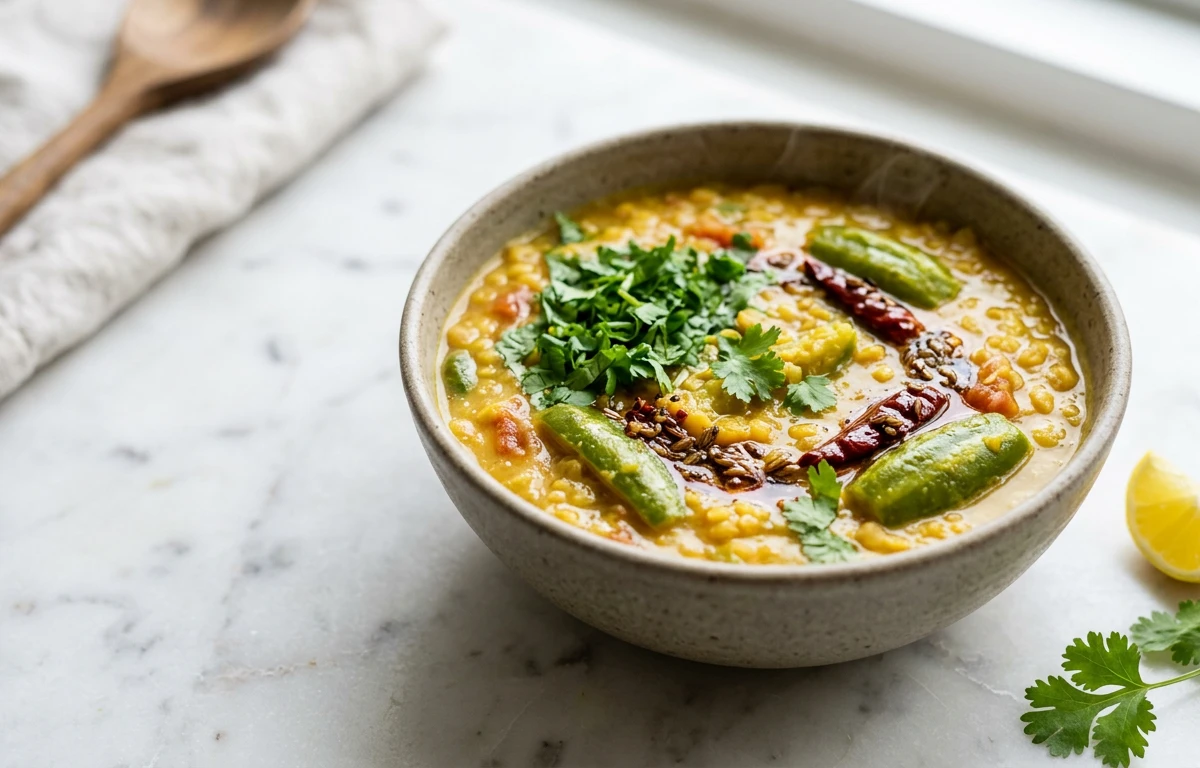
-curry.webp)
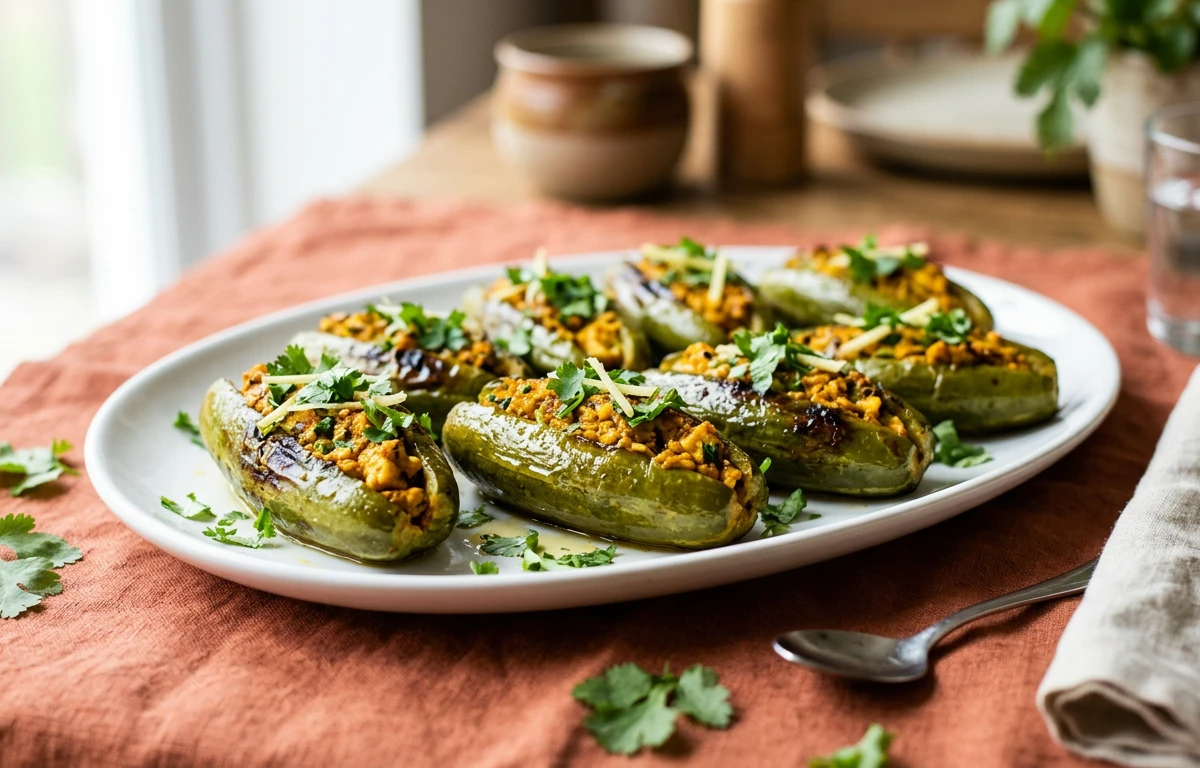
.webp)