
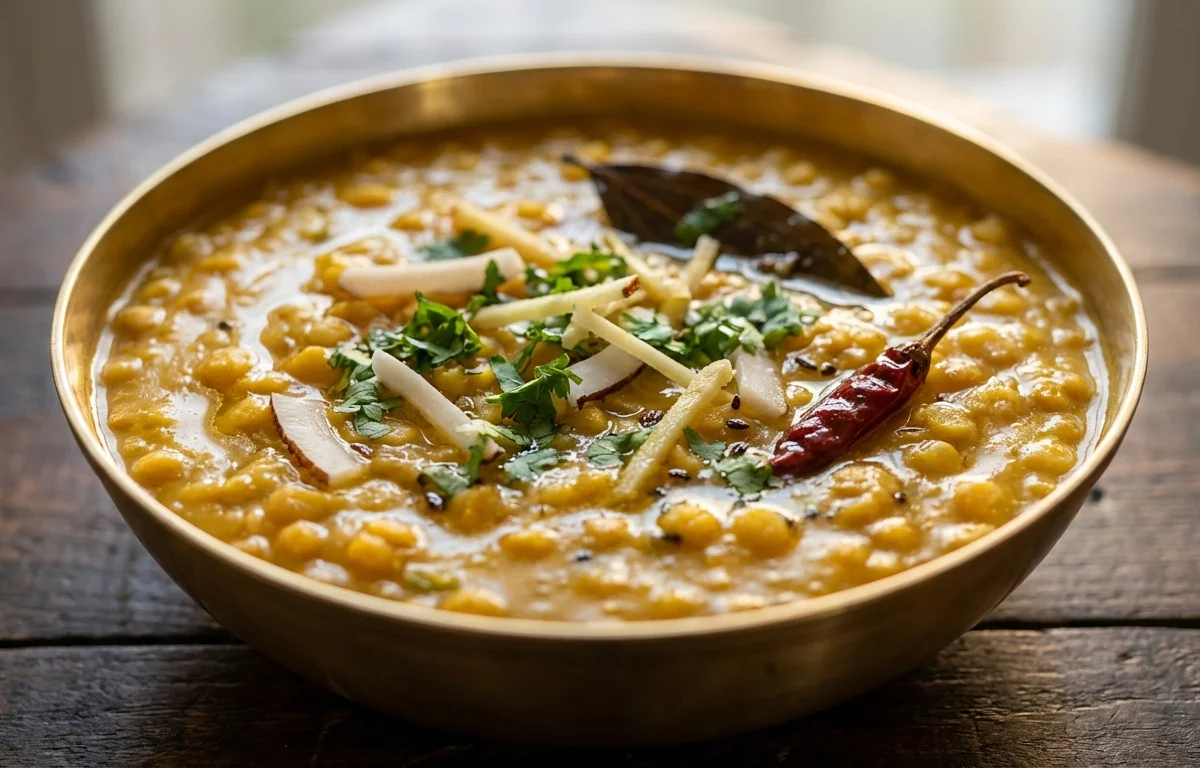
Bootor Dali
A warm, comforting Bengali-style yellow split pea dal with a gentle sweetness from coconut and a nourishing, slightly thick texture. Subtly spiced with bay leaf, ginger, and a fragrant ghee tempering, it's a staple in Bengali homes, perfect spooned over steamed rice for a simple, soulful meal.
For 4 servings
- prep
Rinse and soak the yellow split peas.
Wash the matar dal under cold water until the water runs clear. Soak in fresh water for 30 minutes, then drain.
TIPSoaking softens the dal and speeds up cooking, but skip it if you're short on time and just rinse well. - pressure cook
Pressure cook the dal with turmeric and salt.
Add the drained dal to the pressure cooker with 3 cups of water, turmeric powder, and salt. Stir well. Cook over medium-high heat until the first whistle, then reduce heat to low and cook for 10-12 minutes. Allow the pressure to release naturally.
TIPFor a pan-cooked method, simmer the dal covered for 35-40 minutes until soft, adding more water if needed. - mix
Whisk the dal until smooth.
Once the pressure has released, open the lid and whisk the cooked dal briskly for a minute until it becomes smooth and slightly creamy in texture. Add a splash of water if it seems too thick—it should be pourable but not watery.
TIPWhisking well is the secret to a silky dal texture; a traditional wooden mathani works beautifully if you have one. - temper · ~2 min
Make the ghee tempering.
1.Heat ghee in a small pan over medium heat.2.Add bay leaves and dried red chilies, sauté for 15 seconds until fragrant.3.Add cumin seeds and let them splutter for about 20 seconds.4.Stir in the grated ginger and sauté for 30 more seconds until the raw aroma fades.TIPDon't let the ginger burn — if the pan is too hot, the ghee turns bitter. - simmer · ~5 min
Combine the tempering with the dal and finish.
1.Pour the hot tempering directly over the whisked dal in the cooker.2.Add the sugar and grated coconut.3.Stir well and bring the dal to a gentle simmer over medium-low heat.4.Let it bubble softly for 5 minutes so the flavors meld together.TIPThe sugar balances the gentle heat from the dried red chilies and gives the dal its characteristic Bengali touch. - garnish
Garnish with fresh coriander and serve hot.
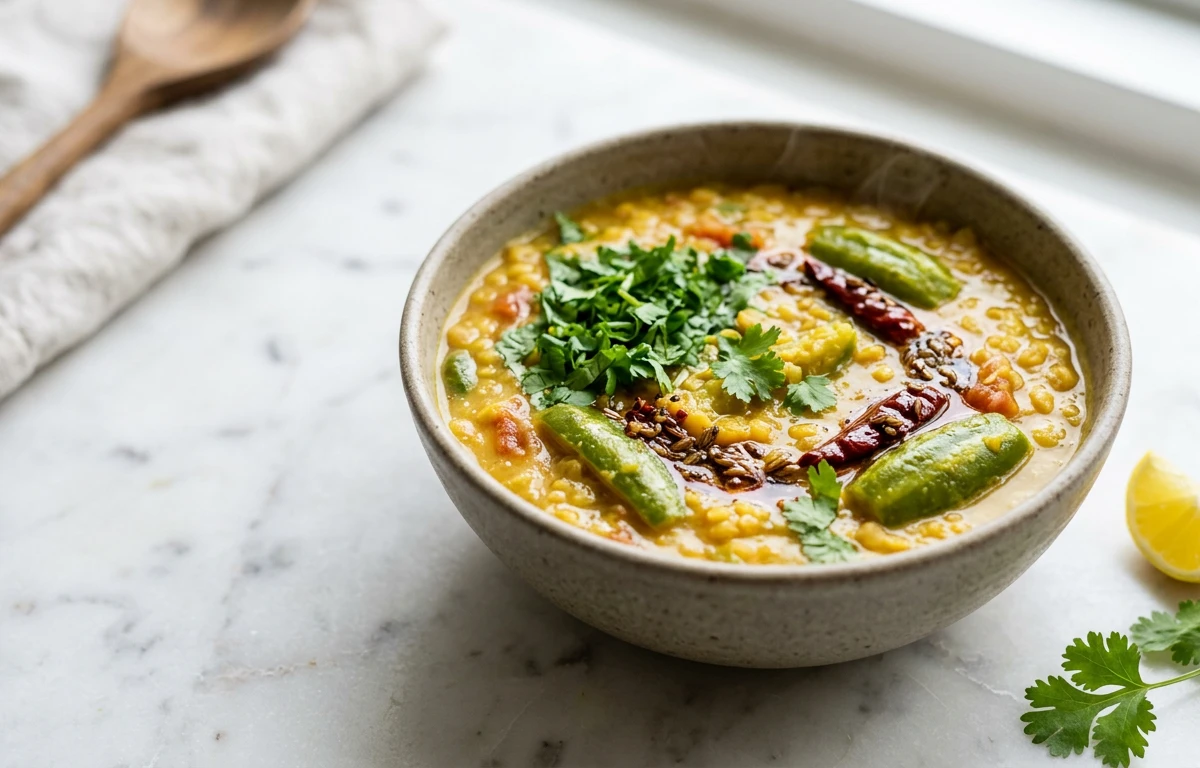
Ladle the dal into serving bowls and scatter the chopped coriander leaves on top. Serve hot with steamed rice and a wedge of lemon on the side.
What to keep in mind.
7 tips from the recipe — small details that make a real difference to the final dish.
- 1Soaking the yellow split peas for 30 minutes ensures even cooking and a creamy texture without turning mushy.
- 2Whisk the dal vigorously after pressure cooking to break down the peas and achieve a silky, homogenous consistency.
- 3Do not skip the sugar — a tiny bit balances the heat from the dried red chilies and enhances the coconut's sweetness.
- 4Temper the ghee on medium heat and add ginger last to prevent it from burning and turning the ghee bitter.
- 5For a thicker, more rustic dal, mash a few dal grains with the back of a spoon instead of whisking fully smooth.
- 6This dal thickens as it cools; add a splash of hot water when reheating to restore its ideal pourable texture.
- 7Make a double batch — Bootor Dali tastes even better the next day as the flavours meld and deepen overnight.
Adapt it for your goals.
Vegan
Replace ghee with coconut oil or a neutral oil for the tempering. Use coconut oil to keep the subtle coconut flavor, making it fully plant-based.
low oilLow-oil
Skip the tempering step entirely. Instead, dry-roast cumin seeds and crushed dried red chili in a small pan, then add them directly to the dal with the ginger. This reduces fat while preserving a hint of spice.
high proteinHigh-protein
Add a cup of boiled moong dal or a handful of paneer cubes along with the coconut. This boosts protein content without overpowering the dal's gentle sweetness.
south indian styleSouth-indian-style
Add a pinch of asafoetida (hing) to the tempering and finish with a squeeze of lemon. This gives the dal a tangy, aromatic profile common in South Indian sambar-like preparations.
Why this is on our healthy list.
Rich in Plant Protein
Yellow split peas are an excellent source of plant-based protein, making this dish a satisfying and nutritious main for vegetarians.
High in Dietary Fiber
The split peas provide a good amount of soluble fiber, which aids digestion and helps maintain steady energy levels.
Source of Essential Minerals
Ingredients like cumin, ginger, and coconut contribute small amounts of iron, magnesium, and zinc, supporting overall wellness.
Low in Saturated Fat
With only two teaspoons of ghee used primarily for flavor, this dal is relatively low in saturated fat compared to many lentil preparations.
Contains Anti-Inflammatory Spices
Turmeric and ginger are traditionally valued for their natural anti-inflammatory properties, adding a wholesome boost to this comforting bowl.
Frequently asked questions
Toor dal (split pigeon peas) works well and yields a similar texture; chana dal (split chickpeas) will be slightly firmer and nuttier, so increase cooking time by 5 minutes.

-curry.webp)
.webp)