
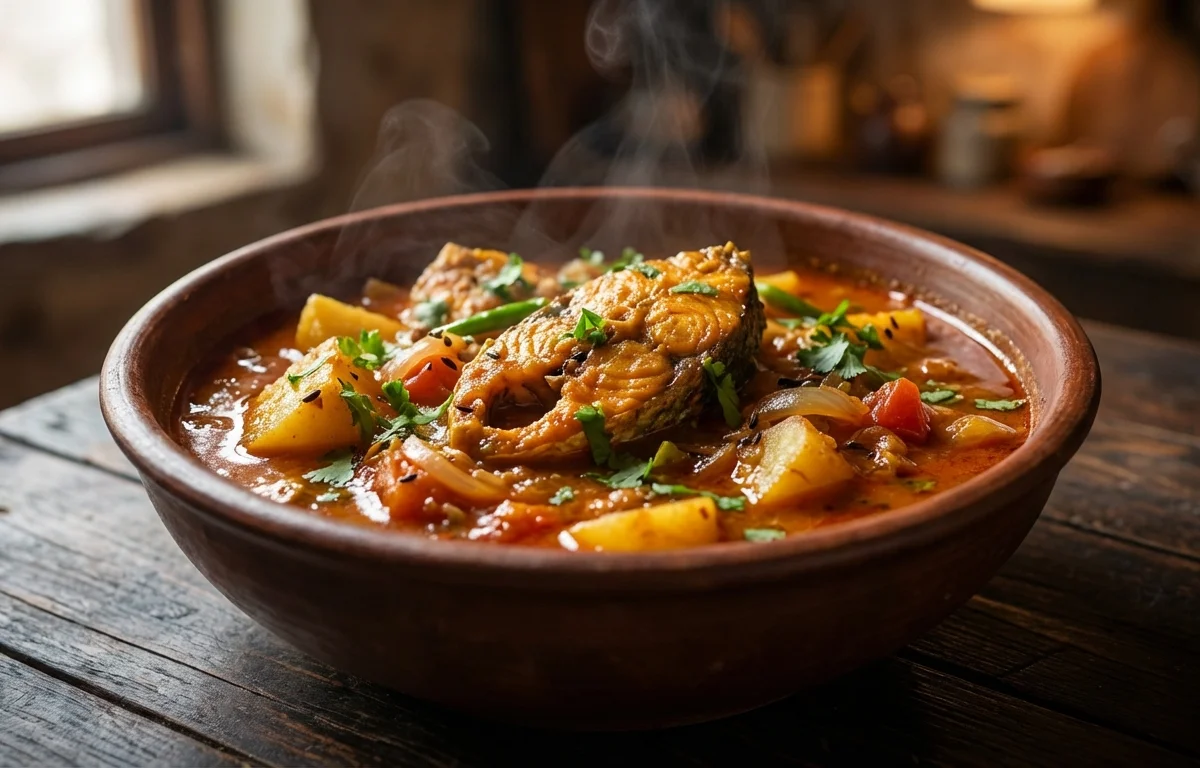
Borali Maasor Anja
A light, tangy fish curry from Assam featuring tender chunks of Borali fish simmered in a simple broth of tomatoes, raw mustard oil, and minimal spices. The sour kick from lemon juice makes it refreshingly different from richer Indian curries. Best enjoyed with plain steamed rice.
For 4 servings
- prep · ~10 min
Marinate the fish.
1.Pat the fish pieces dry and rub them gently with 1 pinch each of turmeric powder and salt.2.Drizzle 1 tbsp mustard oil over the fish. Set aside for 10 minutes.TIPMustard oil helps cut any muddy flavor from river fish. Don't skip this step. - temper · ~8 min
Build the gravy base.
1.Heat the remaining 1 tbsp mustard oil in a kadai until it reaches its smoking point, then cool slightly.2.Add the sliced onions and cook until they turn translucent and soft, about 3 minutes.3.Add the ginger paste, garlic paste, and chopped tomatoes. Stir and cook until the tomatoes break down completely, about 5 minutes.TIPWatch for the oil to smoke lightly — raw mustard oil has a pungent taste that mellows beautifully when heated to its smoke point. - simmer · ~7 min
Simmer the curry.
1.Pour in 3 cups of hot water and stir well to combine.2.Add the slit green chilies. Bring the liquid to a gentle boil.3.Carefully slide the marinated fish pieces into the bubbling gravy.4.Cover the kadai and let it simmer on medium-low heat for 6 to 7 minutes, until the fish is just cooked through.TIPDon't stir the pot vigorously after adding the fish, or the delicate pieces will break apart. A gentle swirl of the pan is enough. - mix · ~1 min
Finish with lemon and herbs.
1.Turn off the heat. Gently stir in the fresh lemon juice.2.Taste the broth and adjust salt if needed.3.Sprinkle chopped cilantro over the top.TIPAdding lemon juice off the heat preserves its bright, fresh tang that defines this dish. - serve · ~2 min
Rest briefly, then serve.
Let the curry rest for 2 minutes before serving. Ladle into bowls alongside steamed rice.
What to keep in mind.
6 tips from the recipe — small details that make a real difference to the final dish.
- 1Rub the fish with turmeric and mustard oil to neutralize any muddy undertones.
- 2Heat mustard oil until it smokes lightly to mellow its pungent bite into a nutty aroma.
- 3Add lemon juice only after turning off the heat so its bright acidity stays vibrant.
- 4Do not stir the curry after adding fish; gently swirl the pan to prevent breaking.
- 5Use hot water for the gravy to maintain a steady simmer and avoid shocking the fish.
- 6Let the curry rest 2 minutes before serving so the fish absorbs the tangy broth.
Adapt it for your goals.
Low-oil
Reduce mustard oil to 1 tbsp total and dry-sear the fish in a non-stick pan before simmering. This cuts fat while keeping the smoky flavour, ideal for lighter eating without losing the Assamese tang.
bone in fishBone-in-fish
Use bone-in rohu or catfish steaks instead of boneless fillets. The bones add body and a subtle sweetness to the broth, making the curry heartier for those who enjoy picking meat off the bone.
smoked tomatoSmoked-tomato
Char one tomato on an open flame until the skin blackens, then chop and add to the gravy. This adds a smoky depth that echoes the mustard oil's intensity, creating a richer, more rustic version.
Why this is on our healthy list.
Lean Protein Source
Borali (freshwater catfish) provides high-quality, low-fat protein that supports muscle repair and satiety without heavy calories.
Rich in Omega-3s
Catfish is a good source of omega-3 fatty acids, which support heart and brain health, especially when cooked in minimal oil.
Digestive-Friendly Spices
Ginger, garlic, and turmeric aid digestion and reduce inflammation, making this a light yet comforting meal.
Low-Calorie Broth
The tomato-lemon base is naturally low in calories and high in vitamin C, providing a refreshing, hydrating curry that pairs well with rice.
Frequently asked questions
Yes, any firm freshwater fish like rohu, catla, or tilapia works well, but avoid delicate fillets that may break apart during simmering.




-curry.webp)
.webp)