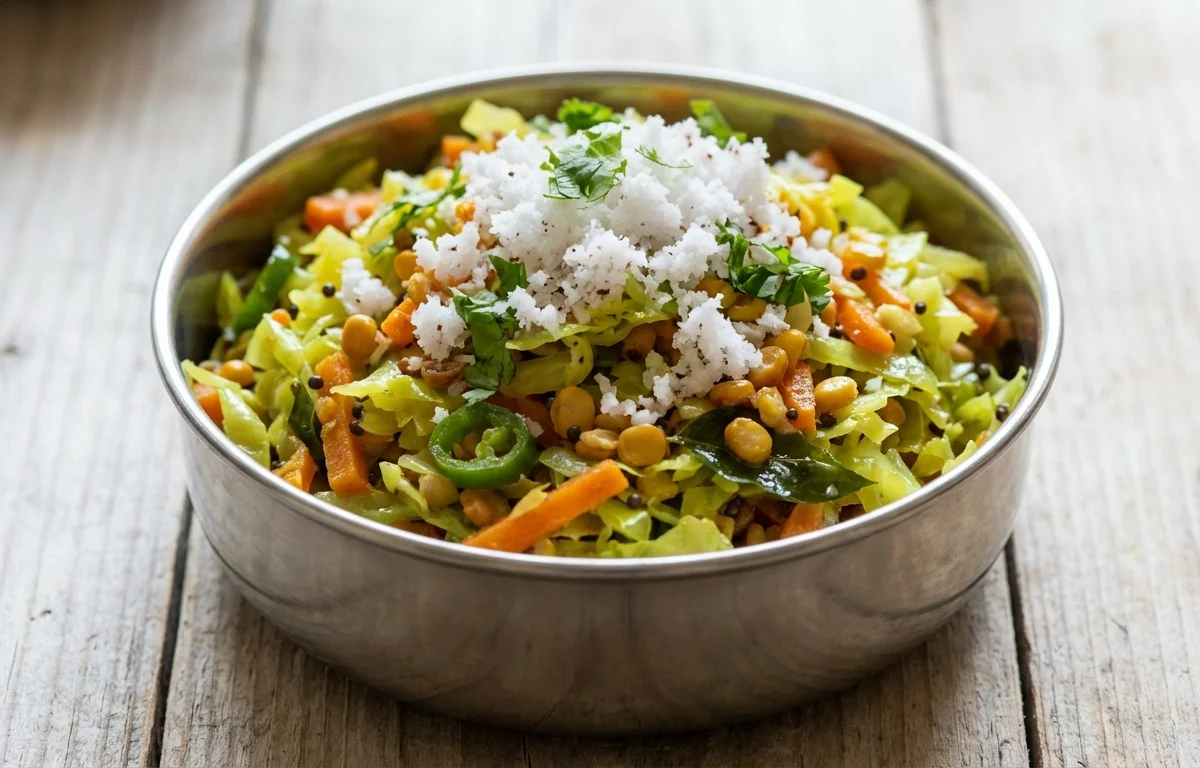
Cabbage Carrot Palya
A simple, everyday South Indian stir-fry of finely shredded cabbage and carrot, gently sautéed with mustard seeds, urad dal, curry leaves and green chilies. Finished with a sprinkle of fresh coconut, this light and fiber-rich dry sabzi pairs beautifully with rice, sambar, and a squeeze of lemon.
For 4 servings
- prep
Prepare the vegetables.
1.Remove the outer leaves of the cabbage and cut it into quarters.2.Slice as finely as possible using a sharp knife or a mandoline.3.Peel the carrots and grate them using the large holes of a box grater.4.Keep the shredded cabbage and grated carrot separate. - temper · ~2 min
Make the tempering.
1.Heat the oil in a large heavy-bottomed pan over medium heat.2.Add the mustard seeds and let them splutter (about 30 seconds).3.Stir in the urad dal and sauté until golden brown (about 30-40 seconds).4.Add the broken dried red chilies, slit green chilies, and fresh curry leaves. Fry for 15-20 seconds until fragrant.TIPDon't let the urad dal burn — it turns bitter very quickly. Keep stirring. - saute · ~5 min
Cook the cabbage and carrot.
1.Add the shredded cabbage and grated carrot to the pan.2.Sprinkle the turmeric powder and salt over the vegetables.3.Toss everything together gently to mix well.4.Cover the pan and cook on medium-low heat for 4-5 minutes, stirring once halfway through.TIPDo not add any water. The vegetables will release their own moisture and steam in the covered pan. - saute · ~2 min
Finish with coconut.
1.Remove the lid. If any moisture remains, increase the heat and stir-fry for 1-2 minutes until completely dry.2.Turn off the heat and fold in the freshly grated coconut.3.Drizzle the lemon juice over the top, if using.4.Give a final gentle toss to combine.TIPAlways add the coconut off the heat to keep its fresh, sweet flavor intact. - serve
Serve warm as a side dish.
Transfer the palya to a serving bowl. It is best enjoyed warm with steamed rice, sambar, or roti.
What to keep in mind.
6 tips from the recipe — small details that make a real difference to the final dish.
- 1Shred the cabbage as finely as possible for a tender, quick-cooking texture.
- 2Do not add water — the cabbage and carrot release enough moisture to steam perfectly.
- 3Toast the urad dal until just golden; burnt dal adds a bitter taste to the dish.
- 4Add the fresh coconut only after turning off the heat to preserve its sweet flavor.
- 5For a drier palya, cook uncovered for an extra minute after steaming to evaporate leftover moisture.
- 6Leftover palya keeps well in the fridge for up to 2 days; reheat in a dry pan.
Adapt it for your goals.
High Protein
Add 1/2 cup of cooked chana dal or crumbled paneer after the tempering for a more filling meal.
Low OilLow-Oil
Reduce oil to 1 teaspoon and use a non-stick pan; the vegetables release enough moisture to cook without sticking.
Vegan & JainVegan & Jain
Omit the optional lemon juice (though it's already vegan) and replace fresh coconut with finely chopped peanuts for a nutty crunch, suitable for Jain diets that avoid root vegetables like turmeric root.
SpicierSpicier
Add 1/2 teaspoon of red chili powder or an extra green chili to increase the heat level.
Why this is on our healthy list.
Rich in Fiber
Cabbage and carrots are both excellent sources of dietary fiber, which supports healthy digestion and helps maintain stable blood sugar levels.
Good Source of Vitamin A
Carrots are packed with beta-carotene, which the body converts into vitamin A, essential for good vision and immune function.
Low in Calories
This dish is naturally low in calories and fat, making it a light and nutritious side that pairs well with heavier main courses.
Antioxidant-Rich
Curry leaves, turmeric, and mustard seeds provide antioxidants and anti-inflammatory compounds that contribute to overall wellness.
Frequently asked questions
Yes, but red cabbage will release less moisture and take slightly longer to soften. You may need to add a tablespoon of water and cook covered for a few extra minutes.