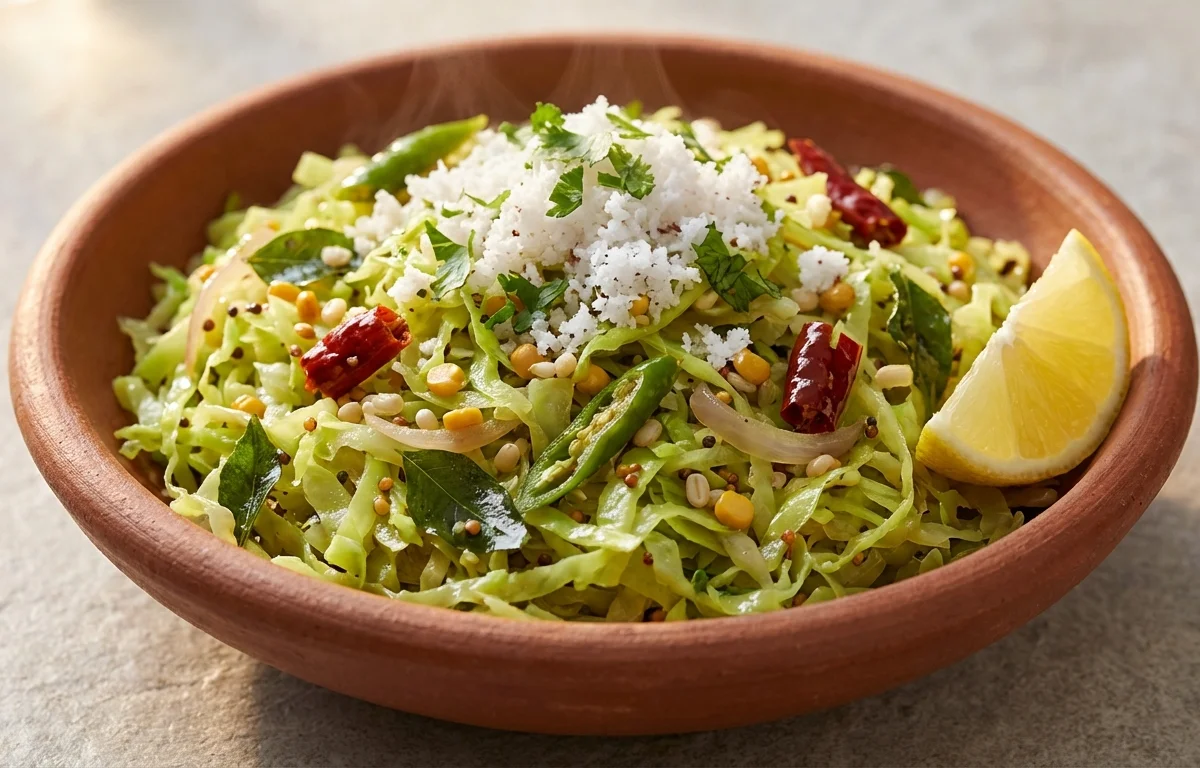
Cabbage Palya
A simple Karnataka-style cabbage stir-fry with soft shreds of cabbage, mild spices, and a light coconut finish. It cooks quickly, tastes homely, and fits beautifully alongside rice, rasam, or chapati.
For 4 servings
- prep · ~10 min
Prep the vegetables.
1.Finely shred the cabbage.2.Chop the onion finely.3.Slit the green chili and chop the cilantro. - temper · ~2 min
Make the tempering.
1.Heat oil in a kadai over medium heat.2.Add mustard seeds and let them splutter.3.Add urad dal and chana dal and cook until lightly golden.4.Add green chili and curry leaves and sauté for a few seconds.TIPKeep the heat medium so the dals turn golden without burning. - saute · ~3 min
Cook the onion.
Add the onion and sauté until soft and lightly translucent. Stir in the turmeric powder.
- saute · ~8 min
Cook the cabbage.
1.Add the shredded cabbage and salt.2.Mix well so the tempering coats the cabbage evenly.3.Sprinkle in the water and cover the pan.4.Cook on low heat until the cabbage is tender but not mushy, stirring once or twice.TIPUse very little water so the palya stays light and semi-dry. - garnish · ~2 min
Finish with coconut, cilantro, and lemon juice.
Uncover the pan and cook off any extra moisture for 1 to 2 minutes. Turn off the heat, then mix in the grated coconut, cilantro, and lemon juice.
- serve
Serve hot.
Serve Cabbage Palya as a side with rice and sambar, rasam, or chapati.
What to keep in mind.
7 tips from the recipe — small details that make a real difference to the final dish.
- 1Shred the cabbage finely and evenly so it softens quickly without turning patchy or stringy.
- 2Let the mustard fully splutter before adding the dals; otherwise the tempering tastes raw.
- 3Cook the urad dal and chana dal only to light golden, since they keep darkening from the pan's heat.
- 4Use just a sprinkle of water and low heat so the palya steams gently instead of becoming soggy.
- 5Stop cooking when the cabbage is tender with a slight bite; overcooked cabbage will smell strong and lose texture.
- 6Mix in the coconut, cilantro, and lemon only after switching off the heat to keep the finish fresh and bright.
- 7If making ahead, cool completely before storing, then reheat briefly uncovered so the stir-fry stays semi-dry.
Adapt it for your goals.
No-onion
Skip the onion for a simpler, more traditional satvik-style version that lets the cabbage, coconut, and tempering stand out.
spicierSpicier
Add an extra green chili or a pinch of red chili powder if you want more heat without changing the basic character of the palya.
carrot cabbageCarrot-cabbage
Mix in a little grated carrot with the cabbage for color, mild sweetness, and a more varied texture.
jainJain
Omit the onion and increase curry leaves slightly for aroma; the dish still tastes balanced and cooks just as quickly.
Why this is on our healthy list.
Vegetable-Forward Side
Cabbage makes this a light, everyday side dish with plant-based fiber and a high vegetable content.
Moderate Healthy Fats
A small amount of oil and fresh coconut adds richness and satisfaction without making the stir-fry overly heavy.
Digestive Spice Support
Curry leaves, mustard seeds, green chili, and turmeric bring traditional South Indian flavor along with digestive-friendly ingredients.
Frequently asked questions
Cabbage releases a lot of moisture on its own, so too much added water or cooking covered for too long can make it wet. Finish uncovered for a minute or two to dry it out.