California Roll
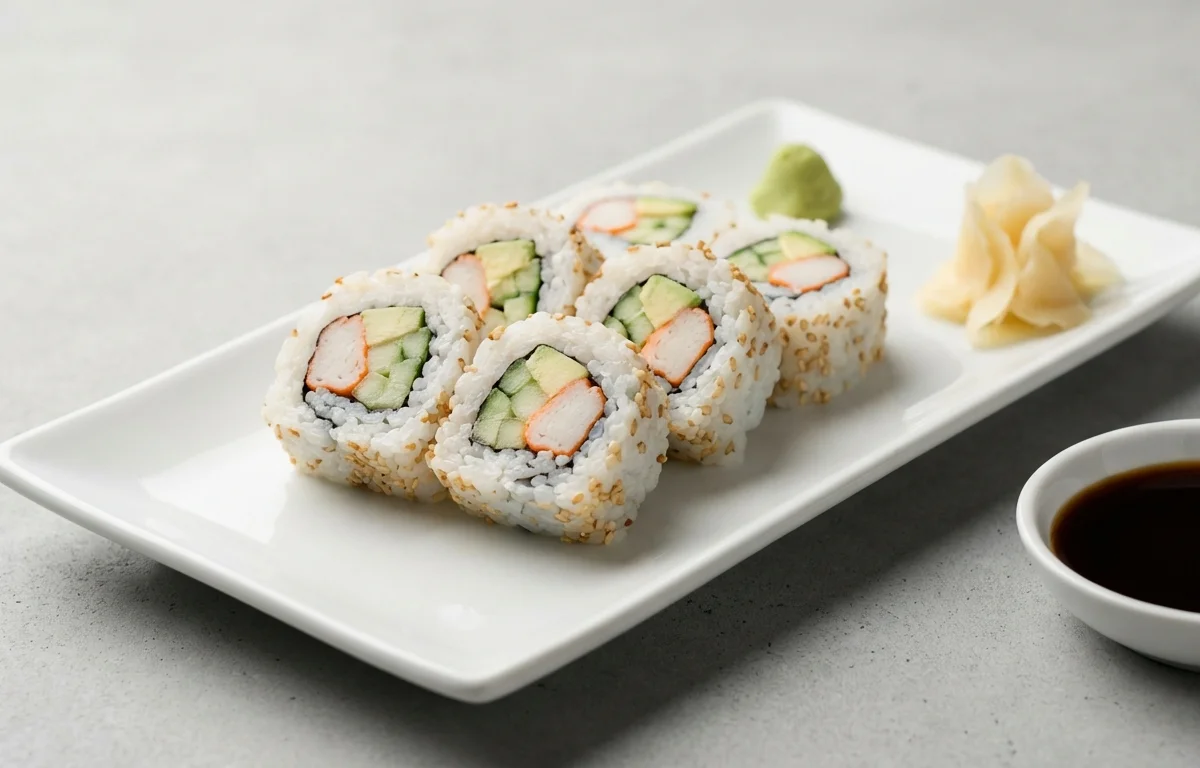
A classic inside-out sushi roll filled with creamy avocado, crunchy cucumber, and sweet imitation crab. Wrapped in seasoned rice and nori, then rolled in toasted sesame seeds, this American-born sushi favorite is fresh, light, and perfect for sushi nights at home.
For 4 servings
- prep · ~25 min
Rinse and cook the sushi rice.
1.Place sushi rice in a fine-mesh strainer and rinse under cold water until the water runs clear.2.Combine rinsed rice and water in a pot. Bring to a boil over medium-high heat.3.Reduce heat to low, cover, and simmer for 15 minutes until water is absorbed.4.Remove from heat and let stand covered for 10 minutes.TIPDon't stir the rice while it cooks — this releases too much starch and makes it mushy. - mix · ~8 min
Season the rice.
1.In a small bowl, stir together rice vinegar, sugar, and salt until dissolved.2.Transfer hot rice to a large shallow bowl. Sprinkle the vinegar mixture evenly over the rice.3.Use a rice paddle to gently fold the rice in slicing motions — do not stir or mash.4.Fan the rice as you fold to help it cool quickly. Let cool to room temperature.TIPCooling the rice to room temp is essential for easy rolling — hot rice makes the nori soggy. - prep · ~5 min
Prepare the fillings.
1.Halve the avocado, remove the pit, scoop out the flesh, and slice into thin strips.2.Cut the cucumber in half lengthwise, scrape out the seeds, and slice into matchsticks.3.Shred the imitation crab sticks into thin, fluffy strands. - assemble · ~2 min
Set up the rolling station.
1.Wrap the bamboo mat tightly with plastic wrap on both sides.2.Place the mat on a clean cutting board with the slats running horizontally.3.Fill a small bowl with water and a splash of rice vinegar for dampening your hands.4.Have all ingredients nearby: seasoned rice, nori sheets, fillings, and toasted sesame seeds. - assemble · ~8 min
Assemble the California roll.
1.Place one nori sheet shiny side down on the bamboo mat.2.Dip your fingers in the water-vinegar mixture and spread half the cooled rice evenly over the nori, leaving a 1-inch gap at the top edge.3.Sprinkle toasted sesame seeds evenly over the rice.4.Flip the nori sheet over so the rice faces down on the mat and the bare nori strip is at the far edge.5.Arrange a line of crab strands, avocado strips, and cucumber matchsticks horizontally across the center of the nori.6.Using the bamboo mat, lift the edge closest to you over the filling, tuck it in, and roll forward firmly but gently into a tight cylinder. Use the bare nori strip to seal the top edge.7.Repeat to make the remaining roll.TIPDon't overfill — a single neat line of filling in the center makes rolling much easier. - prep · ~3 min
Slice and arrange the rolls.
1.Wipe a sharp knife with a damp towel to prevent sticking.2.Slice each roll in half, then slice each half into 4 equal pieces, wiping the knife between cuts.3.Arrange the California rolls on a serving plate.TIPUse a gentle sawing motion with a very sharp knife — pressing down too hard squishes the roll. - serve
Serve with soy sauce, pickled ginger, and wasabi on the side.
What to keep in mind.
5 tips from the recipe — small details that make a real difference to the final dish.
- 1Use a sharp, damp knife to slice rolls cleanly without squishing the filling.
- 2Cool the seasoned rice completely before rolling — warm rice makes nori soggy and hard to handle.
- 3Wrap the bamboo mat tightly in plastic wrap to prevent rice from sticking.
- 4Keep a bowl of vinegared water nearby to wet your hands; it prevents rice from clumping to your fingers.
- 5Seed the cucumber before cutting into matchsticks to avoid excess moisture that can make the roll soggy.
Adapt it for your goals.
Spicy california roll
Mix the shredded imitation crab with a tablespoon of spicy mayo (sriracha blended with Japanese mayo) for a kick of heat that contrasts beautifully with the cool avocado and cucumber.
high proteinHigh-protein
Replace imitation crab with cooked real crabmeat or chopped cooked shrimp for a more substantial protein punch and a richer seafood flavor.
vegetarianVegetarian
Omit the imitation crab and add extra avocado, cucumber, or thin strips of red bell pepper and mango for a sweet, crunchy, plant-based California roll.
low carbLow-carb
Skip the rice and wrap the nori around the fillings only, then slice into bite-sized pieces for a lighter, keto-friendly sushi alternative.
Why this is on our healthy list.
Rich in Healthy Fats
Avocado provides heart-healthy monounsaturated fats that support nutrient absorption and help you feel full longer.
Good Source of Fiber
Cucumber and avocado contribute dietary fiber, aiding digestion and promoting gut health.
Low in Saturated Fat
Imitation crab and avocado keep saturated fat content low, making this roll a lighter option compared to many fried sushi rolls.
Frequently asked questions
The rice may be too warm or wet, or the roll wasn't tightly sealed. Let rice cool fully, don't overfill, and use a sharp damp knife with a gentle sawing motion.