
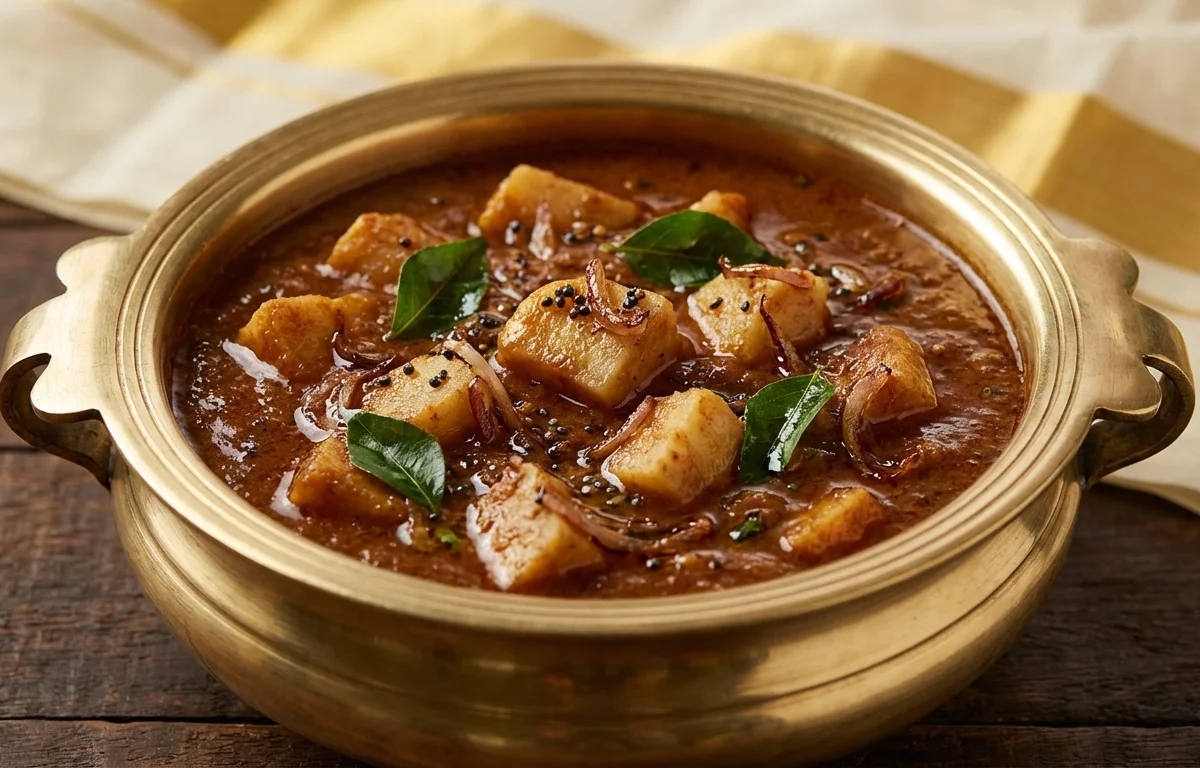
Chena Theeyal
A deeply flavored Kerala curry made with yam, roasted coconut, shallots, and tamarind. It has a rich brown gravy with a gentle smoky bitterness and tangy finish that tastes even better after resting.
For 4 servings
- prep · ~10 min
Prep the yam and tamarind.
1.Peel the yam and cut it into small even cubes.2.Soak the tamarind in 0.5 cup water for 10 minutes.3.Squeeze well and strain the pulp, then keep it aside.TIPWear gloves or oil your hands before handling yam if it irritates your skin. - boil · ~15 min
Cook the yam until just tender.
Add the yam to a pot with 2 cups water, turmeric powder, and salt. Cook over medium heat until the pieces are tender but still hold their shape, about 12 to 15 minutes.
TIPDo not overcook the yam or it will break up when simmered in the gravy. - roast · ~12 min
Roast the coconut and spices.
1.Heat 1 tsp coconut oil in a pan over medium-low heat.2.Add 8 shallots, grated coconut, coriander seeds, dried red chili, and fenugreek seeds.3.Roast slowly, stirring often, until the coconut turns deep golden brown and the shallots soften, 10 to 12 minutes.TIPKeep the heat medium-low so the coconut browns evenly and does not burn. - mix · ~5 min
Grind the roasted mixture.
Cool the roasted mixture slightly, then grind it with 0.5 cup water to a smooth, thick paste.
- simmer · ~10 min
Simmer the gravy with yam and tamarind.
1.Add the ground paste to the cooked yam.2.Pour in the tamarind extract and the remaining 0.5 cup water.3.Mix well and simmer gently for 8 to 10 minutes until the gravy thickens and the flavors come together.TIPTheeyal should have a rich brown gravy with a tangy edge, not a thin watery sauce. - temper · ~4 min
Make the tempering.
1.Heat the remaining coconut oil in a small pan.2.Add mustard seeds and let them splutter.3.Add the sliced shallots and cook until lightly browned.4.Add curry leaves and fry for a few seconds. - assemble · ~1 min
Pour the tempering over the theeyal.
Pour the hot tempering over the simmering curry and mix gently. Cook for 1 more minute, then turn off the heat.
- rest · ~10 min
Let it rest for 10 minutes.
TIPA short rest deepens the roasted coconut and tamarind flavors. - serve
Serve with rice.
What to keep in mind.
7 tips from the recipe — small details that make a real difference to the final dish.
- 1Cut the yam into evenly sized cubes so they finish cooking together and stay intact in the gravy.
- 2Roast the coconut mixture to a deep golden brown, not pale; that dark roast gives theeyal its signature color and slight bitterness.
- 3Cool the roasted coconut slightly before grinding, or the paste can turn greasy and less smooth.
- 4Add tamarind only after the yam is tender, since acidity can slow further softening.
- 5Keep the final simmer gentle; a hard boil can cause the yam pieces to crumble and the gravy to split.
- 6Let the curry rest at least 10 minutes before serving, or even longer, so the roasted coconut and tamarind meld fully.
- 7This theeyal tastes even better the next day; reheat on low heat with a splash of water if it thickens too much.
Adapt it for your goals.
Jaggery-balanced
Add a very small pinch of jaggery while simmering to round out sharp tamarind notes without making the curry sweet.
spicierSpicier
Increase the dried red chilies or use a hotter variety if you prefer a more assertive heat against the roasted coconut base.
mixed vegetableMixed-vegetable
Replace part of the yam with small cubes of ash gourd or raw banana for a lighter texture while keeping the same theeyal gravy.
thicker gravyThicker-gravy
Use slightly less water while grinding and simmering if you want a more concentrated theeyal to serve with rice or dosa.
Why this is on our healthy list.
Fiber-Rich Yam Base
Elephant foot yam adds fiber and satisfying bulk, making the curry hearty and filling with a vegetable-centered base.
Beneficial Spice Profile
Coriander, fenugreek, turmeric, curry leaves, and shallots contribute plant compounds and aromatic depth beyond simple heat.
Naturally Plant-Based
This dish is built entirely from plant ingredients, with coconut and yam providing richness and body without dairy.
Frequently asked questions
It should be deep golden to brown, almost mahogany, but not burnt. That darker roast gives the curry its characteristic color and gentle bitter edge.



.webp)
.webp)