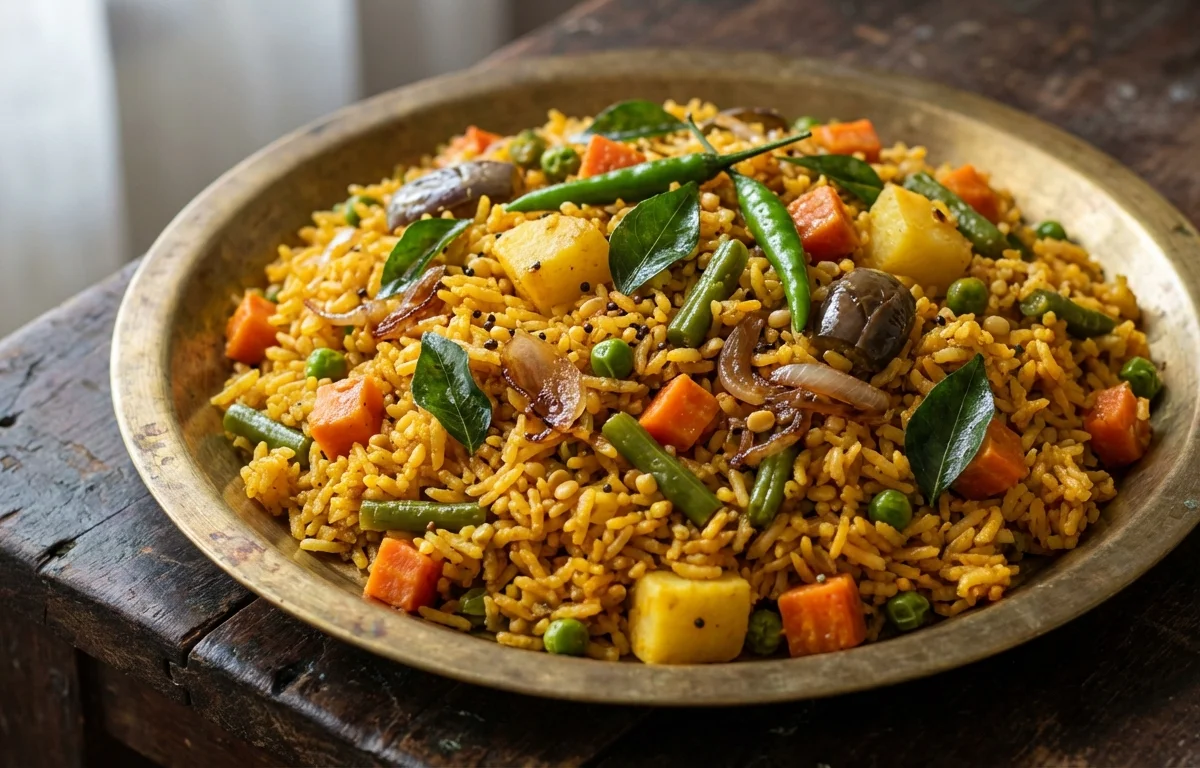
Chettinad Vegetable Mandi
A tangy and flavorful mixed vegetable curry from the Chettinad region of South India. Made with a unique base of rice-washed water (mandi), this rustic dish is simple to prepare and pairs perfectly with steamed rice for a wholesome meal.
For 4 servings
Prepare Mandi Water and Tamarind Extract
1.Place 200g of raw rice in a bowl. Add water, rinse once, and discard this first rinse water.2.Add 750ml (3 cups) of fresh water to the rice. Rub the grains gently with your fingers for about a minute. Strain and collect this cloudy, starchy water. This is the 'mandi' or 'kazhani thanni'. Set it aside.3.In a separate small bowl, soak the 15g of tamarind in 125ml (1/2 cup) of warm water for 15 minutes. Squeeze the tamarind well to extract a thick pulp, then strain and discard the solids.Prepare the Tempering (Tadka)
1.Heat 30ml of sesame oil in a heavy-bottomed pan or a traditional clay pot over medium heat.2.Once the oil is hot, add 1 tsp of mustard seeds. Wait for them to splutter completely, which should take about 30-45 seconds.3.Add 1 tsp of urad dal and sauté until it turns a light golden brown.4.Add the curry leaves, slit green chillies, and a pinch of hing. Sauté for another 30 seconds until the curry leaves are crisp and aromatic.Sauté Onions and Vegetables
1.Add the peeled sambar onions to the pan. Sauté for 3-4 minutes until they become soft and translucent.2.Add all the chopped mixed vegetables, 1/2 tsp of turmeric powder, and salt. Stir well to coat the vegetables with the spices and cook for 2-3 minutes.Simmer the Curry
1.Pour the reserved 3 cups of mandi water into the pan. Stir everything together to combine.2.Bring the mixture to a rolling boil, then reduce the heat to medium-low. Cover the pan and let it simmer for 10-12 minutes, or until the vegetables are tender but still retain their shape.Finish and Thicken
1.Uncover the pan and pour in the prepared tamarind extract. Stir gently.2.Increase the heat to medium and let the curry simmer uncovered for another 5-7 minutes. This allows the raw taste of the tamarind to cook off and the gravy to thicken slightly.3.Taste and adjust the salt if necessary. Turn off the heat.Rest and Serve
1.Let the Vegetable Mandi rest for at least 10-15 minutes before serving. This allows the flavors to meld and deepen.2.Serve hot with freshly steamed rice.
What to keep in mind.
6 tips from the recipe — small details that make a real difference to the final dish.
- 1For the most authentic flavor, use sesame (gingelly) oil and a traditional clay pot (manchatti).
- 2The second rinse of the rice is crucial for the 'mandi' flavor; the first rinse just cleans the rice.
- 3Ensure vegetables are cooked until tender but not mushy. They should have a slight bite.
- 4The curry's flavor enhances significantly the next day, making it great for leftovers.
- 5Adjust the quantity of green chillies and tamarind to balance the spice and tang according to your preference.
- 6Do not skip the sambar onions; their mild sweetness is key to the dish's flavor profile.
Adapt it for your goals.
Creamier Version
For a richer, creamier gravy, add 1/4 cup of thin coconut milk along with the tamarind extract in the final step. Simmer gently without boiling vigorously.
Add ProteinAdd Protein
Incorporate cooked chickpeas or black-eyed peas along with the vegetables for a protein boost.
Different VegetablesDifferent Vegetables
Feel free to use other vegetables like ash gourd, yam, sweet potato, or raw banana for different textures and flavors.
Why this is on our healthy list.
Rich in Dietary Fiber
The variety of vegetables used in this dish makes it an excellent source of dietary fiber, which aids digestion, promotes gut health, and helps in maintaining stable blood sugar levels.
Aids Digestion
Spices like asafoetida (hing) and tamarind are traditionally known to stimulate digestion and prevent bloating, making this curry easy on the stomach.
Packed with Vitamins and Minerals
Each vegetable contributes a unique profile of essential nutrients. For instance, drumsticks are rich in Vitamin C and pumpkin is a great source of Vitamin A.
Anti-Inflammatory Properties
Turmeric, a key ingredient, contains curcumin, a powerful compound with potent anti-inflammatory and antioxidant effects that support overall health.
Frequently asked questions
'Mandi' or 'kazhani thanni' is the cloudy, starchy water collected from the second rinsing of raw rice. It acts as a natural, light thickening agent and imparts a unique, subtle flavor and aroma to the curry, which is the hallmark of this traditional Chettinad dish.