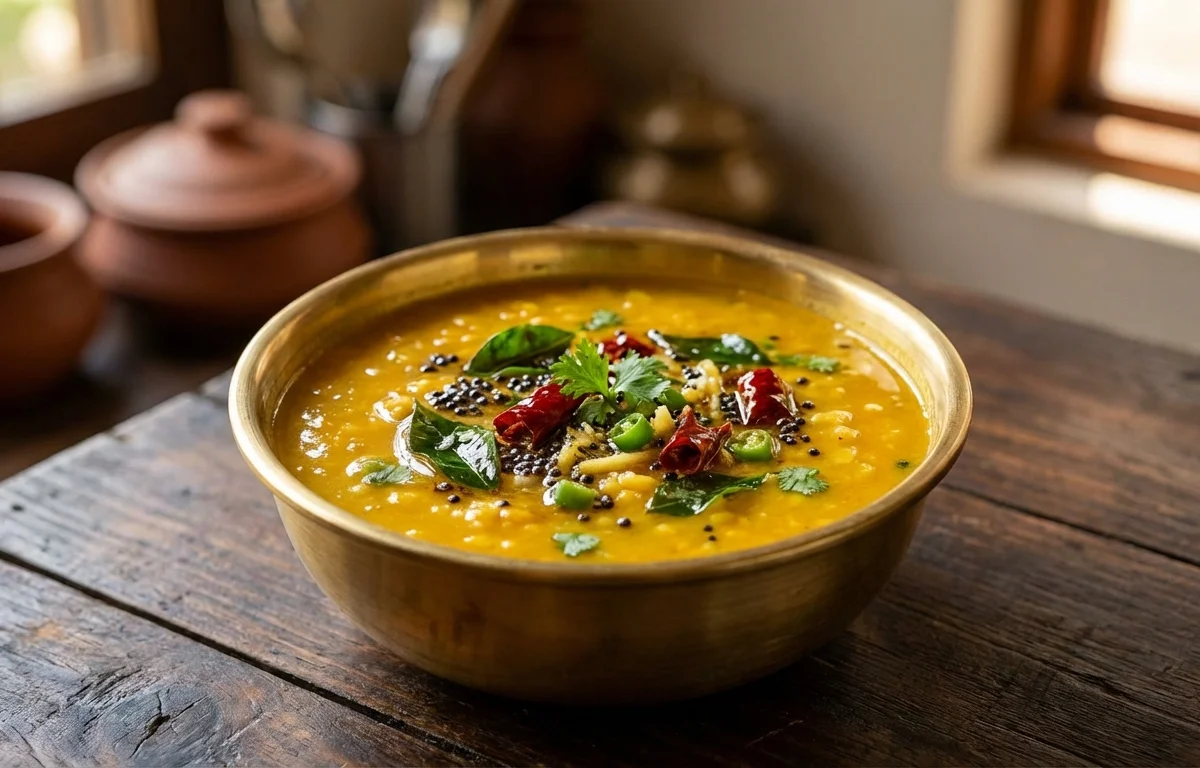
Dalithoy
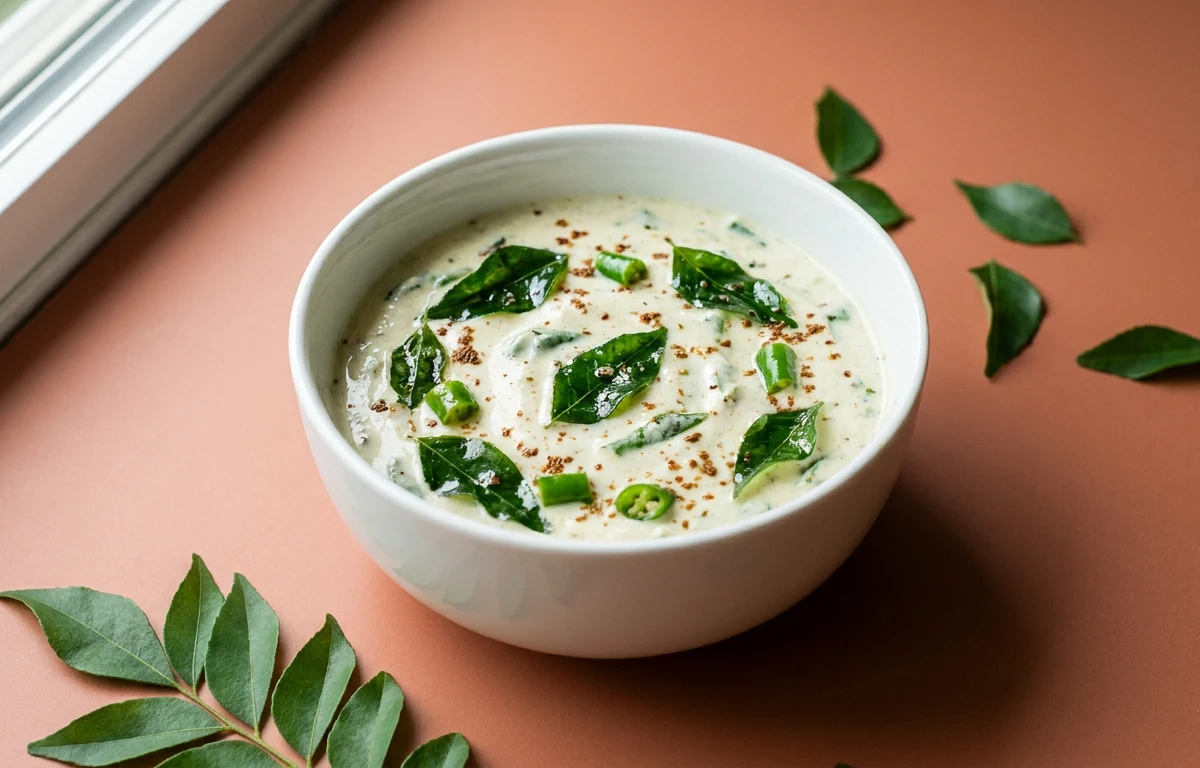
A light, comforting Konkani-style toor dal seasoned with green chili, curry leaves, and a simple tempering. It is mild, gently spiced, and perfect with hot rice for an everyday coastal meal.
For 4 servings
- prep · ~30 min
Rinse and soak the dal.
Wash the toor dal well until the water runs mostly clear. Soak it in fresh water for 30 minutes, then drain.
TIPSoaking helps the dal cook faster and gives a smoother texture. - pressure cook · ~20 min
Cook the dal until soft.
1.Add the soaked toor dal, water, green chili, and turmeric powder to a pressure cooker.2.Cook on medium heat for 4 to 5 whistles, until the dal is very soft.3.Let the pressure release naturally before opening the cooker. - mix · ~3 min
Mash and thin the dal.
Mash the cooked dal with a ladle or whisk until smooth. Add salt and a little extra water if needed to make a light, pourable consistency.
- simmer · ~5 min
Simmer the dal briefly.
Transfer the dal to a pot if needed and bring it to a gentle simmer for 4 to 5 minutes so the flavors come together.
TIPDalithoy should stay light and not too thick; loosen it with hot water if it starts tightening. - temper · ~1 min
Make the tempering.
1.Heat ghee in a small pan over medium heat.2.Add mustard seeds and let them splutter.3.Add dried red chili, curry leaves, and asafoetida.4.Cook for a few seconds until fragrant.TIPKeep the heat moderate so the asafoetida and chilies do not burn. - assemble · ~1 min
Pour the tempering over the dal.
Add the hot tempering straight into the simmering dal and mix gently. Let it sit for 1 minute so the flavor settles in.
- serve
Serve hot with rice.
What to keep in mind.
6 tips from the recipe — small details that make a real difference to the final dish.
- 1Cook the toor dal until it is completely soft; any graininess will stand out in this light dal.
- 2Mash the dal well before simmering so Dalithoy gets its characteristic smooth, pourable texture.
- 3Keep the consistency thinner than regular sambar; it should easily flow over hot rice.
- 4Add hot water, not cold, when loosening the dal so the simmer stays steady and the texture stays even.
- 5Pour the tempering over the dal while both are hot to trap the aroma of ghee, curry leaves, and hing.
- 6If making ahead, reheat gently and thin with a splash of hot water since toor dal thickens as it sits.
Adapt it for your goals.
Vegan
Replace ghee with coconut oil for a plant-based version that still suits the coastal Konkani flavor profile.
low spiceLow-spice
Use one green chili and one dried red chili for a gentler everyday dal that keeps the classic aroma but less heat.
garlic temperingGarlic-tempering
Add lightly crushed garlic to the tempering for a deeper, homestyle variation with extra savoriness.
no onion no garlicNo-onion-no-garlic
Keep it exactly as written for a simple satvik-style dal focused on hing, curry leaves, and ghee.
Why this is on our healthy list.
Plant Protein from Toor Dal
Toor dal provides plant-based protein and makes this simple rice pairing more satisfying and balanced.
Comforting and Easy to Digest
The dal is cooked until very soft and lightly seasoned, making it a gentle, soothing option for everyday meals.
Uses Digestive Spices
Asafoetida, curry leaves, and turmeric are traditional seasonings that add flavor while keeping the dish light.
Frequently asked questions
Yes, but it may take longer to pressure-cook and the texture may be slightly less smooth unless you cook it very soft.