Dana Methi Ki Sabzi
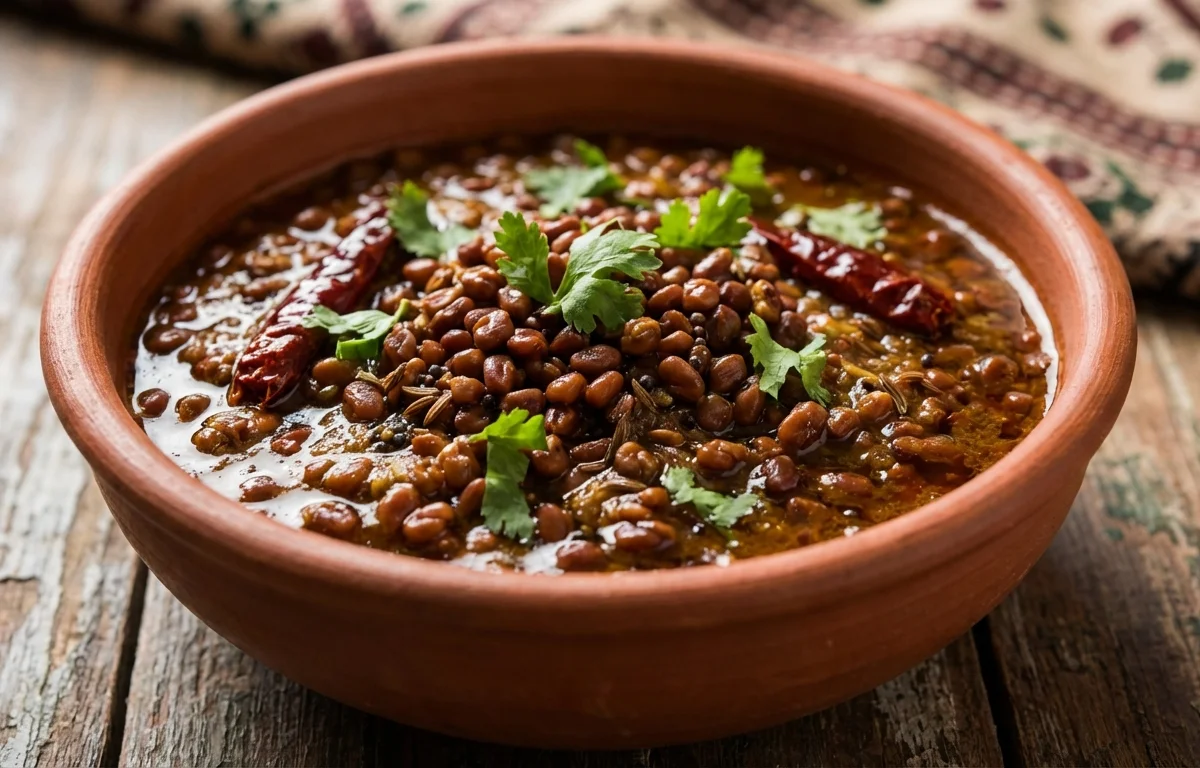
This homestyle sabzi pairs soaked fenugreek seeds with soft potatoes, gentle spices, and a touch of tang from yogurt. The result is lightly bitter, warmly spiced, and perfect with roti as part of a simple North Indian meal.
For 4 servings
- prep · ~1 min
Soak the fenugreek seeds.
Wash the fenugreek seeds well, soak them in enough water overnight, then drain them before cooking.
TIPSoaking helps soften the seeds and mellows their bitterness. - boil · ~15 min
Boil the fenugreek seeds and potatoes.
1.Add the drained fenugreek seeds to a pan with fresh water and boil until just tender, about 12 to 15 minutes.2.Boil the potato cubes separately until cooked but still holding their shape, about 8 to 10 minutes.3.Drain both well and keep them aside.TIPDo not overcook the potatoes or they will break while mixing. - saute · ~10 min
Cook the base masala.
1.Heat oil in a pan over medium heat.2.Add cumin seeds and asafoetida and let them sizzle for a few seconds.3.Add onion, ginger, and green chili, then cook until the onion turns light golden.4.Add tomato and cook until soft and the mixture looks jammy.TIPKeep the heat medium so the spices bloom without burning. - mix · ~3 min
Add the spices and yogurt.
Stir in turmeric powder, red chili powder, coriander powder, garam masala, and salt. Lower the heat, add the whisked yogurt, and mix continuously for 1 to 2 minutes so it blends smoothly into the masala.
- simmer · ~8 min
Cook the sabzi until the flavors come together.
1.Add the boiled fenugreek seeds and boiled potatoes to the pan.2.Pour in water and mix gently so the potatoes stay intact.3.Cover and cook on low heat until the sabzi is lightly coated and semi-dry, about 6 to 8 minutes. - garnish
Garnish with coriander leaves.
- serve
Serve hot with roti or phulka.
What to keep in mind.
7 tips from the recipe — small details that make a real difference to the final dish.
- 1Drain the soaked and boiled dana methi very well, or the sabzi can turn watery and more bitter.
- 2Boil the potatoes only until just tender; firm cubes hold their shape when folded into the masala.
- 3Lower the heat before adding yogurt and stir constantly so it blends smoothly without splitting.
- 4Cook the tomato-onion masala until it looks jammy and the oil begins to separate for a fuller flavour.
- 5If the fenugreek seeds still taste too bitter after boiling, rinse them once with warm water before adding.
- 6Keep the final simmer on low and uncovered for the last minute if you want a nicely semi-dry sabzi.
- 7This sabzi tastes even better after a short rest, as the potatoes absorb the tangy, spiced yogurt masala.
Adapt it for your goals.
Jain
Skip onion, garlic-free hing only, and increase ginger and tomato for body; useful if you want a Jain-style version.
veganVegan
Replace yogurt with a few tablespoons of cashew yogurt or a little tomato puree for tang without dairy.
low oilLow-oil
Use less oil and add a splash of water while bhunoing the masala; good for a lighter everyday sabzi.
no potatoNo-potato
Swap potatoes for boiled sweet potato or lauki for a different texture and a less starchy side dish.
Why this is on our healthy list.
Fiber-Rich Fenugreek Seeds
Fenugreek seeds add plant fiber and a hearty texture, making this sabzi more sustaining than a plain potato dish.
Digestive Spice Support
Cumin, ginger, asafoetida, and coriander are classic digestive spices often used to make legume- and seed-based dishes feel gentler.
Balanced with Yogurt
The yogurt adds protein and a tangy creamy element that balances the earthy seeds and potatoes without heavy richness.
Frequently asked questions
They may need proper overnight soaking and full boiling until just tender. A quick warm-water rinse after boiling can also soften lingering bitterness.



.webp)