Dapate
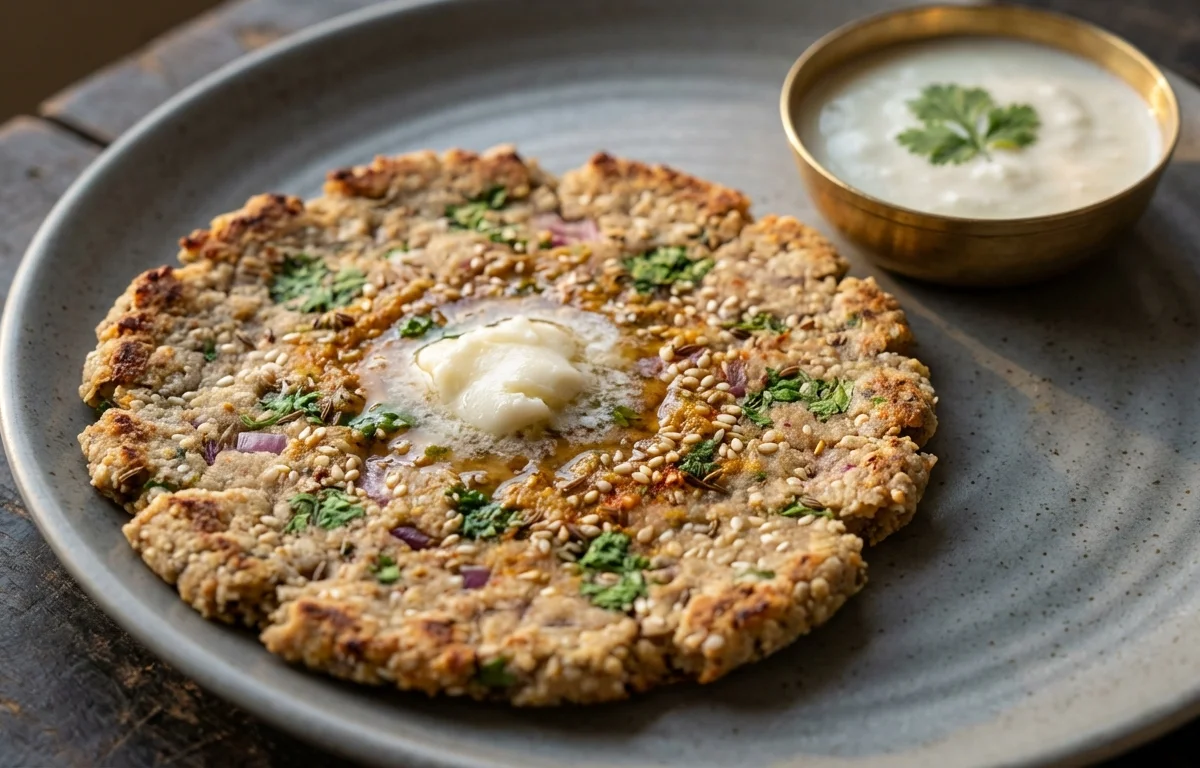
Dapate is a rustic Maharashtrian multigrain flatbread made with bhajani flour, onion, herbs, and spices. It is patted by hand and cooked on a hot tawa until lightly crisp outside and soft inside.
For 8 servings
- prep · ~5 min
Prepare the dough ingredients.
1.Add bhajani flour to a wide mixing bowl.2.Add onion, cilantro, green chili, sesame seeds, cumin seeds, turmeric powder, red chili powder, and salt.3.Mix everything well so the onion and spices are evenly distributed. - knead · ~7 min
Knead a soft dough.
Add 1 tbsp oil and rub it into the flour mixture. Pour in water little by little and knead into a soft, slightly moist dough that holds together without cracking.
TIPIf the dough feels dry, wet your hand and knead again. Bhajani flour absorbs water gradually. - rest · ~10 min
Rest the dough for 10 minutes.
- assemble · ~8 min
Shape the dapate.
1.Divide the dough into 8 equal portions.2.Place one portion on a lightly moistened sheet or clean counter.3.Pat it gently with wet fingers into a thin round flatbread.4.Make a small hole in the center so it cooks evenly.TIPWet fingers make shaping easier and prevent the dough from sticking. - fry · ~5 min
Cook the dapate on a hot tawa.
1.Heat a tawa over medium heat.2.Transfer one shaped dapate to the tawa and drizzle a little oil around the edges and in the center hole.3.Cook until the base gets light brown spots, about 2 to 3 minutes.4.Flip and cook the other side until done and lightly crisp, about 2 minutes more.TIPKeep the heat medium so the inside cooks through before the outside hardens. - serve
Serve the dapate hot.
What to keep in mind.
7 tips from the recipe — small details that make a real difference to the final dish.
- 1Let the chopped onion sit in the flour mix for a minute before adding water; it releases moisture and helps bind the bhajani dough.
- 2If the dough cracks while patting, dip your fingers in water and press the edges back together instead of adding too much extra water.
- 3Pat each dapate directly on a damp cloth, banana leaf, or plastic sheet for easier transfer to the hot tawa.
- 4Keep the center hole open while shaping; it helps the thicker middle cook through at the same pace as the edges.
- 5Cook on medium heat only—high heat can char the outside while the onion and multigrain dough stay undercooked inside.
- 6Serve immediately after cooking for the best contrast of crisp edges and a soft interior.
- 7For storing, cool completely and keep wrapped; reheat on a dry tawa, not in the microwave, to bring back the texture.
Adapt it for your goals.
Low-oil
Use just a light brushing of oil on the tawa and skip the extra drizzle; good if you want a lighter everyday version.
spicierSpicier
Increase green chili and red chili powder for a sharper heat that pairs especially well with curd or thecha.
garlicGarlic
Add finely chopped garlic to the dough for a bolder, more savory village-style flavor.
jainJain
Skip onion and add a little extra cilantro plus cumin; useful for those avoiding onion while keeping the dough aromatic.
Why this is on our healthy list.
Wholesome Multigrain Base
Bhajani flour is a roasted multigrain flour, giving the flatbread a more diverse grain profile than plain wheat breads.
Plant-Based Satiety
The combination of multigrain flour and sesame seeds makes this a filling vegetarian flatbread suited to a hearty meal.
Herb and Spice Support
Cilantro, cumin, turmeric, and chilies add flavor with minimal heaviness, so the bread tastes robust without relying on rich ingredients.
Frequently asked questions
Bhajani flour needs enough hydration. Keep the dough soft and slightly moist, then pat with wet fingers so the edges do not split.



.webp)