Egg Bhurji Mangalorean Style
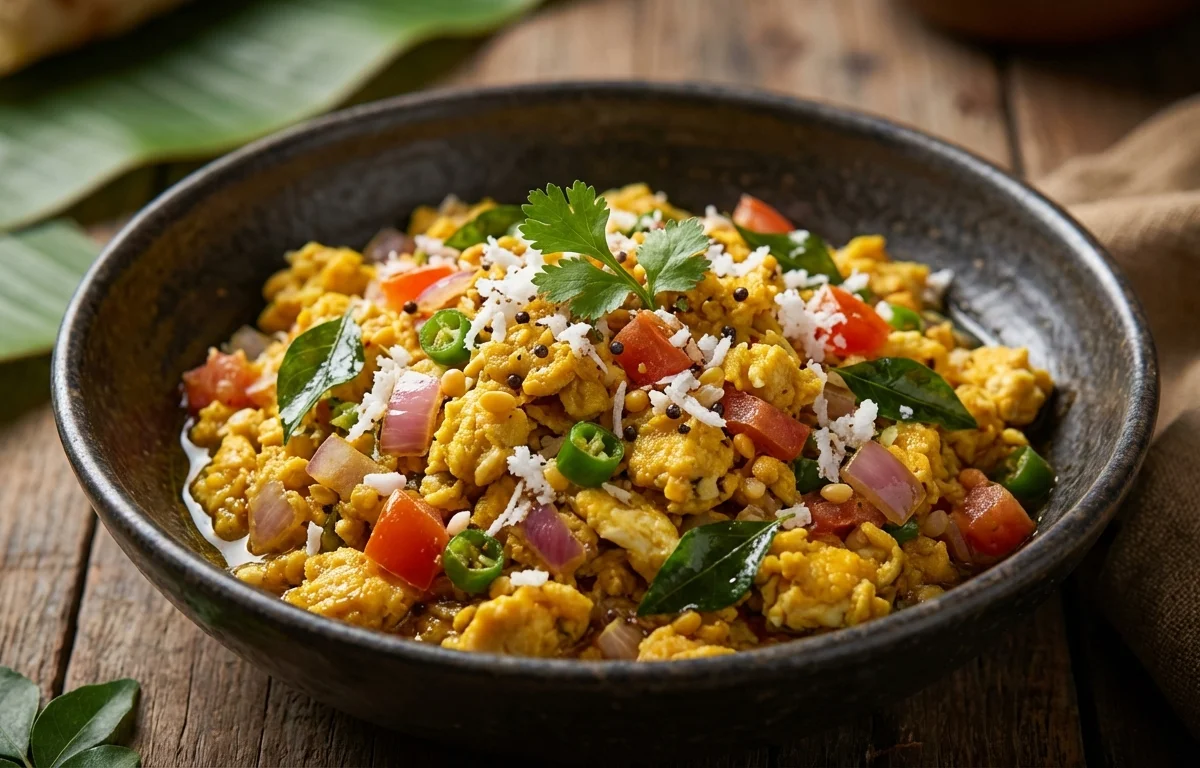
Fluffy scrambled eggs with the nutty richness of fresh coconut and a gentle heat from green chilies, all finished with a fragrant tempering of mustard seeds and curry leaves. This Mangalorean-style egg bhurji brings the coastal flavors of Karnataka to your breakfast table in under 15 minutes.
For 4 servings
- prep
Prep the eggs and aromatics.
1.Crack 6 eggs into a bowl and beat well until frothy.2.Finely chop the onion, tomato, and ginger.3.Slit the green chilies lengthwise.4.Grate the fresh coconut and set aside.TIPBeat the eggs thoroughly — incorporating air now gives a fluffier bhurji later. - temper · ~2 min
Make the tempering.
1.Heat 2 tbsp oil in a kadai or wide pan over medium heat.2.Add 0.5 tsp mustard seeds and let them splutter (20-30 sec).3.Add 0.5 tsp cumin seeds and 8 fresh curry leaves. Fry until fragrant (10 sec).TIPWait for the mustard seeds to pop fully — this releases their nutty flavor. - saute · ~8 min
Saute the aromatics until soft.
1.Add chopped onion and slit green chilies. Saute until translucent (3-4 min).2.Add chopped ginger and saute for 30 seconds until fragrant.3.Add chopped tomato, a pinch of turmeric powder, and a pinch of red chili powder.4.Cook until the tomato softens and oil starts to separate (2-3 min).TIPDon't rush the onions — let them turn soft and glossy for natural sweetness. - fry · ~3 min
Scramble the eggs into the masala.
1.Reduce the heat to low.2.Pour the beaten eggs into the pan.3.Let them set for 20 seconds, then gently push and fold with a spatula.4.Continue folding until the eggs are just cooked but still soft (1-2 min).TIPKeep the heat on low and don't over-scramble — soft, large curds make the best bhurji. - mix · ~1 min
Finish with fresh coconut.
1.Sprinkle 1 pinch of salt over the eggs and gently mix in.2.Add 3 tbsp freshly grated coconut and fold through the warm eggs.3.Turn off the heat immediately.TIPThe coconut should stay fresh and raw — adding it off the heat keeps its sweet crunch. - garnish
Garnish with fresh coriander leaves and serve hot.
Scatter chopped coriander leaves on top and serve immediately with pav, toast, or neer dosa.
What to keep in mind.
7 tips from the recipe — small details that make a real difference to the final dish.
- 1Beat the eggs until frothy to incorporate air for a fluffier texture.
- 2Let mustard seeds splutter fully to release their nutty, aromatic flavor.
- 3Cook onions until soft and glossy to build a sweet flavor base.
- 4Keep heat low when adding eggs to prevent toughness and ensure soft curds.
- 5Fold in grated coconut off the heat to retain its fresh crunch and sweetness.
- 6Use fresh curry leaves for the most authentic coastal aroma.
- 7Serve immediately after cooking — Mangalorean egg bhurji is best hot and soft.
Adapt it for your goals.
High-Protein
Add 1/4 cup cooked, shredded chicken or paneer along with the eggs for an extra protein boost. Ideal for post-workout meals or a heartier breakfast.
Low OilLow-Oil
Reduce oil to 1 tablespoon and use a non-stick pan. The eggs will still cook well, and the coconut adds moisture to compensate for less fat.
VeganVegan
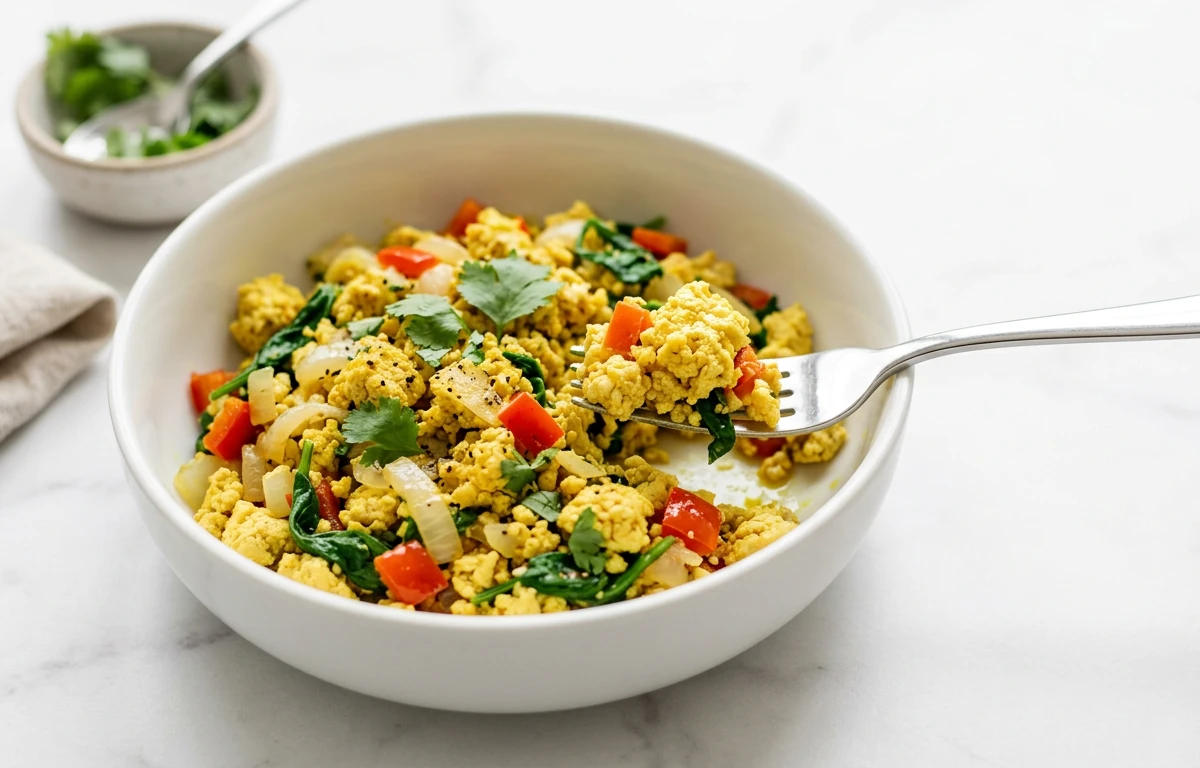
Replace eggs with 1.5 cups crumbled firm tofu (seasoned with kala namak for an eggy flavor). Great for plant-based diets while retaining the Mangalorean tempering and coconut.
Why this is on our healthy list.
Rich in Protein
Eggs provide high-quality protein with all essential amino acids, supporting muscle repair and satiety.
Healthy Fats from Coconut
Fresh grated coconut supplies medium-chain triglycerides (MCTs) that offer quick energy and support metabolism.
Antioxidant-Rich Spices
Turmeric and curry leaves contain anti-inflammatory compounds that may help reduce oxidative stress.
Frequently asked questions
Fresh coconut is best for its moist texture and subtle sweetness. Dried, unsweetened coconut can be used but should be rehydrated in warm water for 5 minutes and drained before adding.