
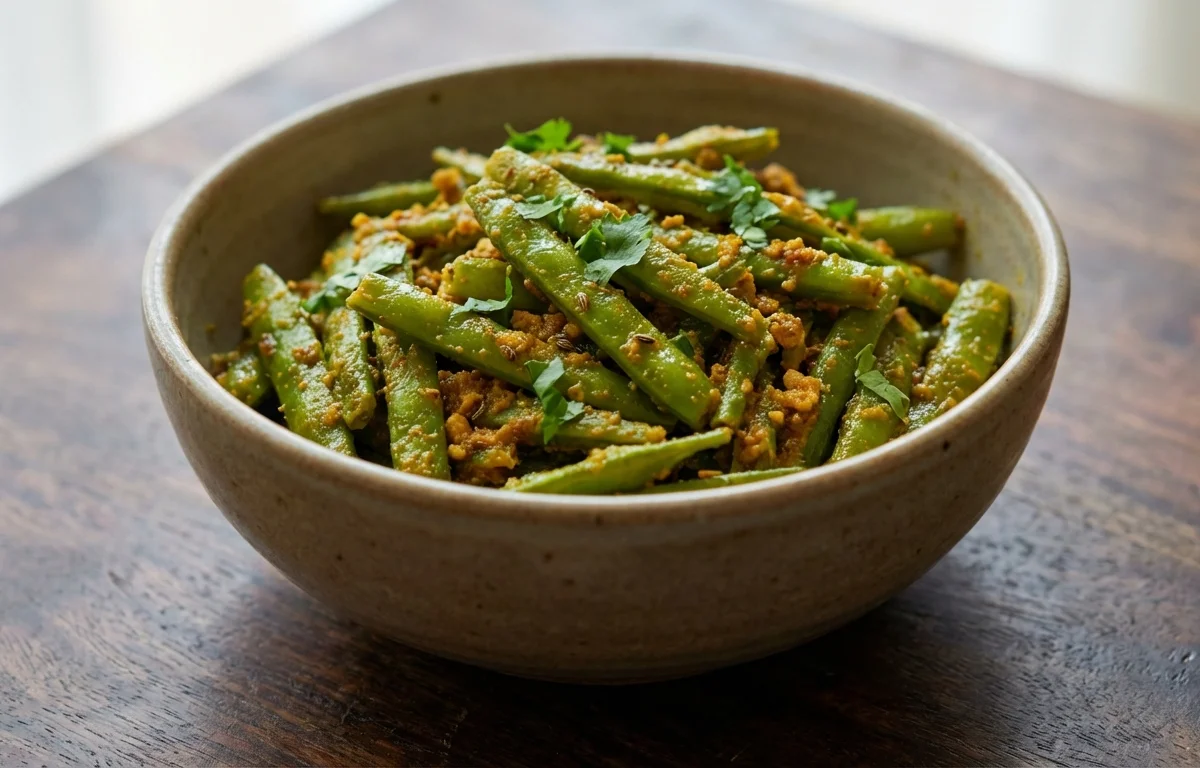
Gawar Phali ki Sabji
Tender cluster beans cooked with potatoes and a handful of everyday spices. This simple Rajasthani-style sabzi is dry, lightly spiced, and comes together in one pan. The beans stay slightly crisp while the potatoes soak up all the flavour from cumin, turmeric, and a pinch of amchur for tang.
For 4 servings
- prep
Prep the cluster beans and potato.
1.Wash 500g gawar phali thoroughly and trim both ends.2.Cut beans into 1-inch pieces.3.Peel and cube 2 medium potatoes into small bite-sized pieces. - temper · ~1 min
Make the tempering.
1.Heat 2 tbsp oil in a kadai over medium heat.2.Add 1 tsp cumin seeds and let them splutter (30 sec).3.Add 1 pinch asafoetida and 2 slit green chilies. Sauté for 15 sec.TIPDon't let the cumin burn — it turns the dish bitter. - saute · ~2 min
Add potatoes and spice powders.
1.Add cubed potatoes to the kadai and stir well.2.Sprinkle 1 pinch turmeric, 1 pinch red chili powder, and 1 tsp coriander powder.3.Sauté for 2 minutes until potatoes are lightly coated and spices are fragrant. - saute · ~18 min
Cook the cluster beans.
1.Add the chopped gawar phali and 0.5 tsp salt. Mix everything well.2.Cover with a lid and cook on low heat for 15-18 minutes.3.Stir once or twice in between. The beans will release moisture and steam cook.TIPNo need to add water — the beans release enough moisture to cook through. - saute · ~2 min
Finish with amchur and dry roast.
1.Remove the lid once beans are tender and any liquid has evaporated.2.Sprinkle 1 pinch dry mango powder and stir gently.3.Increase heat slightly and dry-roast for 2 minutes, stirring to prevent sticking.TIPDry roasting at the end intensifies the flavours and gives a slight char. - garnish
Garnish with fresh coriander leaves and serve hot.
What to keep in mind.
6 tips from the recipe — small details that make a real difference to the final dish.
- 1Trim the cluster beans just before cooking to prevent them from drying out.
- 2Choose small, tender cluster beans for the best texture and no fibrous strings.
- 3Cut potatoes into small, uniform cubes so they cook in the same time as the beans.
- 4If the beans are older, sprinkle a little water while steaming to help them soften.
- 5Let the sabji rest for 5 minutes after cooking so the amchur flavor melds evenly.
- 6For a smoky touch, finish with a pinch of garam masala along with the amchur.
Adapt it for your goals.
Vegan
The recipe is already vegan — just ensure your asafoetida is gluten-free if needed. No changes needed for a plant-based diet.
Low OilLow-Oil
Reduce oil to 1 tbsp and steam the beans and potatoes in a covered pan with a splash of water after the tempering — lighter but still flavorful.
High ProteinHigh-Protein
Add 1/2 cup of boiled chickpeas or sprouted moth beans along with the cluster beans to boost protein while keeping the Rajasthani character.
Jain (no onion garlic)Jain (no onion-garlic)
This dish is naturally Jain-friendly — skip the green chilies if avoiding them, or swap for a pinch of black pepper and asafoetida for heat.
Why this is on our healthy list.
Rich in Dietary Fiber
Cluster beans and potatoes provide a good amount of fiber, supporting digestion and helping maintain steady blood sugar levels.
Low in Calories
This dry sabzi uses minimal oil and no heavy cream or coconut, making it a light side dish suitable for weight management.
Packed with Antioxidants
Turmeric, cumin, and coriander powder supply curcumin and other antioxidants that help combat oxidative stress.
Good Source of Plant Iron
Amchur (dry mango powder) enhances iron absorption from the beans and leafy garnish, supporting healthy blood.
Frequently asked questions
Yes, but thaw and pat them dry before cooking to avoid excess moisture. Reduce the covered cooking time by about 5 minutes.



.webp)
.webp)
.webp)