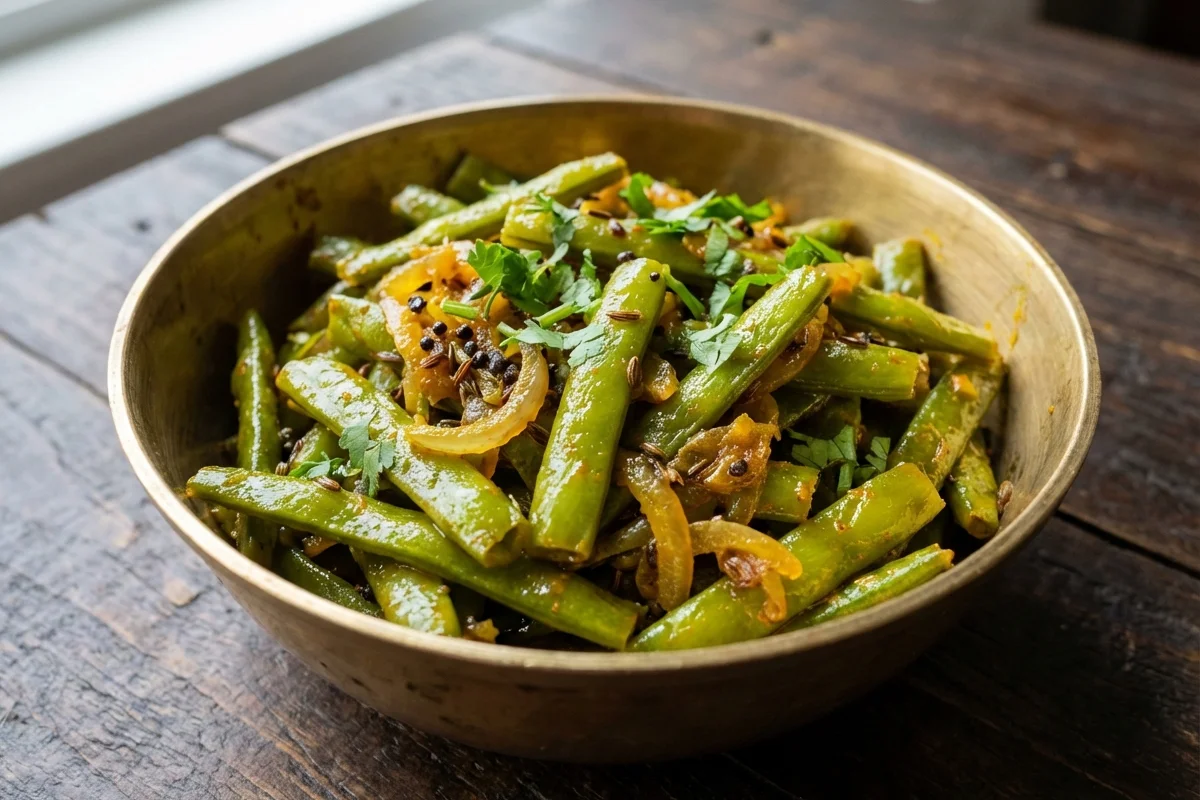
Gawar Phalli Fry
A simple everyday sabzi made with cluster beans, onions, and basic spices. The beans turn tender with a slight bite, while the light masala keeps the dish earthy, savory, and perfect with roti or dal rice.
For 4 servings
- prep · ~10 min
Prepare the gawar phalli.
1.Wash the gawar phalli well and drain.2.Trim both ends and pull away any tough strings.3.Cut the beans into small even pieces for quick cooking. - temper · ~1 min
Make the tempering.
1.Heat oil in a kadai over medium heat.2.Add mustard seeds and let them splutter.3.Add cumin seeds and cook for a few seconds until fragrant.TIPKeep the heat medium so the seeds crackle without burning. - saute · ~6 min
Cook the onion, garlic, and chili.
1.Add onion and sauté until soft and light golden.2.Add garlic and green chili.3.Cook for 1 minute until the raw smell fades. - saute · ~3 min
Add the spices and gawar phalli.
1.Add turmeric powder, red chili powder, coriander powder, and salt.2.Mix quickly so the spices coat the onion mixture.3.Add the chopped gawar phalli and toss well. - simmer · ~15 min
Cover and cook until tender.
Pour in water, mix once, and cover the pan. Cook on low heat until the gawar phalli is tender but not mushy, stirring once or twice in between.
TIPIf the pan dries out before the beans soften, add 1 to 2 tbsp more water, not too much. - saute · ~3 min
Dry out the sabzi lightly.
Remove the lid and cook for 2 to 3 minutes, stirring gently, until any extra moisture evaporates and the masala clings to the beans.
- garnish
Garnish with cilantro.
- serve
Serve hot with roti or dal rice.
What to keep in mind.
7 tips from the recipe — small details that make a real difference to the final dish.
- 1Remove the side strings well; any missed fibers stay chewy even after the beans are cooked.
- 2Cut the gawar phalli into even small pieces so the sabzi softens uniformly without some bits turning mushy.
- 3After adding the powdered spices, stir only briefly before the beans go in so the masala does not scorch.
- 4Cook covered on low heat; high heat can brown the onions too much before the cluster beans become tender.
- 5The right doneness is tender with a slight bite, not limp; overcooked gawar loses its pleasant texture.
- 6Finish uncovered until the pan looks nearly dry, because this sabzi tastes best when the masala lightly coats each piece.
- 7This sabzi keeps well for lunchboxes; cool fully before storing so condensation does not make it watery.
Adapt it for your goals.
Jain
Skip onion and garlic, increase cumin slightly, and add a pinch of hing for a simpler but still flavorful everyday version.
potatoPotato
Add small diced potatoes with the gawar phalli for a heartier sabzi that pairs especially well with chapati.
peanutPeanut
Finish with crushed roasted peanuts for added nuttiness and texture, a great match for cluster beans.
coconutCoconut
Add a spoonful of fresh grated coconut at the end for a mildly sweet, South Indian-style finish.
Why this is on our healthy list.
Fiber-Rich Vegetable Base
Cluster beans and onions add dietary fiber, making this dry sabzi a filling side for everyday meals.
Moderate Oil Cooking
The dish uses a small amount of oil and gets most of its flavor from tempering, onions, garlic, and spices.
Phytonutrients From Spices
Turmeric, cumin, mustard, coriander, chili, garlic, and cilantro bring plant compounds along with strong flavor.
Frequently asked questions
Cluster beans have a natural slight bitterness. Proper sautéing of onion and garlic, balanced salt, and cooking until just tender help mellow it.