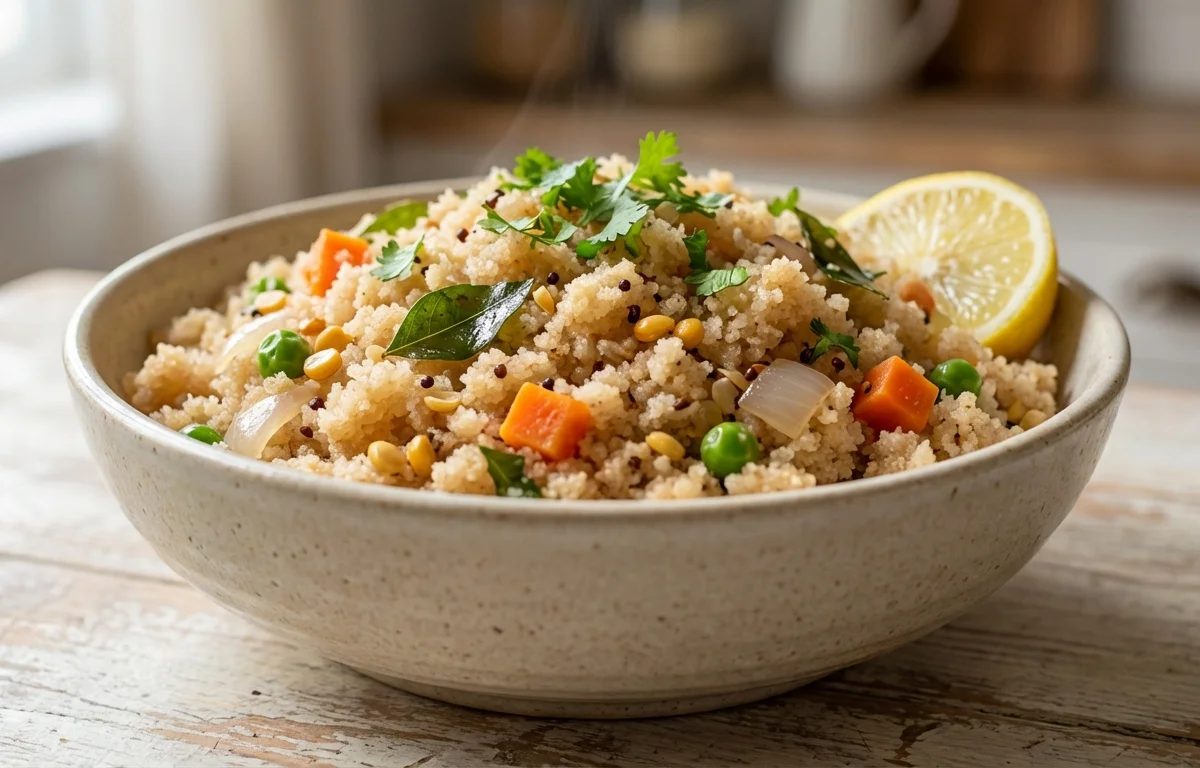
Godhuma Rava Upma
A warm, comforting South Indian breakfast made with broken wheat, onions, chilies, and a simple tempering. It cooks up soft yet fluffy, with plenty of flavor from ginger, curry leaves, and lemon.
For 4 servings
- prep
Prepare the vegetables and measure the ingredients.
1.Chop the onion finely.2.Finely chop the carrot and ginger.3.Slit the green chilies and chop the coriander leaves.4.Measure the broken wheat and water so the cooking goes smoothly. - saute · ~4 min
Roast the broken wheat lightly.
Heat a dry pan over medium heat and roast the godhuma rava for 3 to 4 minutes until it smells nutty. Stir often and do not brown it deeply.
TIPA light roast helps the upma stay fluffy instead of turning sticky. - temper · ~2 min
Make the tempering.
1.Heat oil and ghee in the same pan over medium heat.2.Add mustard seeds and let them splutter.3.Add urad dal, chana dal, and cashews.4.Cook until the dals turn light golden and the cashews look lightly toasted. - saute · ~5 min
Cook the aromatics and vegetables.
1.Add green chilies, ginger, and curry leaves and cook for 20 to 30 seconds.2.Add the onion and sauté until soft and translucent.3.Add carrot and peas and cook for 2 to 3 minutes.4.Stir in the salt. - boil · ~4 min
Boil the water.
Pour in the water and bring it to a full boil over medium-high heat. Taste the water once and adjust only if needed before adding the broken wheat.
- mix · ~2 min
Add the broken wheat and mix well.
Lower the heat and add the roasted godhuma rava slowly while stirring continuously to avoid lumps. Mix until the grains are evenly spread through the water.
TIPAdd it in a steady stream, not all at once, for the best texture. - simmer · ~8 min
Cook until the upma is soft and fluffy.
Cover and cook on low heat until the broken wheat is tender and the water is absorbed. Open once midway to stir gently so it cooks evenly.
- rest · ~5 min
Rest the upma for 5 minutes.
- garnish
Finish with lemon juice and coriander leaves.
Fluff the upma gently with a spoon, then mix in the lemon juice and coriander leaves just before serving.
- serve
Serve hot.
What to keep in mind.
7 tips from the recipe — small details that make a real difference to the final dish.
- 1Roast the godhuma rava only until nutty; deep browning can make the upma taste dry and heavy.
- 2Wait for the mustard seeds to fully splutter before adding dals, or the tempering will taste raw.
- 3Add the broken wheat in a steady rain while stirring so it stays separate instead of forming lumps.
- 4Taste the boiling water for salt before adding rava; once it absorbs, seasoning is harder to fix evenly.
- 5Cook covered on low and stir only once midway, so the grains turn tender without getting mushy.
- 6Mix in lemon juice only after resting the upma, so the fresh tang stays bright instead of turning dull.
- 7If reheating leftovers, sprinkle a little hot water first and fluff gently to bring back the soft texture.
Adapt it for your goals.
Vegan
Skip the ghee and use all oil or coconut oil for a fully vegan version with a slightly different but still classic South Indian aroma.
low oilLow-oil
Reduce the oil and omit cashews for a lighter upma; keep the tempering gentle so the mustard and dals still flavor the dish well.
vegetable loadedVegetable-loaded
Add beans, capsicum, or finely chopped cabbage along with the carrot and peas for a heartier breakfast with more texture.
masalaMasala
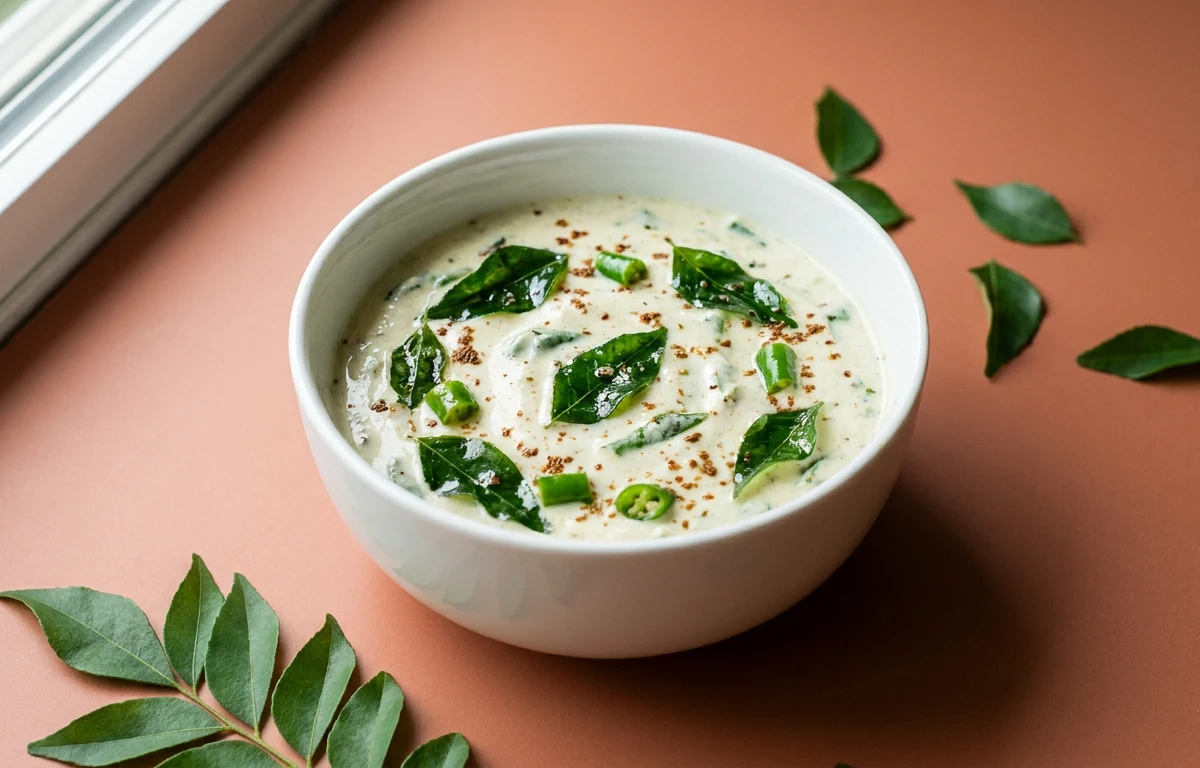
Add a pinch of turmeric and a little black pepper for a warmer, more spiced upma that pairs well with coconut chutney.
Why this is on our healthy list.
Whole Grain Goodness
Broken wheat is a minimally processed whole grain, making this upma more sustaining than many refined breakfast options.
Includes Vegetables
Carrot, peas, onion, ginger, curry leaves, and coriander add plant compounds, color, and everyday nourishment.
Balanced Energy
The combination of broken wheat, lentils in the tempering, and a little fat helps make the dish filling and satisfying.
Frequently asked questions
It usually happens if the rava was not lightly roasted, was added all at once, or was cooked with too much stirring. Roast first and add it slowly into boiling water.