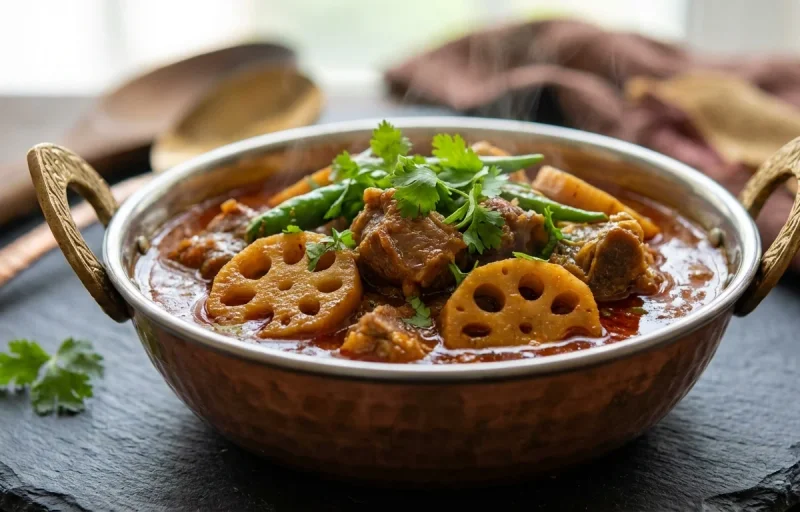
Gogji Nadir with Boiled Eggs
A homestyle Kashmiri curry where tender turnip and lotus stem simmer with warm spices, then finish with boiled eggs. The gravy is light, comforting, and full of earthy flavor that pairs beautifully with plain rice.
For 4 servings
- boil · ~20 min
Boil the eggs and vegetables.
1.Place the eggs in a small pan, cover with water, and boil until firm (10-12 min).2.Lift out the eggs, cool them, and peel them.3.In another pan, boil the turnip and lotus stem in water until just tender (8-10 min).4.Drain the vegetables and keep them aside.TIPDo not overcook the turnip and lotus stem here; they should finish cooking in the gravy. - saute · ~2 min
Heat the oil and bloom the whole spices.
1.Heat mustard oil until it reaches smoking point, then lower the heat slightly.2.Add asafoetida, fennel seeds, green cardamom, and cinnamon.3.Stir for a few seconds until fragrant. - saute · ~1 min
Add the ground spices.
Add dry ginger powder, fennel powder, red chili powder, turmeric powder, and salt. Splash in 2 to 3 tablespoons water right away and stir so the spices do not burn.
TIPThat quick splash of water helps the spice powders stay bright and keeps the gravy smooth. - simmer · ~15 min
Simmer the turnip and lotus stem.
Add the boiled turnip and lotus stem, then pour in 3 cups water. Bring to a gentle simmer and cook until the vegetables are soft and the broth is lightly flavored, about 15 minutes.
- simmer · ~5 min
Finish with the boiled eggs.
Add the peeled boiled eggs to the curry and simmer for 5 minutes so they soak up the spices. Spoon some gravy over the eggs as they cook.
- serve
Serve hot with plain rice.
What to keep in mind.
6 tips from the recipe — small details that make a real difference to the final dish.
- 1Prick the boiled eggs lightly with a fork before the final simmer so they absorb more of the fennel-ginger broth.
- 2Rinse sliced lotus stem very well to remove any trapped grit from the holes before boiling.
- 3Keep the turnip wedges medium-sized so they soften without breaking apart in the light gravy.
- 4After mustard oil reaches smoking point, reduce the heat before adding spices to avoid scorching the asafoetida and fennel.
- 5If the broth tastes thin, simmer uncovered for a few extra minutes; this curry is light but should still taste rounded.
- 6This dish tastes even better after a short rest, as the eggs and vegetables continue to take on the Kashmiri spices.
Adapt it for your goals.
No-egg
Skip the eggs for a lighter vegetable-forward Gogji Nadir that lets the earthy turnip and lotus stem stand out more clearly.
spicierSpicier
Increase Kashmiri chili slightly for a deeper red color and warmer finish while keeping the dish aromatic rather than fiery.
yakhni styleYakhni-style
Add a little whisked curd carefully at low heat for a tangier, silkier gravy inspired by other Kashmiri curry styles.
jainJain
Use only lotus stem and eggs, omitting turnip if desired by household preference while keeping the same fennel-ginger spice profile.
Why this is on our healthy list.
Protein from Eggs
Boiled eggs add satisfying protein, making this light broth-based curry more filling and balanced as a meal with rice.
Fiber-Rich Vegetables
Turnip and lotus stem contribute fiber and texture, helping the dish feel hearty without relying on a heavy gravy.
Light, Broth-Based Curry
With water as the base and modest oil, this recipe delivers flavor through spices rather than a rich cream or nut paste.
Digestive Spice Profile
Fennel, dry ginger, and asafoetida are traditional warming spices that add depth while keeping the curry feel comforting and gentle.
Frequently asked questions
You can, but the curry will take longer and the broth may turn muddier. Parboiling keeps the vegetables tender yet intact and helps the gravy stay clean-tasting.