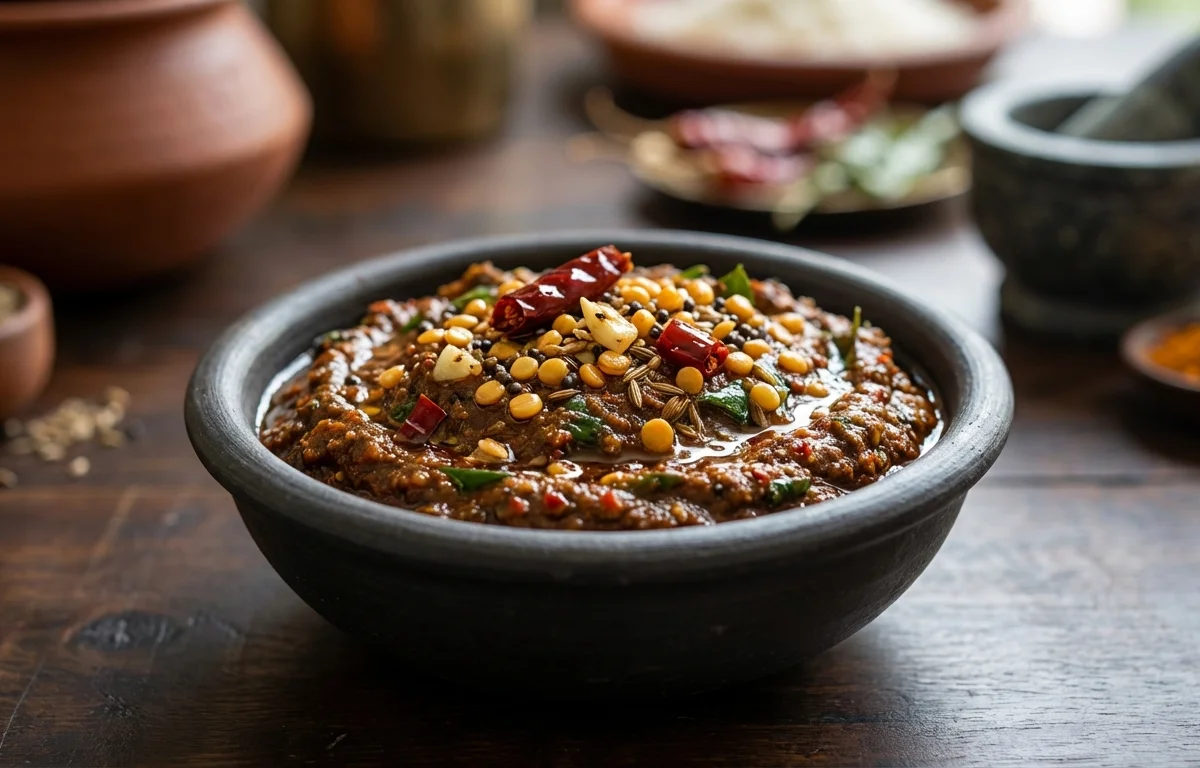
Gongura Chutney
Tangy gongura leaves cooked down with garlic, chilies, and a simple tempering make a bold Andhra-style chutney. It is sharp, spicy, and deeply savory, with a rich taste that goes beautifully with hot rice or dosa.
For 8 servings
- prep
Prep the gongura leaves.
Wash the gongura leaves very well to remove any grit, then drain and roughly chop them. Keep the garlic and both chilies ready before you start cooking.
- saute · ~10 min
Cook the chilies, garlic, and leaves.
1.Heat 1 tbsp oil in a pan over medium heat.2.Add dried red chili, green chili, and garlic, then sauté for 1-2 minutes until fragrant.3.Add the chopped gongura leaves and cook until wilted and most of the moisture dries out, about 6-8 minutes.4.Turn off the heat and let the mixture cool slightly.TIPCook the leaves until their raw sharpness softens and the pan looks almost dry, or the chutney can taste watery. - mix
Grind the chutney.
Transfer the cooled gongura mixture to a mixer jar. Add salt and grind to a coarse or smooth chutney, depending on how you like it.
- temper · ~2 min
Make the tempering.
1.Heat the remaining 1 tbsp oil in a small pan.2.Add mustard seeds and let them splutter.3.Add urad dal and cumin seeds, then cook until the dal turns lightly golden.4.Add asafoetida and switch off the heat.TIPKeep the heat moderate so the urad dal turns golden, not dark brown. - assemble
Mix the tempering into the chutney.
Pour the hot tempering over the ground gongura chutney and mix well. Taste and adjust salt if needed.
- serve
Serve with hot rice, dosa, or idli.
What to keep in mind.
6 tips from the recipe — small details that make a real difference to the final dish.
- 1Drain the washed gongura really well before cooking so the chutney reduces faster and tastes more concentrated.
- 2Cook the leaves until the pan looks nearly dry; extra moisture makes the chutney loose and dulls its punchy sourness.
- 3Let the gongura mixture cool a bit before grinding, or steam can create a watery texture in the mixer jar.
- 4Grind it coarse for hot rice and ghee, or smoother for dosa and idli where a spreadable texture works better.
- 5Do not over-brown the garlic in the first sauté; lightly golden garlic keeps the chutney savory without bitterness.
- 6Store in a clean dry jar and top with a thin film of oil to help the chutney keep its flavor longer in the fridge.
Adapt it for your goals.
Extra-garlicky
Add a few more garlic cloves while sautéing for a stronger, rustic chutney that pairs especially well with hot rice and ghee.
less spicyLess-spicy
Reduce the dried red chilies and use only one green chili for a milder version that keeps the gongura's tang in the spotlight.
chunkyChunky
Pulse the cooked mixture briefly instead of grinding smooth if you prefer a traditional coarse pachadi texture.
no garlicNo-garlic
Skip the garlic for a simpler temple-style flavor profile; the tempering spices and gongura still give plenty of character.
Why this is on our healthy list.
Leafy Green Goodness
Gongura leaves bring the benefits of leafy greens, adding plant compounds and everyday nourishment to a small, flavorful condiment.
Digestive Spice Support
Cumin, asafoetida, garlic, and chilies are commonly used in Indian cooking to add flavor while making rich meals feel easier to digest.
Light but Flavorful
Because this chutney gets most of its character from sour leaves, chilies, garlic, and tempering spices, a little goes a long way.
Frequently asked questions
Usually the leaves were not drained well or not cooked down enough. Sauté until most moisture evaporates and the pan looks almost dry before grinding.



.webp)