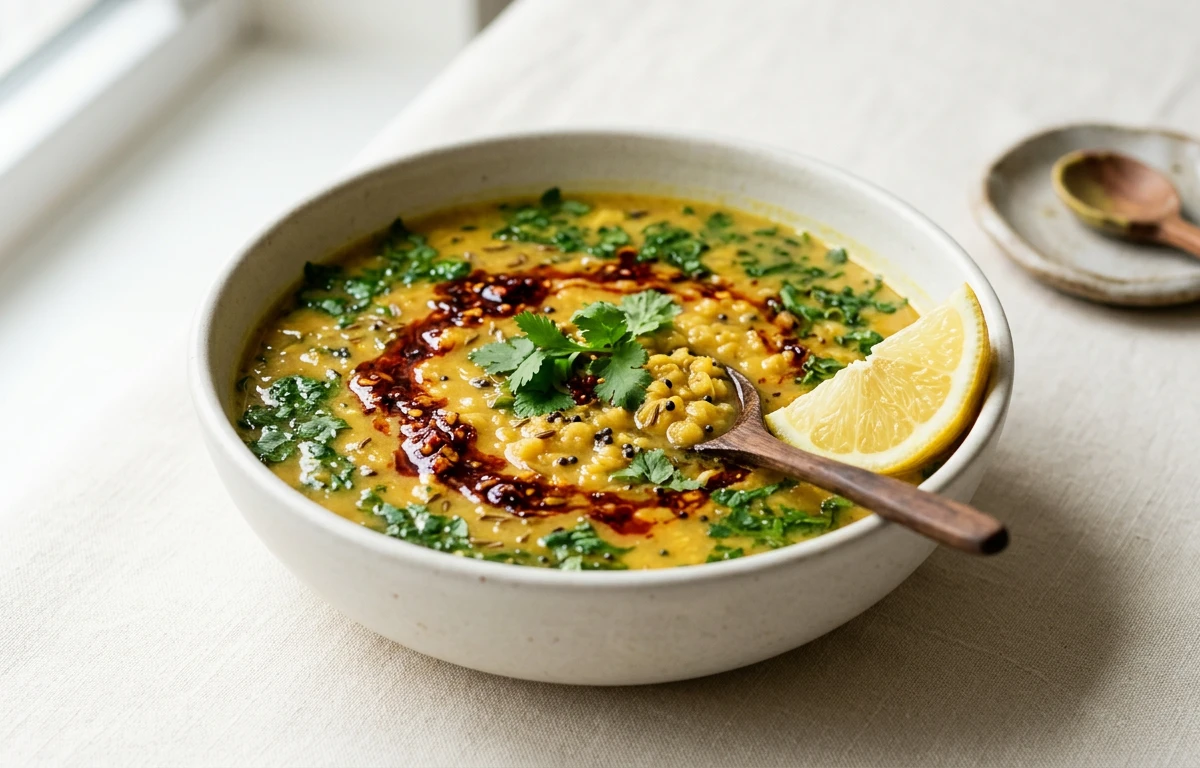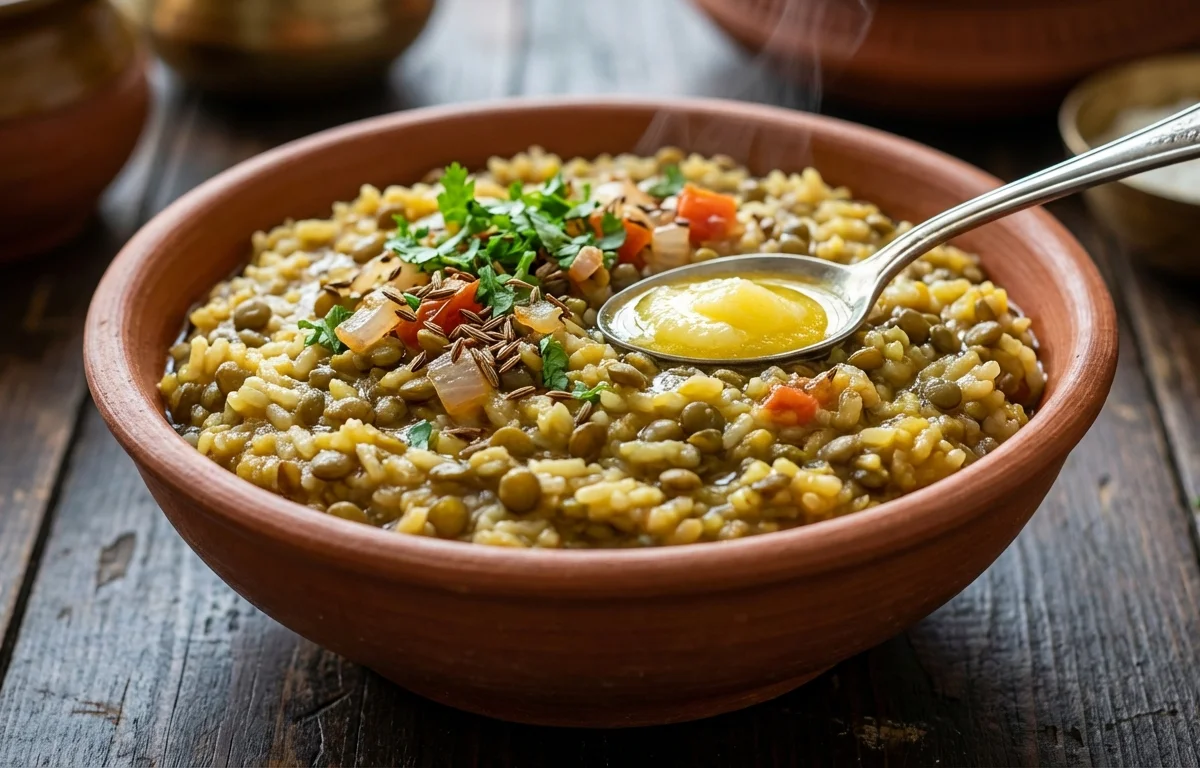
Green Moong Dal Khichdi
A humble, one-pot comfort dish of whole green moong beans and rice slow-cooked together into a soft, creamy porridge. Lightly tempered with ghee, cumin, and a touch of turmeric, this easy-to-digest meal is a warm hug in a bowl—perfect with a dollop of yogurt and a spoonful of pickle.
For 4 servings
- prep · ~30 min
Wash and soak the dal and rice.
1.Rinse whole green moong dal and rice together in 2-3 changes of water.2.Soak in enough water to cover for 30 minutes, then drain. - temper · ~2 min
Make the tempering.
1.Heat ghee in the pressure cooker over medium heat.2.Add cumin seeds and let them splutter (30 seconds).3.Add a pinch of hing and turmeric powder; stir for 10 seconds.TIPUse medium heat — high heat burns the cumin and hing. - saute · ~2 min
Sauté the dal and rice.
1.Add the drained moong dal and rice to the pressure cooker.2.Stir gently for 2 minutes until the grains are well coated with ghee and aromatic.TIPRoasting the grains lightly enhances the nutty flavor. - pressure cook · ~18 min
Pressure cook the khichdi.
1.Add 4 cups of water and salt. Stir to combine.2.Close the pressure cooker lid and cook on medium heat.3.Wait for 3-4 whistles, then lower the heat and cook for 10 more minutes.4.Turn off the heat and let the pressure release naturally.TIPNatural pressure release makes the khichdi creamier. - mix · ~2 min
Adjust consistency and mash lightly.
1.Open the lid once the pressure has dropped.2.Mash the khichdi lightly with the back of a ladle for a creamier texture.3.If it looks too thick, stir in a splash of hot water to reach a flowing, porridge-like consistency.TIPKhichdi thickens as it cools — add water just before serving. - garnish
Garnish with fresh coriander and serve hot.
Ladle the steaming khichdi into bowls, scatter chopped coriander leaves on top, and finish with an extra drizzle of ghee if desired.
What to keep in mind.
6 tips from the recipe — small details that make a real difference to the final dish.
- 1Soaking the dal and rice for 30 minutes is essential for even cooking and creaminess.
- 2Sauté the soaked grains in ghee for 2 minutes to unlock a nutty, toasty flavor.
- 3Always let pressure release naturally (not quick release) for the softest, creamiest texture.
- 4Adjust the water quantity: use 3.5 cups for a thicker khichdi or 4.5 cups for a soupy porridge.
- 5For a richer taste, finish with a drizzle of warm ghee and a pinch of cumin powder just before serving.
- 6Khichdi thickens as it cools; add a splash of hot water when reheating to restore consistency.
Adapt it for your goals.
Vegan
Replace ghee with coconut oil or a neutral vegetable oil in the tempering. The khichdi stays just as comforting, and coconut oil adds a subtle tropical note.
vegetable loadedVegetable-loaded
After tempering, sauté 1/2 cup each of chopped carrots, beans, and peas for 3 minutes before adding the dal and rice. This boosts nutrition and adds a gentle sweetness.
spiced upSpiced-up
Add 1/2 teaspoon of grated ginger and 1 slit green chilli along with the hing for a warm, mildly spicy kick that cuts through the creaminess.
low oilLow-oil
Use only 1 teaspoon of ghee for tempering instead of 2, and skip the final drizzle. The khichdi remains light yet still satisfyingly soft.
Why this is on our healthy list.
Rich in Plant Protein
Whole green moong dal provides a solid source of plant-based protein, making this dish a balanced, meat-free meal that supports muscle repair and satiety.
Easy to Digest
The soft, porridge-like consistency and addition of hing (asafoetida) aid digestion, making this khichdi a go-to comfort food for upset stomachs or post-illness recovery.
Good Source of Dietary Fiber
The skin-on whole green moong beans retain their natural fiber, which promotes healthy digestion and helps maintain stable blood sugar levels.
Low in Fat
With just 2 tablespoons of ghee for the entire pot, this khichdi is naturally low in fat while still providing the satiety of a warm, hearty meal.
Frequently asked questions
Yes, but reduce cooking time by about 5 minutes as split dal cooks faster. The texture will be even softer and less chunky.