Bajra Vada
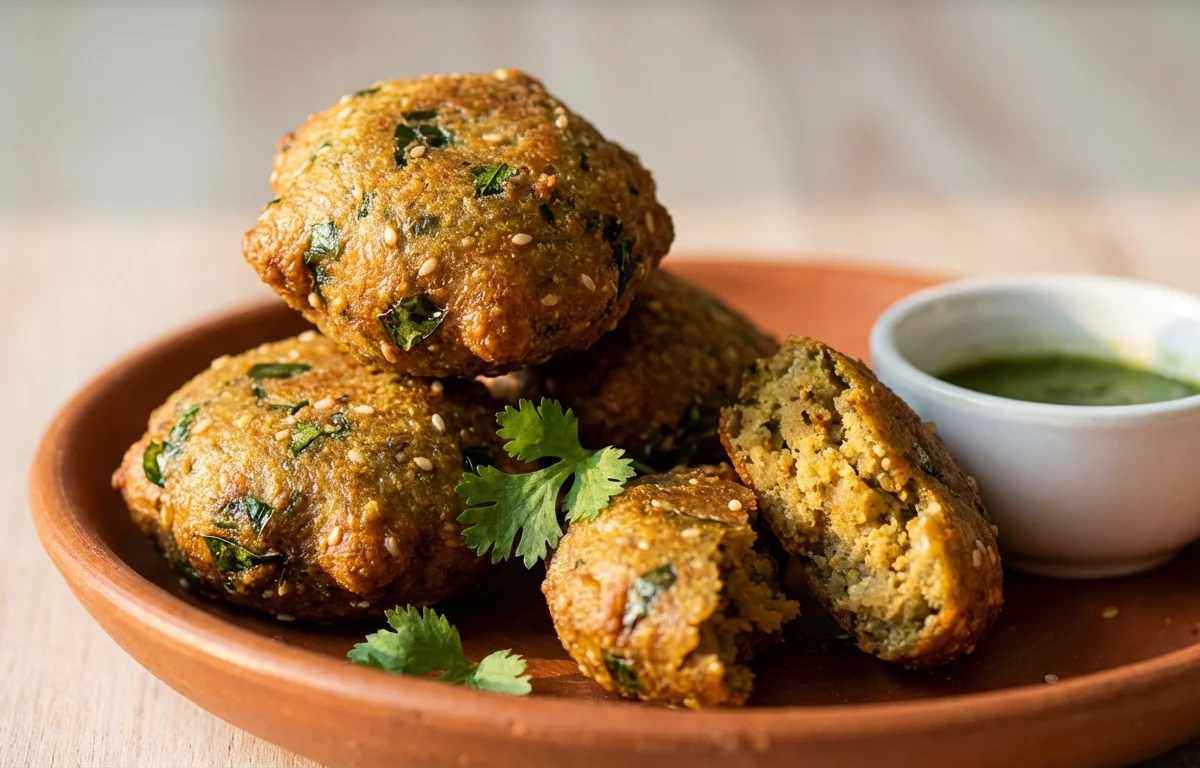
Crispy, golden fritters made from pearl millet flour, bursting with nutty, earthy flavors and a hint of spice. These Rajasthani winter favorites are perfect with a hot cup of chai or tangy green chutney.
For 4 servings
- prep · ~2 min
Mix the dry ingredients.
1.Sift the bajra flour into a large mixing bowl to remove any lumps.2.Add salt, turmeric powder, red chili powder, and cumin seeds.3.Mix well with a spoon to evenly distribute the spices. - mix · ~5 min
Combine wet and dry ingredients to form a dough.
1.Add finely chopped onion, green chili, grated ginger, and coriander leaves to the flour mixture.2.Pour in the whisked yogurt and mix with your hands to integrate the yogurt with the flour.3.Slowly add water, a tablespoon at a time, kneading gently until the mixture comes together into a stiff, firm dough. Do not over-knead.TIPA stiff dough is key. If it becomes too soft, the pakoras will absorb too much oil. - prep · ~4 min
Shape the vadas.
1.Divide the dough into 8 equal portions and roll them into smooth balls.2.Flatten each ball between your palms into a round disc, about 2 inches wide and 0.25 inch thick. Keep the edges smooth to prevent crumbling while frying.3.Place the shaped vadas on a clean, dry plate.TIPWet your palms slightly if the dough sticks, but avoid adding dry flour. - fry · ~10 min
Deep fry the vadas until golden.
1.Heat the oil in a kadhai over medium heat. To test, a small piece of dough should sizzle and rise to the surface without browning immediately.2.Gently slide in 3-4 vadas, being careful not to overcrowd the pan.3.Fry for 4-5 minutes, turning occasionally, until they turn deep golden brown and crisp on both sides.4.Remove with a slotted spoon and drain on paper towels to absorb excess oil.TIPMaintain steady medium heat. High heat will brown the outside before the inside cooks through. - serve
Serve hot with chutney.
Serve the bajra vadas immediately while still hot and crispy. Pair with tangy raw mango pickle or spicy green chutney.
What to keep in mind.
7 tips from the recipe — small details that make a real difference to the final dish.
- 1Sift the bajra flour thoroughly to prevent lumps and ensure a smooth dough.
- 2Knead the dough stiff; a soft dough makes vadas absorb excess oil while frying.
- 3Wet your palms slightly if the dough sticks when shaping, but avoid adding dry flour.
- 4Test oil temperature by dropping a tiny dough piece—it should sizzle and float slowly.
- 5Fry over steady medium heat; high heat burns the exterior before the inside cooks.
- 6Drain fried vadas on paper towels immediately to keep them crisp and not greasy.
- 7Bajra vadas are best served hot; they lose crispness as they cool.
Adapt it for your goals.
No-Onion Garlic (Satvik)
Replace onion with grated bottle gourd (lauki) and omit green chili for a lighter, satvik version suitable for fasting or temple offerings.
High ProteinHigh Protein
Add 2 tablespoons of roasted and crushed peanuts or sesame seeds to the dough for extra protein and crunch.
Gluten Free VeganGluten-Free Vegan
Replace yogurt with 2 tablespoons of lemon juice mixed with water to keep the vadas vegan while retaining binding and subtle tang.
Stuffed Bajra VadaStuffed Bajra Vada
Enclose a small ball of spiced crumbled paneer or mashed potato inside each vada before flattening for a surprise filling.
Why this is on our healthy list.
Rich in Dietary Fiber
Pearl millet (bajra) is a whole grain packed with fiber, which aids digestion and helps keep you full longer.
Gluten-Free Grain
Bajra flour is naturally gluten-free, making these vadas suitable for those with celiac disease or gluten sensitivity.
Good Source of Iron
Bajra is a good source of iron, supporting healthy blood and energy levels, especially important in winter diets.
Warming for Winter
In Ayurveda, bajra is considered a warming grain that helps combat cold and boosts immunity during chilly months.
Frequently asked questions
The dough was likely too dry or crumbly. Ensure the dough is stiff but cohesive; if it cracks, add a tablespoon of yogurt or water and knead again.