
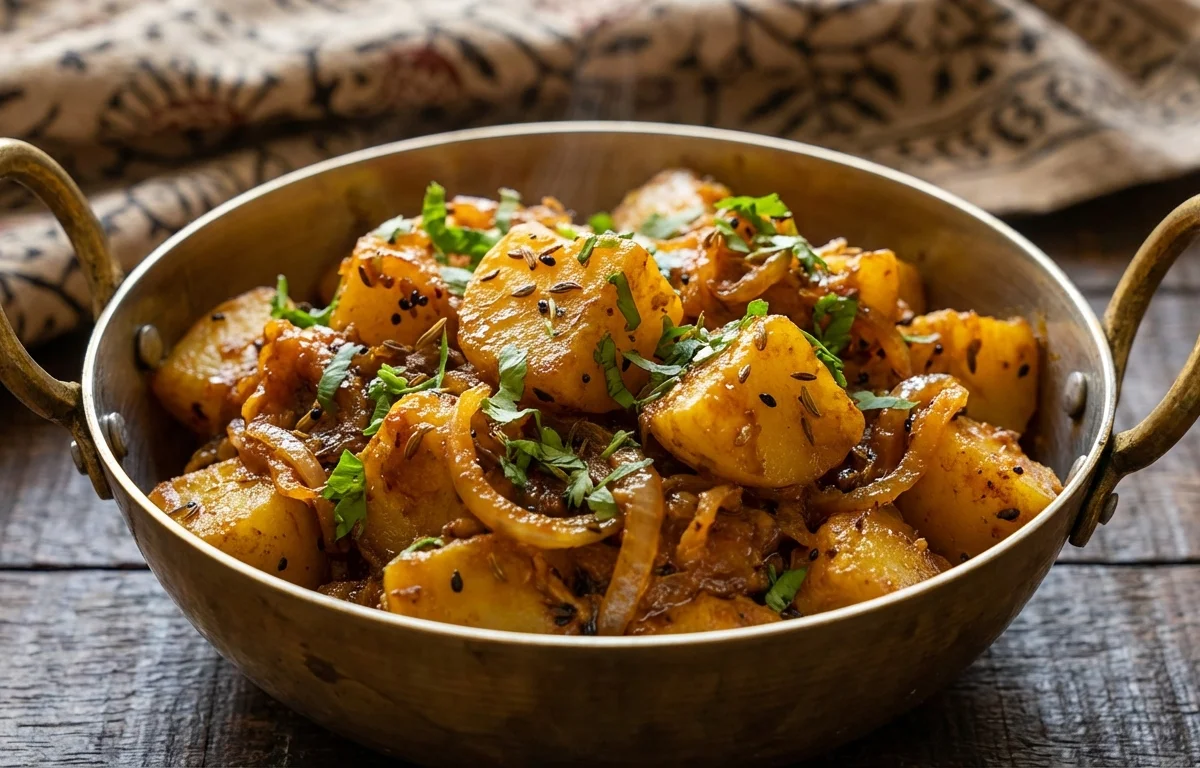
Jaipuri Aloo Pyaz
A homestyle Rajasthani potato and onion sabzi with warm spices, a little tang from dry mango powder, and just enough heat to make it lively. It cooks quickly and sits beautifully beside roti, poori, or dal for a comforting meal.
For 4 servings
- prep · ~15 min
Prep the potatoes and onions.
1.Peel the potatoes and cut them into medium cubes.2.Peel the onions and separate them into thick petals.3.Slit the green chilies and finely chop the ginger. - temper · ~1 min
Crackle the whole spices.
1.Heat oil in a wide pan over medium heat.2.Add cumin seeds and fennel seeds.3.Let them sizzle until fragrant, about 20 to 30 seconds.TIPUse medium heat so the fennel seeds release flavor without turning bitter. - saute · ~4 min
Cook the aromatics and onions.
1.Add green chili and chopped ginger to the pan.2.Stir for a few seconds, then add the onion petals.3.Cook until the onions soften slightly but still hold their shape, 3 to 4 minutes. - saute · ~3 min
Add the potatoes and spices.
1.Add the potato cubes and mix well with the onions.2.Sprinkle in turmeric powder, red chili powder, coriander powder, garam masala, and salt.3.Stir well so the potatoes are evenly coated in the spices. - simmer · ~15 min
Cover and cook until the potatoes are tender.
Pour in the water, mix once, then cover the pan and cook on low heat until the potatoes are tender, stirring once or twice so nothing catches at the bottom.
TIPKeep just a little moisture in the pan. This dish should finish semi-dry, not watery. - garnish
Finish with dry mango powder and coriander leaves.
Uncover the pan and cook for 1 to 2 minutes if any extra moisture remains. Sprinkle dry mango powder and chopped coriander leaves, then toss gently.
- serve
Serve hot.
Serve Jaipuri Aloo Pyaz hot with roti, paratha, or poori.
What to keep in mind.
8 tips from the recipe — small details that make a real difference to the final dish.
- 1Cut the potatoes into even medium cubes so they soften at the same rate without turning mushy.
- 2Keep the onion petals fairly large; they should soften and sweeten but still stay distinct in the finished sabzi.
- 3Temper cumin and fennel only until fragrant—if the fennel darkens too much, the sabzi can taste bitter.
- 4After adding the dry spices, stir well to coat the potatoes before adding water so the masala clings better.
- 5Cook covered on low heat and stir just once or twice; too much stirring can break the potatoes.
- 6Add amchur only at the end to keep its tang bright and prevent it from dulling during simmering.
- 7If the sabzi looks wet at the end, uncover and cook briefly until it turns semi-dry, as traditionally served.
- 8This dish reheats very well; rest it for 15 to 20 minutes after cooking for even better spice absorption.
Adapt it for your goals.
Low-oil
Use 1 tbsp oil and a good heavy pan; the sabzi will still cook well, with a slightly lighter mouthfeel.
spicierSpicier
Increase red chili powder or add one extra slit green chili for a hotter Jaipuri-style sabzi.
no onionNo-onion
Skip the onion petals for a simpler potato sabzi with a cleaner spice profile, useful for fasting or preference.
garlicGarlic
Add a little chopped garlic with the ginger for a deeper, more robust everyday North Indian flavor.
Why this is on our healthy list.
Vegetable-Based Comfort Dish
Potatoes and onions make this a satisfying sabzi built from everyday vegetables rather than heavily processed ingredients.
Digestive Spice Support
Cumin, fennel, and ginger are classic Indian cooking ingredients often used to add warmth and digestive comfort to meals.
Moderate Oil Preparation
The sabzi uses a small amount of oil and cooks mainly by covered steaming after the initial tempering.
Frequently asked questions
Use potatoes that hold their shape after simmering, so the cubes stay intact and do not collapse into the masala.


