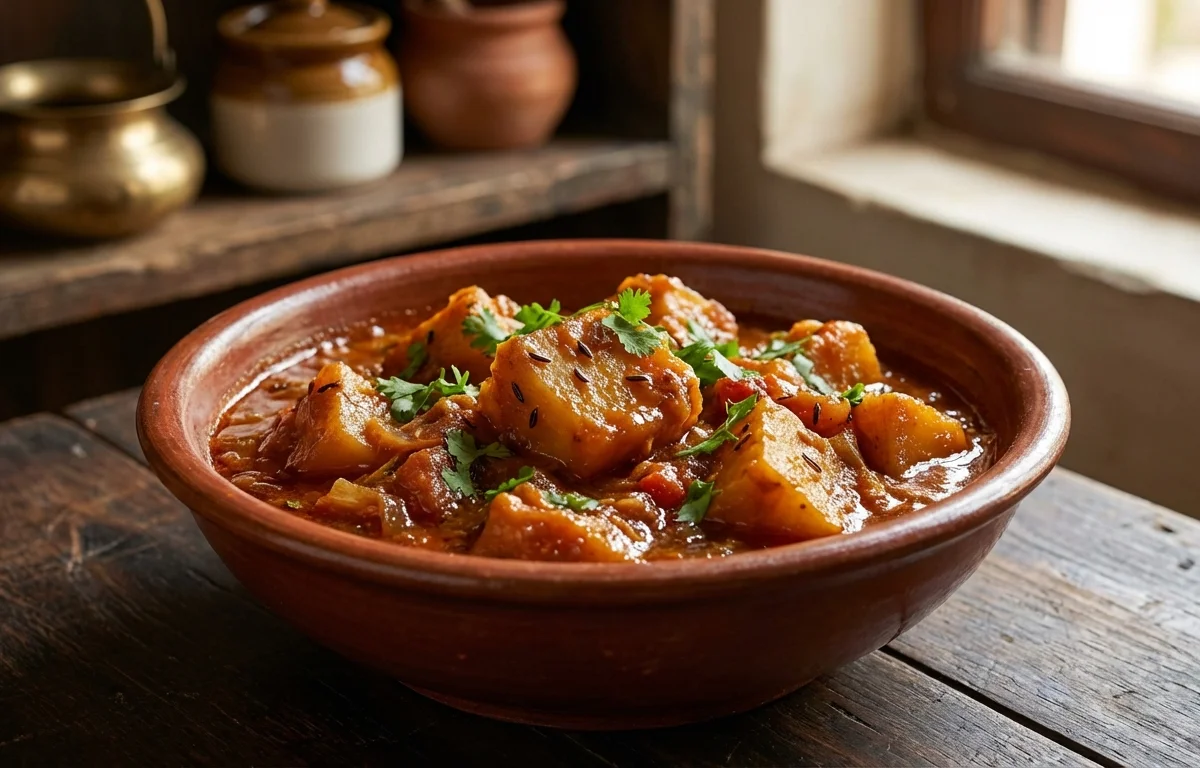
Jimikand Curry
Earthy elephant foot yam simmered in a lightly spiced onion-tomato gravy makes a comforting home-style curry. The yam turns tender and meaty, soaking up warm spices beautifully for a satisfying Indian side or main.
For 4 servings
- prep
Prepare the jimikand.
1.Peel the jimikand carefully and cut it into medium cubes.2.Rinse the cubes well under running water.3.Chop the onion, tomato, and green chili, and keep the remaining ingredients ready. - boil · ~12 min
Boil the jimikand until just tender.
Add the jimikand, 500 ml water, and half of the salt to a pot. Boil for 10-12 minutes until the cubes are just tender but still hold their shape, then drain.
TIPDo not overcook the yam or it may break apart later in the gravy. - temper · ~1 min
Heat the oil and crackle the whole spices.
Heat oil in a pan over medium heat. Add cumin seeds and bay leaf, and let them sizzle for a few seconds until fragrant.
- saute · ~13 min
Cook the onion mixture.
1.Add the chopped onion and cook until light golden, 6-7 minutes.2.Add ginger-garlic paste and green chili, and sauté for 1 minute.3.Stir in the chopped tomato and cook until soft and pulpy, 4-5 minutes. - saute · ~1 min
Add the ground spices.
Add turmeric powder, red chili powder, coriander powder, garam masala, and the remaining salt. Mix well and cook for 30 seconds so the spices bloom in the oil.
TIPIf the masala looks dry, splash in a spoon of water so the spices do not burn. - simmer · ~12 min
Simmer the curry with the jimikand.
1.Add the boiled jimikand cubes and coat them well in the masala.2.Pour in 1 cup water and stir gently.3.Cover and simmer for 10-12 minutes so the yam absorbs the flavors and the gravy thickens slightly. - garnish
Finish with lemon juice and coriander leaves.
Turn off the heat and stir in lemon juice. Sprinkle coriander leaves on top for a fresh finish.
- serve
Serve the jimikand curry hot.
What to keep in mind.
7 tips from the recipe — small details that make a real difference to the final dish.
- 1Wear gloves or oil your hands while peeling jimikand, as raw yam can irritate the skin.
- 2Boil the yam only until a knife goes in with slight resistance; overboiled cubes will crumble in the gravy.
- 3Let the onions turn light golden before adding ginger-garlic paste for a sweeter, deeper masala base.
- 4Cook the tomatoes until they look pulpy and the oil starts separating, or the gravy can taste raw.
- 5Stir gently after adding the boiled yam so the cubes stay intact and meaty.
- 6Add lemon juice only after switching off the heat to keep its brightness and avoid bitterness.
- 7This curry tastes even better after 30 minutes of resting, when the yam absorbs the onion-tomato masala.
Adapt it for your goals.
No-onion-no-garlic
Skip onion and ginger-garlic paste; use extra tomato, a pinch of hing, and a little more cumin for a satvik-style curry.
dry sabziDry-sabzi
Reduce the final water and simmer uncovered until the masala clings to the yam for a drier version to serve with rotis.
spicierSpicier
Add an extra green chili or slightly more red chili powder if you want the earthy yam balanced by more heat.
mustard oilMustard-oil
Cook the masala in mustard oil for a sharper, more rustic North Indian flavor that pairs very well with jimikand.
Why this is on our healthy list.
Fiber-Rich Vegetable Base
Elephant foot yam and the onion-tomato gravy provide fiber that can make the curry more satisfying and hearty.
Antioxidant-Rich Spices
Turmeric, cumin, coriander, chili, and fresh coriander leaves add plant compounds along with layered flavor.
Light Yet Filling
Because the dish relies on yam and a simple spiced gravy rather than cream, it stays comforting without being overly heavy.
Frequently asked questions
Parboiling helps the yam cook evenly, reduces its raw taste, and keeps the cubes tender while still firm enough to hold shape in the gravy.



.webp)