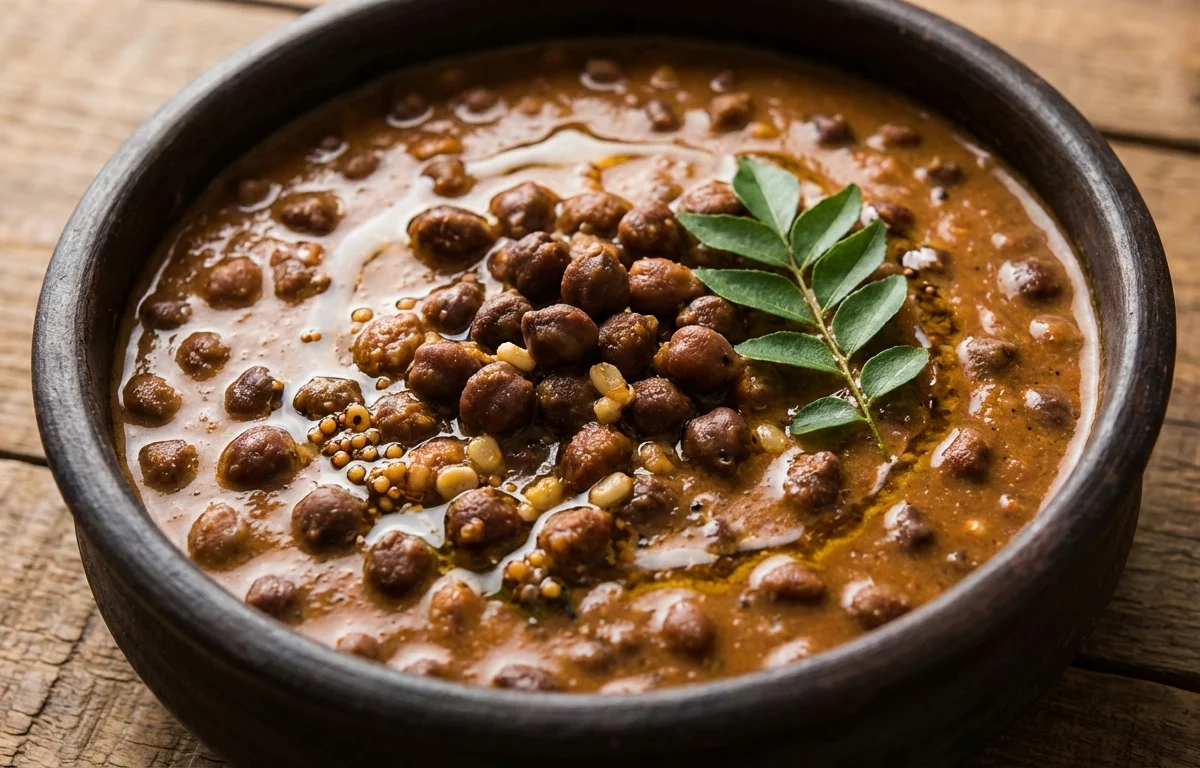
Kadle Gashi
A hearty Mangalorean chickpea curry with a coconut and roasted spice paste that gives it deep color and warm flavor. Slightly tangy tamarind and creamy chickpeas make it perfect with rice, neer dosa, or poori.
For 4 servings
- prep · ~480 min
Soak the chickpeas.
Wash the black chickpeas well and soak them in plenty of water overnight or for at least 8 hours.
- pressure cook · ~30 min
Pressure cook the chickpeas.
Drain the soaked chickpeas and add them to a pressure cooker with 3 cups water and 0.25 tsp salt. Cook until soft but not mushy, about 6 to 8 whistles, then let the pressure drop naturally.
TIPKeep the cooking liquid. It adds flavor and helps set the right curry consistency. - roast · ~6 min
Roast the coconut and spices.
1.Heat a small pan over medium heat.2.Add the coriander seeds, cumin seeds, fenugreek seeds, dried red chili, and turmeric powder.3.Roast for 1 to 2 minutes until fragrant, stirring often.4.Add the grated coconut and roast until it turns light golden and smells nutty.TIPRoast on medium heat and stir constantly so the coconut browns evenly without burning. - mix · ~4 min
Grind the masala paste.
Cool the roasted mixture slightly, then grind it with tamarind and a little water to a smooth, thick paste.
- simmer · ~10 min
Cook the gashi.
1.Transfer the cooked chickpeas and their cooking liquid to a pot.2.Add the ground coconut masala and mix well.3.Add the remaining 0.25 tsp salt.4.Bring to a gentle simmer and cook for 8 to 10 minutes, stirring now and then, until the curry thickens and the flavors come together. - temper · ~1 min
Make the tempering.
1.Heat oil in a small pan over medium heat.2.Add mustard seeds and let them splutter.3.Add curry leaves and fry for a few seconds. - assemble · ~1 min
Finish the curry with the tempering.
Pour the hot tempering over the simmering curry and mix gently. Cook for 1 minute more, then switch off the heat.
- serve
Serve hot.
Serve Kadle Gashi hot with rice, neer dosa, poori, or idiyappam.
What to keep in mind.
7 tips from the recipe — small details that make a real difference to the final dish.
- 1Cook the black chickpeas until tender enough to press easily but still whole; overcooked chickpeas can make the gashi muddy.
- 2Reserve all the chickpea cooking liquid and use it to adjust consistency; it gives the curry a fuller, more integrated taste.
- 3Roast the coconut only to light golden, not deep brown, so the masala stays rich and nutty without turning bitter.
- 4Grind the roasted coconut-spice mix very smooth; a coarse paste makes the curry feel grainy instead of velvety.
- 5Add tamarind gradually if your tamarind is very sour, because Kadle Gashi should be tangy but not sharp.
- 6Let the curry rest for 10 to 15 minutes after tempering; the coconut masala settles and the flavor deepens noticeably.
- 7This curry thickens as it sits, so loosen leftovers with a splash of hot water before reheating.
Adapt it for your goals.
Low-oil
Dry-roast the spices and coconut, then use a very small tempering. You still get the signature flavor with less oil.
spicierSpicier
Increase the dried red chilies or use a hotter variety for a more fiery gashi that pairs especially well with neer dosa.
onion garlicOnion-garlic
Add sautéed onion and a little garlic while simmering for a less traditional but deeper, more savory curry.
thicker gravyThicker-gravy
Use slightly less grinding water and simmer a bit longer for a thicker version that works well with poori or idiyappam.
Why this is on our healthy list.
Rich in Plant Protein
Black chickpeas make this curry filling and provide plant-based protein along with fiber for a satisfying meal.
Good Fiber Content
The chickpeas contribute plenty of dietary fiber, which supports fullness and pairs well with the hearty gravy.
Spice-Based Antioxidants
Coriander, cumin, turmeric, red chilies, and curry leaves add protective plant compounds along with layered flavor.
Naturally Dairy-Free
The creamy texture comes from coconut rather than dairy, making the dish suitable for those avoiding milk products.
Frequently asked questions
Yes, but the flavor and texture will be different. Black chickpeas are earthier and firmer, which is more traditional for Kadle Gashi.