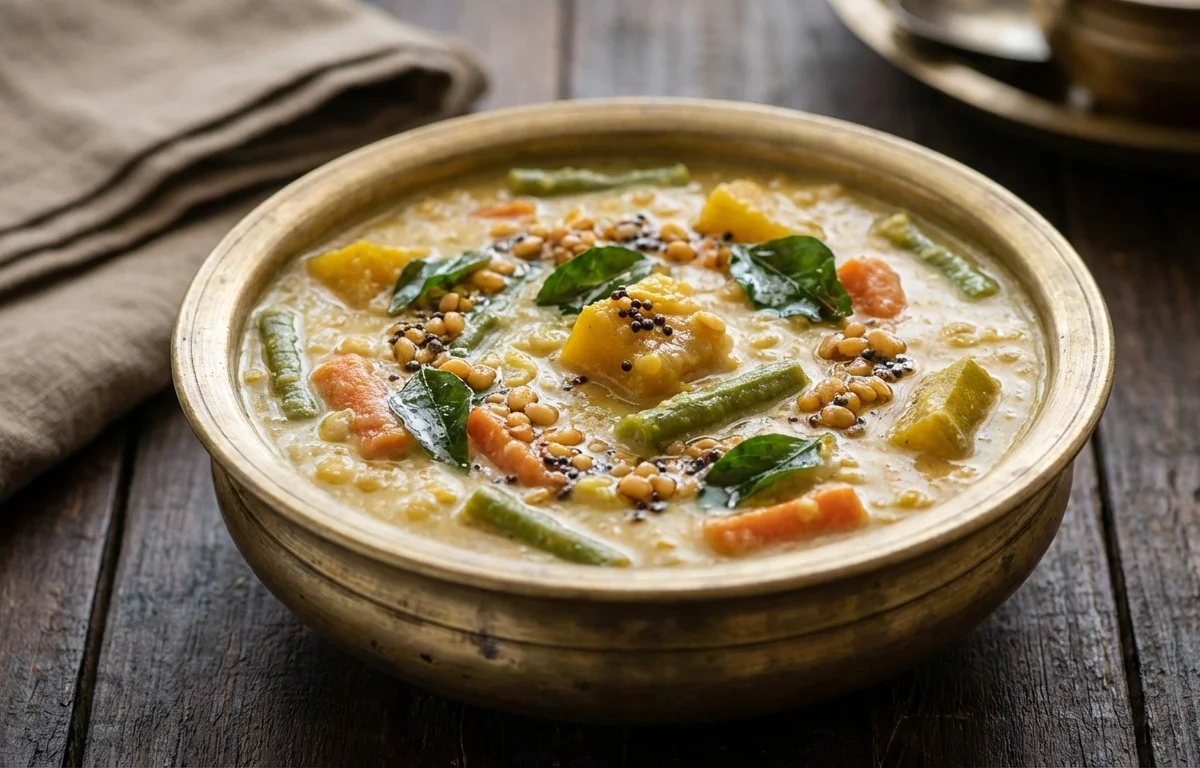
Kaikari Kootu
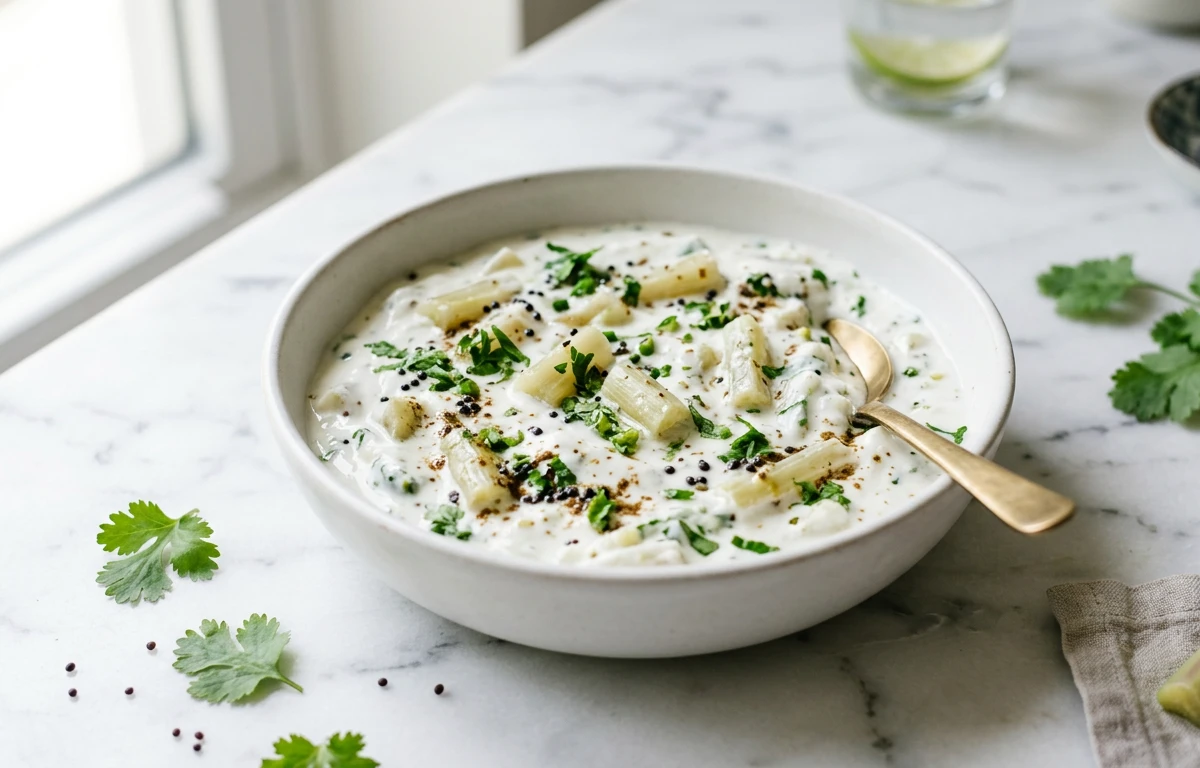
A comforting South Indian stew of mixed vegetables and lentils simmered in a fragrant coconut-cumin paste. Mildly spiced and slightly sweet from coconut, this Tamil Nadu classic brings together seasonal vegetables like chow chow, beans, and carrot in one nourishing bowl. Perfect with steamed rice and a drizzle of ghee.
For 4 servings
- prep
Prepare the vegetables.
1.Peel and cube the chow chow into bite-sized pieces.2.Dice the carrot into small cubes.3.Trim the green beans and cut into 1-inch lengths. - boil · ~15 min
Cook the dal and vegetables together.
1.Combine moong dal, chopped vegetables, turmeric, salt, and water in a pan.2.Bring to a boil, then reduce heat to a gentle simmer.3.Cook until dal is soft and vegetables are tender but hold their shape, about 15 minutes.TIPDon't overcook the vegetables — they should be soft but not mushy. - mix · ~2 min
Grind the coconut-cumin paste.
1.Add grated coconut, cumin seeds, green chili, and rice flour to a small blender.2.Add 3-4 tablespoons of water and grind to a smooth, thick paste. - simmer · ~7 min
Add the coconut paste and simmer.
1.Stir the coconut paste into the cooked dal-vegetable mixture.2.Add a splash of water if the kootu feels too thick.3.Simmer on low heat for 5-7 minutes, stirring occasionally. The raw aroma of the paste should mellow and the kootu will thicken slightly.TIPStir gently to avoid mashing the vegetables. - temper · ~2 min
Make the tempering.
1.Heat coconut oil in a small pan over medium heat.2.Add mustard seeds and let them pop.3.Add urad dal and saute until golden.4.Toss in dried red chili, curry leaves, and asafoetida. Fry for 10 seconds until fragrant. - assemble · ~2 min
Finish the kootu.
1.Pour the hot tempering over the simmered kootu.2.Stir through gently.3.Turn off the heat and let it rest for 2 minutes. - serve
Serve hot with steamed rice and a drizzle of ghee.
What to keep in mind.
7 tips from the recipe — small details that make a real difference to the final dish.
- 1Cube the chow chow and carrot into similar-sized pieces so they cook evenly with the beans.
- 2Don't skip the rice flour in the coconut paste — it helps thicken the kootu and prevents curdling.
- 3Simmer the coconut paste on low heat only; high heat can cause the coconut to separate and turn oily.
- 4Let the tempering sizzle for just a few seconds after adding curry leaves — burnt curry leaves turn bitter.
- 5Use freshly grated coconut for the best flavor; frozen grated coconut is a fine substitute if thawed completely.
- 6Adjust the green chili to your heat preference — for a milder kootu, deseed the chili before grinding.
- 7The kootu thickens as it cools, so keep it slightly runny when you turn off the heat.
Adapt it for your goals.
High-protein
Replace half the moong dal with chana dal (split chickpeas) — it adds a firmer texture and more plant protein, making the kootu more substantial.
low oilLow-oil
Skip the tempering step entirely and instead stir in 1 teaspoon of coconut oil and a pinch of asafoetida at the end — reduces fat while keeping the essential flavor.
veganVegan
This dish is naturally vegan — simply serve with a drizzle of coconut oil or a non-dairy ghee alternative for the same rich finish.
vegetable swapVegetable swap
Swap chow chow for chopped bottle gourd (lauki) or use diced pumpkin for a sweeter, creamier variation — adjust cooking time as needed.
Why this is on our healthy list.
Rich in Plant Protein
Moong dal provides a lean, easily digestible source of plant protein, supporting muscle repair and satiety.
High in Dietary Fiber
The mix of moong dal, beans, carrot, and chayote squash delivers soluble and insoluble fiber for digestive health.
Good Source of Vitamin A
Carrots are rich in beta-carotene, which the body converts to vitamin A for healthy vision and immune function.
Low in Saturated Fat
Using a small amount of coconut oil and fresh coconut keeps saturated fat moderate while still providing a rich mouthfeel.
Frequently asked questions
Yes, but toor dal takes longer to cook — pressure-cook it with the vegetables for 3-4 whistles, then proceed.