Karela Sabzi
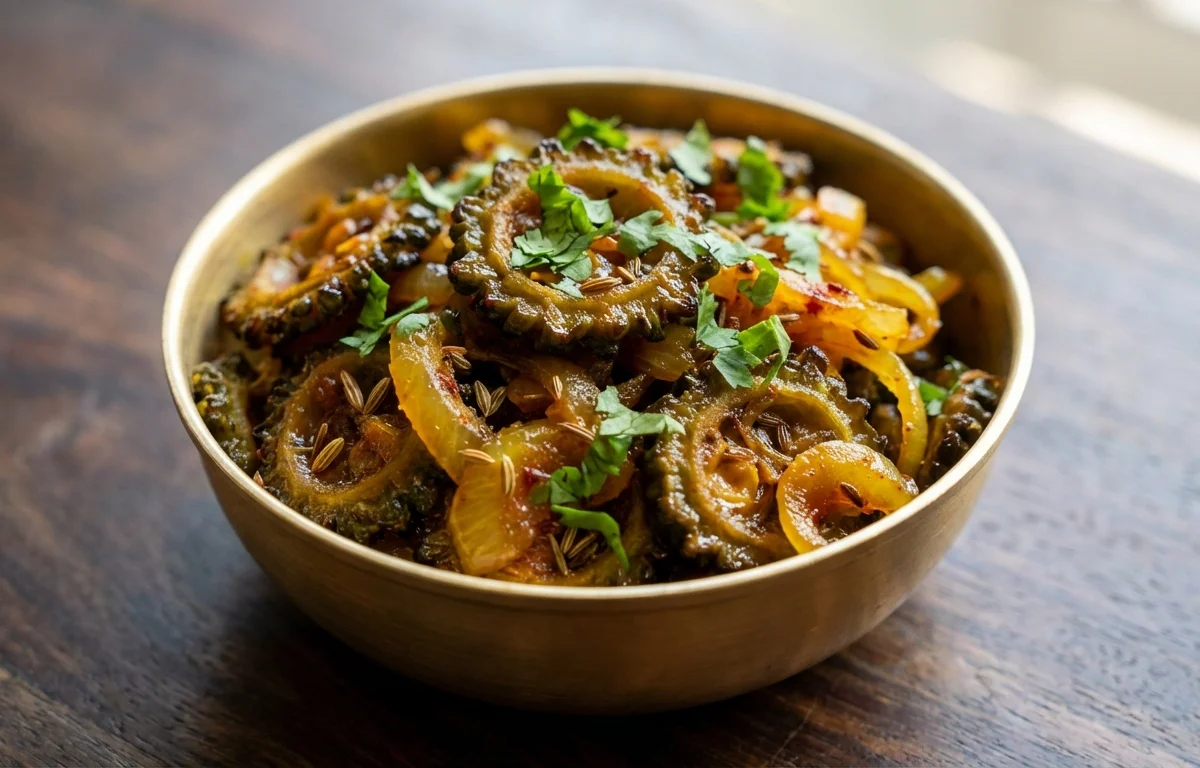
Thinly sliced bitter gourd cooked with onions, spices, and a little tang from amchur for a classic dry sabzi. It turns tender, lightly crisp at the edges, and pairs especially well with roti or plain dal-rice.
For 4 servings
- prep · ~10 min
Prep the karela.
1.Wash the karela well and scrape lightly only if the skin feels thick.2.Halve the karela lengthwise and remove hard seeds if they are mature.3.Slice the karela thinly so it cooks evenly and gets lightly crisp at the edges.TIPThin slices help the bitterness mellow and give the sabzi a better texture. - saute · ~7 min
Cook the onions and cumin.
1.Heat the oil in a wide pan over medium heat.2.Add cumin seeds and let them sizzle until fragrant.3.Add the sliced onion and cook until soft and light golden. - saute · ~3 min
Add the karela and spices.
1.Add the sliced karela to the pan and mix well with the onions.2.Add turmeric powder, red chili powder, coriander powder, and salt.3.Stir well so the slices are evenly coated with oil and spices. - saute · ~15 min
Cook until tender and lightly browned.
Cook the sabzi uncovered over medium-low heat, stirring every few minutes, until the karela turns tender and browned in spots. If the pan looks too dry, lower the heat and keep stirring rather than adding water.
TIPUncovered cooking helps the karela dry out and taste better than steaming it. - garnish · ~1 min
Sprinkle dry mango powder and toss well.
- serve
Serve hot or warm.
Serve Karela Sabzi with roti, paratha, or a simple dal-rice meal.
What to keep in mind.
7 tips from the recipe — small details that make a real difference to the final dish.
- 1Slice the karela as evenly and thinly as possible so all the pieces soften and brown at the same rate.
- 2Use a wide pan instead of a deep kadhai so the karela cooks dry and gets those lightly crisp edges.
- 3Do not cover the pan; trapped steam makes the sabzi soft and dulls the lightly browned texture.
- 4Wait for the onions to turn light golden before adding karela, or the sabzi can taste flatter and harsher.
- 5Add amchur only at the end to keep its tang bright; cooking it too long can mute the sour note.
- 6If the karela starts catching, reduce the heat and stir more often rather than splashing in water.
- 7This sabzi keeps well for lunchboxes; cool fully before storing so it stays dry instead of turning soggy.
Adapt it for your goals.
Low-oil
Use a well-seasoned pan and reduce the oil slightly, stirring more often; good if you want a lighter everyday sabzi.
jainJain
Skip the onion and cook the karela directly with cumin and spices for a simpler, more bitterness-forward version.
spicierSpicier
Increase the red chili powder or add slit green chilies with the onions for a sharper heat that stands up to the bitter gourd.
stuffed styleStuffed-style
Slice the karela a bit thicker and cook longer for a texture closer to bharwa karela, while keeping this recipe's dry masala profile.
Why this is on our healthy list.
Vegetable-Forward Side Dish
This sabzi is centered on bitter gourd and onion, making it a simple way to include more cooked vegetables in a meal.
Moderate in Added Fat
Only a small amount of oil is used to sauté and brown the vegetables, keeping the dish relatively light for a dry sabzi.
Digestive Spice Support
Cumin, coriander, and amchur add flavor while making the sabzi feel more balanced and appetizing alongside roti or dal-rice.
Frequently asked questions
Use mature seeds only if they are tender; remove hard ones, slice the karela thin, and let it brown well with onions. The onion sweetness and amchur also help balance bitterness.



.webp)