
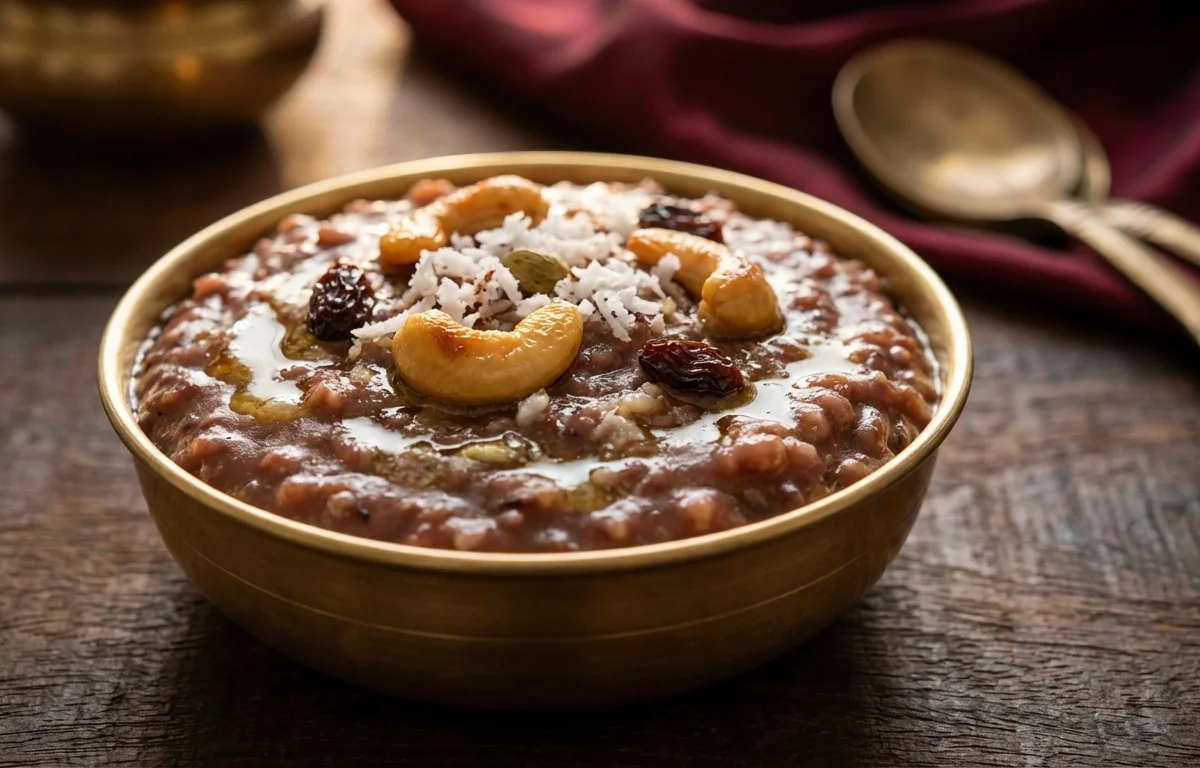
Kavuni Arisi Sweet Pongal
A rich Chettinad-style sweet made with black kavuni rice, jaggery, ghee, and cardamom. The rice cooks down to a soft, slightly chewy texture, while roasted cashews and raisins add warmth and crunch in every spoonful.
For 4 servings
- prep · ~480 min
Wash and soak the kavuni arisi.
Rinse the kavuni arisi well until the water runs clearer. Soak it in enough water overnight so the grains soften and cook evenly.
- pressure cook · ~35 min
Cook the rice until soft.
1.Drain the soaked kavuni arisi and add it to a pressure cooker.2.Pour in 4 cups water and close the cooker.3.Pressure cook on medium heat for 25 to 30 minutes until the rice is very soft.4.Let the pressure drop naturally, then mash the rice lightly with the back of a spoon.TIPKavuni arisi should be softer than regular cooked rice here, so it can absorb the jaggery well. - boil · ~5 min
Melt the jaggery.
Heat 1/2 cup water with the grated jaggery in a pan until the jaggery dissolves fully. Strain if needed to remove any grit, then return the syrup to the pan.
- simmer · ~7 min
Mix the rice with the jaggery syrup.
1.Add the cooked rice to the jaggery syrup.2.Mix well and cook on low heat until the syrup coats the rice evenly.3.Add cardamom powder and a pinch of salt.4.Cook for 5 to 7 minutes, stirring often, until the pongal looks glossy and thick.TIPKeep the heat low after adding jaggery so the sweet pongal stays soft and does not catch at the bottom. - temper · ~2 min
Fry the nuts and raisins in ghee.
1.Heat ghee in a small pan over low heat.2.Add cashew nuts and fry until light golden.3.Add raisins and cook until they puff up. - assemble · ~1 min
Finish the sweet pongal.
Pour the ghee, cashew nuts, and raisins over the pongal. Mix gently so the ghee spreads through the rice without breaking it down too much.
- serve
Serve warm.
What to keep in mind.
7 tips from the recipe — small details that make a real difference to the final dish.
- 1Do not skip the overnight soak; kavuni arisi stays tough if it is cooked straight from dry.
- 2Cook the rice until it is softer than table rice, because the grains firm up slightly after jaggery is added.
- 3Strain the melted jaggery syrup if it looks sandy, so the pongal stays smooth and glossy.
- 4Keep the flame low after mixing in jaggery; high heat can make the bottom catch and turn bitter.
- 5Mash the cooked rice lightly, not fully, so you keep the classic chewy-soft kavuni texture.
- 6Fry cashews first and add raisins only at the end, since raisins puff in seconds and can burn quickly.
- 7If the pongal thickens too much as it cools, loosen it with a splash of hot water and a little ghee before serving.
Adapt it for your goals.
Vegan
Replace ghee with coconut oil for a dairy-free version with a light coconut note that pairs well with jaggery and black rice.
richer festiveRicher-festive
Add a few extra spoonfuls of ghee and more cashews for a temple-style, more indulgent pongal suited to festive serving.
less sweetLess-sweet
Reduce the jaggery slightly to let the earthy flavor of kavuni arisi stand out more clearly.
coconut flavoredCoconut-flavored
Finish with a little freshly grated coconut for added texture and a soft sweetness that complements the jaggery.
Why this is on our healthy list.
Whole Grain Goodness
Kavuni arisi is a traditional whole black rice, so this pongal offers more grain character and fiber than polished white-rice sweets.
Antioxidant-Rich Black Rice
The deep color of kavuni arisi comes from natural plant pigments associated with antioxidant compounds.
Energy-Dense Festive Food
Jaggery, rice, and ghee make this a sustaining sweet dish that is especially fitting for celebratory meals and special occasions.
Nuts for Texture and Nutrients
Cashews and raisins contribute some healthy fats, minerals, and natural sweetness along with contrast in texture.
Frequently asked questions
It is not ideal. Kavuni arisi is quite firm, and soaking overnight helps it cook evenly and turn soft enough for pongal.


