Khatta Meetha Kaddu Sabzi
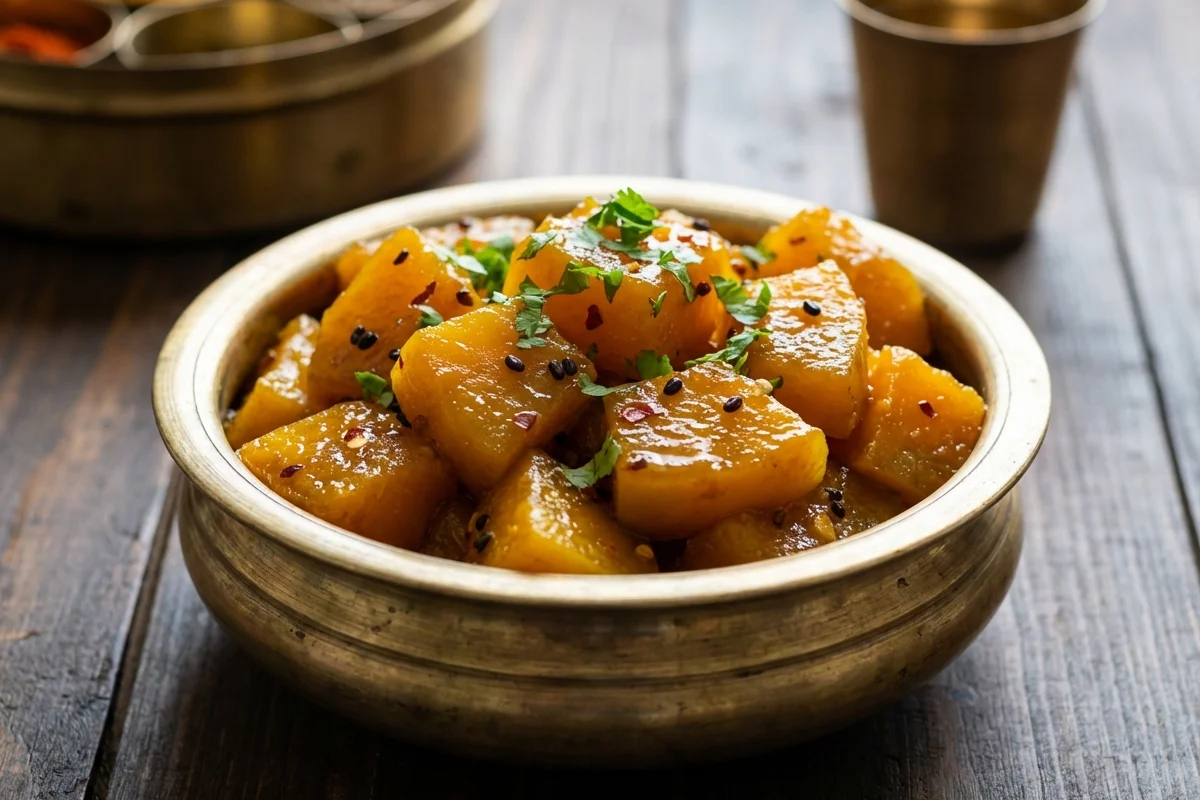
Tender pumpkin cubes cooked with simple North Indian spices, jaggery, and amchur for that classic sweet and tangy balance. This homestyle kaddu sabzi is soft, lightly spiced, and perfect with puri or roti.
For 4 servings
- prep · ~15 min
Prep the pumpkin and measure the spices.
Peel the pumpkin, remove the seeds, and cut it into medium cubes. Keep the jaggery grated and the cilantro chopped so everything is ready before cooking.
- temper · ~2 min
Crackle the whole spices in oil.
1.Heat oil in a kadhai over medium heat.2.Add fenugreek seeds, fennel seeds, and cumin seeds.3.Let them sizzle for a few seconds until fragrant.4.Add the dried red chili and green chili.TIPKeep the heat moderate so the fenugreek seeds do not turn too dark and bitter. - saute · ~3 min
Coat the pumpkin with the spices.
1.Add the pumpkin cubes and mix well with the tempered spices.2.Add turmeric powder, red chili powder, coriander powder, and salt.3.Stir for 2 to 3 minutes so the pumpkin is evenly coated. - simmer · ~12 min
Cook the pumpkin until soft.
Add water, mix, and cover the pan. Cook on low heat until the pumpkin turns soft and tender but still holds its shape, stirring once or twice in between.
- saute · ~4 min
Add the sweet and tangy finish.
Uncover the pan and add jaggery and dry mango powder. Mix gently and cook for 3 to 4 minutes until the jaggery melts and the sabzi looks glossy and semi-dry.
TIPMash just a few pumpkin pieces while stirring to create the classic lightly coated texture. - garnish
Finish with cilantro.
- serve
Serve the kaddu sabzi warm.
Serve warm with puri, roti, or as part of a festive North Indian meal.
What to keep in mind.
7 tips from the recipe — small details that make a real difference to the final dish.
- 1Keep the pumpkin cubes medium and similar in size so they soften evenly without turning mushy.
- 2Do not let the fenugreek seeds brown too much in the tadka, or the sabzi can taste noticeably bitter.
- 3Stir gently once or twice while covered; too much stirring will break the pumpkin before it is tender.
- 4Add jaggery and amchur only after the pumpkin is cooked, so the pieces soften properly and the flavors stay balanced.
- 5Mash only a few cubes at the end to create the classic lightly thickened coating while keeping most pieces intact.
- 6If your pumpkin is naturally very sweet, reduce the jaggery slightly so the tang from amchur still comes through.
- 7This sabzi often tastes even better after 20 to 30 minutes of resting, when the sweet, tangy, and spiced notes settle.
Adapt it for your goals.
Low-oil
Use less oil and cook in a heavy pan with a splash more water; good if you want a lighter everyday version.
spicierSpicier
Add an extra green chili or a little more red chili powder for a sharper heat that cuts through the sweet pumpkin.
no jaggeryNo-jaggery
Skip the jaggery for a more savory, tang-forward kaddu sabzi if you prefer less sweetness with puri or roti.
vrat styleVrat-style
For fasting meals, adapt the spices as per family rules and pair with vrat puri; keep the sweet-tangy pumpkin texture similar.
Why this is on our healthy list.
Rich in Vegetable Goodness
Pumpkin brings natural fiber and plant compounds, making this sabzi a wholesome vegetable side for everyday meals.
Digestive Spice Support
Fennel, cumin, and fenugreek are traditional spices often used to add aroma while making vegetable dishes feel easier to digest.
Moderate Ingredient List
The recipe relies on pumpkin, simple spices, and a small amount of jaggery rather than heavy cream or rich gravies.
Frequently asked questions
Use a ripe, firm yellow or orange pumpkin that turns soft when cooked but does not fall apart immediately in the pan.



.webp)