
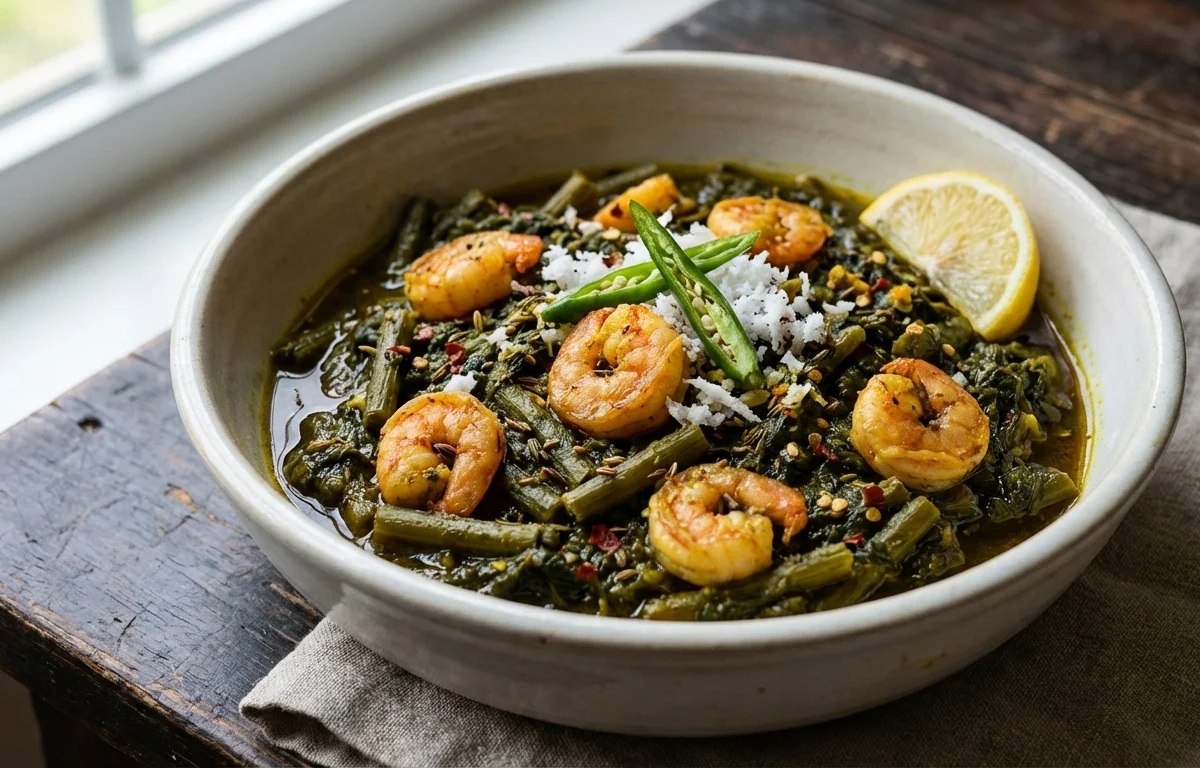
Kochu Shak diye Chingri
Tender, earthy taro leaves gently wilted into a savory prawn curry with a mustardy kick. This Bengali classic balances the slight itch of kochu shak with the sweetness of fresh prawns and the warmth of green chilies. A humble yet deeply satisfying dish best mopped up with warm rice.
For 4 servings
- prep
Prep the taro leaves and prawns.
1.Wash taro leaves thoroughly under running water to remove all grit. Drain well.2.Finely chop the leaves and tender stalks. Set aside.3.Pat the prawns dry with a paper towel and set aside.TIPWear kitchen gloves when handling raw taro leaves if you have sensitive skin — the sap can cause mild itching. - temper · ~2 min
Make the tempering.
1.Heat mustard oil in a kadai over medium heat until it just reaches its smoking point.2.Reduce heat to low and let the oil cool slightly for 30 seconds.3.Add nigella seeds and dried red chilies. Let them splutter and release their aroma for 30 seconds.TIPHeating mustard oil to its smoking point removes its raw pungency and brings out a sweeter, nuttier flavour. - saute · ~7 min
Sauté the aromatics.
1.Add sliced onions and cook until they turn translucent and lightly golden (4-5 minutes).2.Add chopped garlic and slit green chilies. Sauté until the raw garlic smell disappears (1-2 minutes).3.Add turmeric powder and red chili powder. Stir continuously for 30 seconds to bloom the spices without burning. - saute · ~4 min
Cook the prawns.
1.Add the prawns and cubed potatoes to the pan. Sprinkle half the salt.2.Sauté gently for 3-4 minutes until the prawns turn pink and curl up.3.Remove only the prawns with a slotted spoon and set them aside to prevent overcooking.TIPRemoving the prawns after a quick sear keeps them juicy and prevents them from turning rubbery in the gravy. - saute · ~6 min
Wilt the taro leaves.
1.Add the chopped taro leaves to the pan. Stir well to coat them in the spices.2.Sauté for 5-6 minutes until the leaves wilt completely and reduce in volume.3.Add water and the remaining salt. Bring to a gentle boil.TIPCooking taro leaves well is essential to break down the calcium oxalate crystals that cause the itchiness. - simmer · ~12 min
Simmer until tender.
1.Cover the pan and simmer on low heat for 10-12 minutes until the potatoes are fork-tender and leaves are cooked into a soft, integrated gravy.2.Stir once or twice in between to prevent sticking. - simmer · ~3 min
Return the prawns and finish.
1.Gently fold the reserved prawns back into the curry.2.Simmer uncovered for a final 2-3 minutes so the prawns heat through and flavours meld. - garnish
Garnish with fresh coriander leaves and serve hot with steamed rice.
What to keep in mind.
6 tips from the recipe — small details that make a real difference to the final dish.
- 1When chopping taro leaves, use a sharp knife to reduce the release of sap that can irritate skin.
- 2Always heat mustard oil until it smokes, then let it cool slightly; this tames its pungency and deepens flavor.
- 3Remove the prawns after they turn pink to keep them tender; returning them at the end prevents overcooking.
- 4Cook the taro leaves thoroughly (at least 10 minutes) to neutralize the itch-causing calcium oxalate crystals.
- 5For a thicker gravy, mash a few potato cubes against the side of the pan before adding the water.
- 6This curry tastes even better the next day; store in the fridge and reheat gently to meld the flavors.
Adapt it for your goals.
Vegetarian
Skip the prawns and use 200g of cubed paneer or firm tofu, added with the potatoes. This makes the dish vegetarian-friendly while keeping it protein-rich.
low oilLow-oil
Reduce mustard oil to 1 tablespoon and use a non-stick pan. The flavors will still be robust, especially if you bloom the spices in a splash of water after tempering.
veganVegan
Replace prawns with 200g of sliced mushrooms or chickpeas. Use coconut oil instead of mustard oil for a different but delicious flavor profile.
extra spicyExtra-spicy
Add one more slit green chili and a teaspoon of mustard paste (made from yellow mustard seeds) along with the turmeric for a more intense, sinus-clearing heat.
jainJain
Skip garlic, onion, and prawns. Temper with only nigella seeds and dried red chili, then add potatoes and taro leaves. Use a pinch of asafoetida for a garlic-onion flavor proxy.
Why this is on our healthy list.
Rich in Dietary Fiber
Taro leaves are an excellent source of fiber, aiding digestion and promoting a feeling of fullness after the meal.
Good Source of Protein
Prawns provide high-quality, lean protein that supports muscle repair and overall body function.
Packed with Vitamins A and C
Taro leaves and potatoes contribute vitamin A for vision and vitamin C for immune support, both naturally present in these ingredients.
Low in Saturated Fat
This dish uses minimal mustard oil and lean prawns, making it a relatively low-fat curry choice compared to cream-based gravies.
Frequently asked questions
Wash your hands immediately with soap and water, then rub a little cooking oil or yogurt on the affected area to soothe the itch. Next time, wear disposable gloves while handling the leaves.




-curry.webp)
.webp)