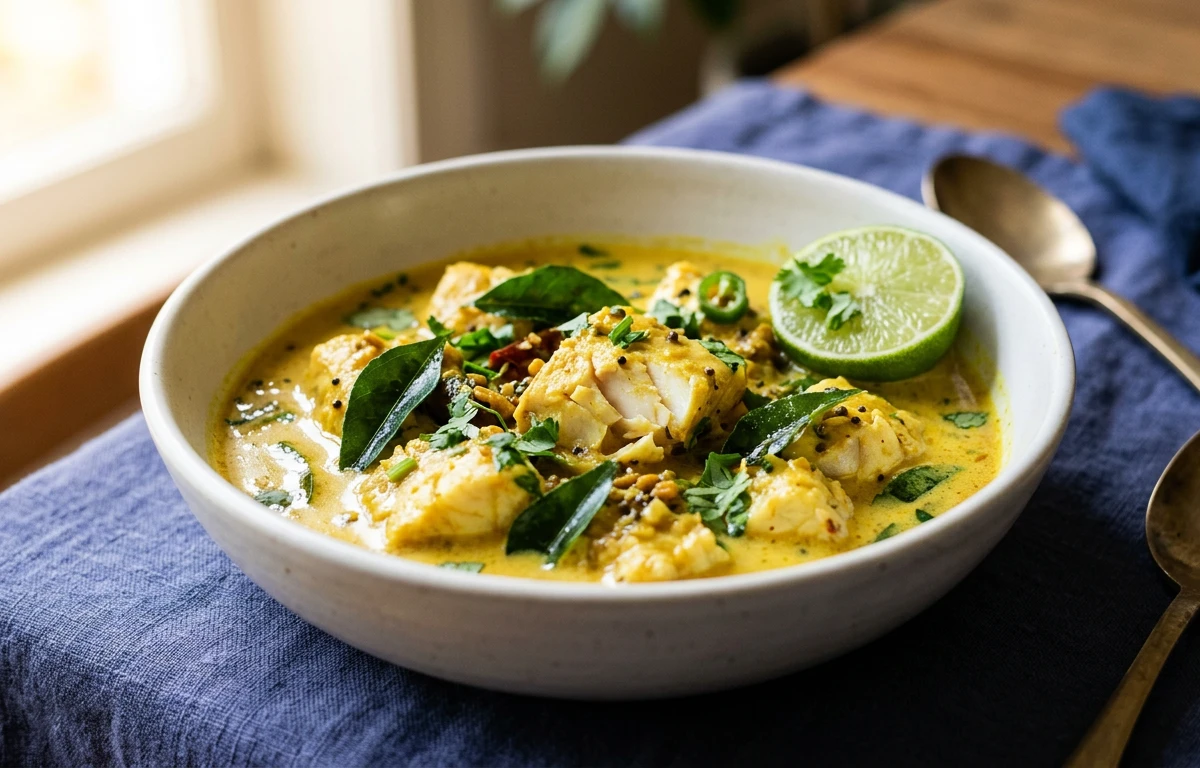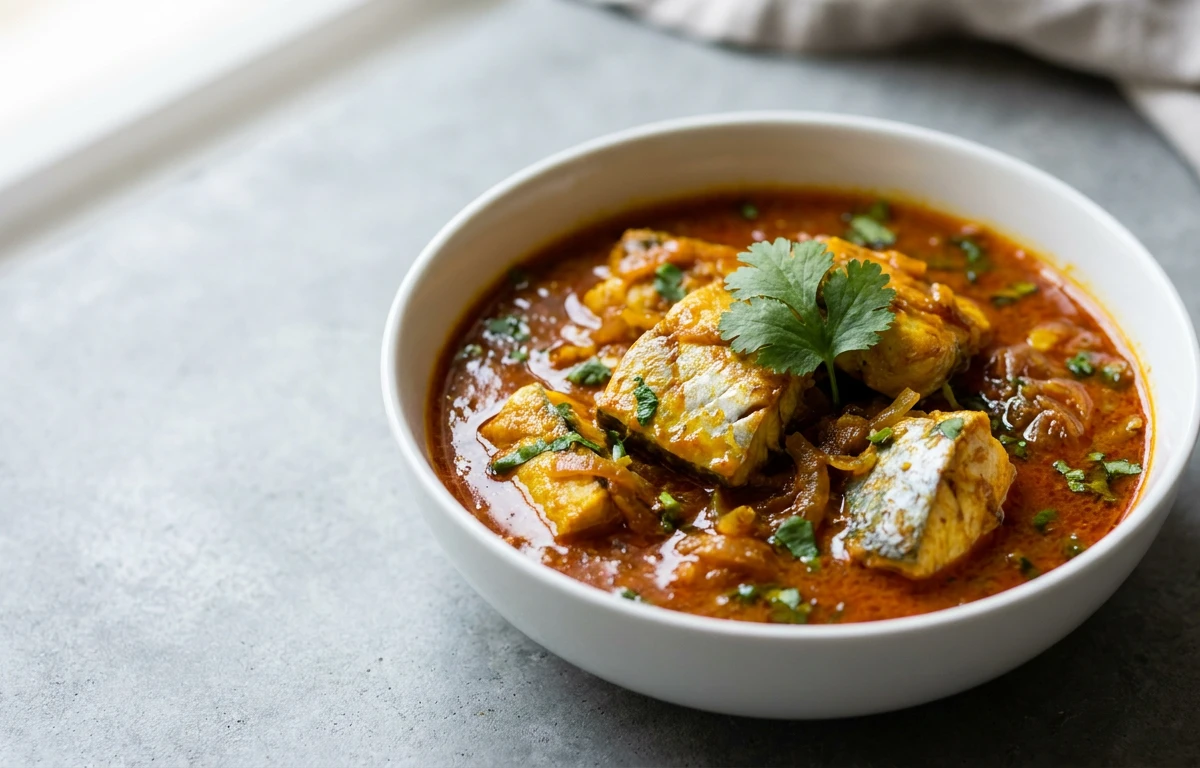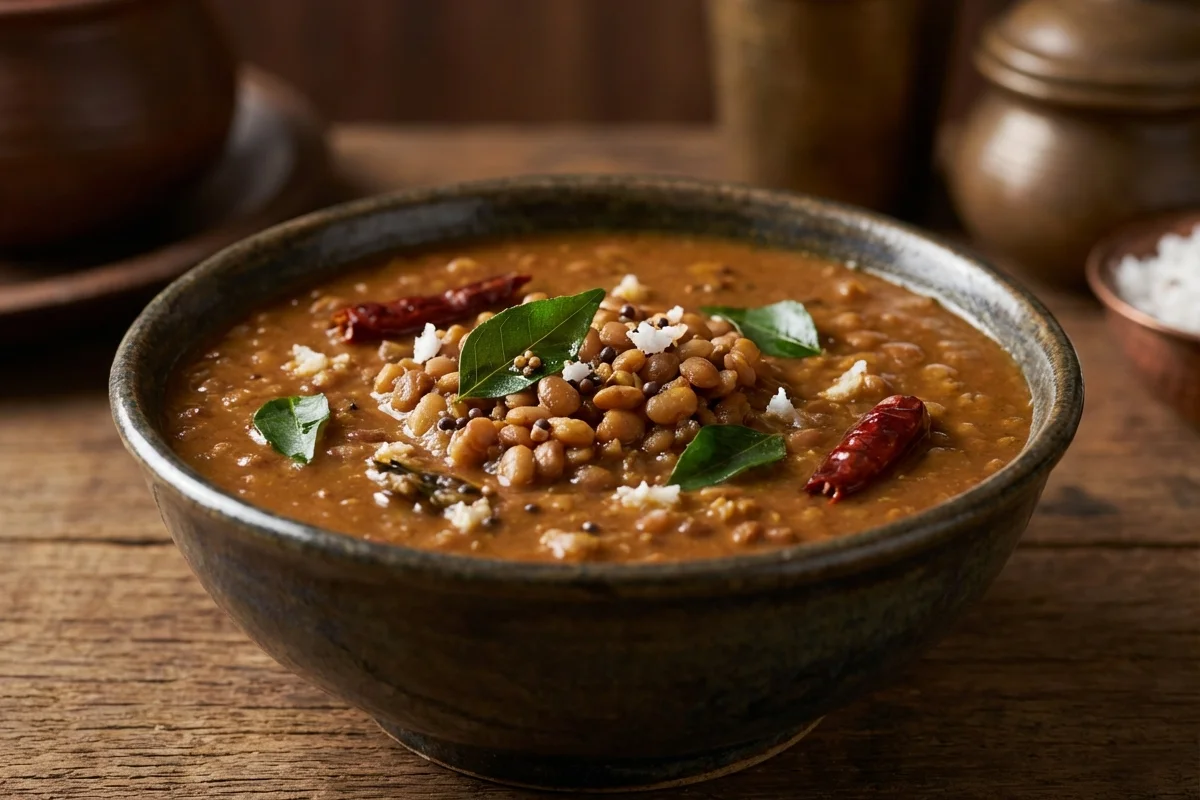
Kulith Tonak
A rustic, earthy curry from the Konkan coast featuring nutty horse gram simmered in a roasted coconut and spice masala. This protein-packed Goan and Maharashtrian staple is deeply aromatic with toasted coriander, cumin, and dried red chilies, finished with a crackling mustard seed tadka.
For 4 servings
- prep
Soak the horse gram.
Wash 1 cup horse gram thoroughly. Soak in enough water to cover by 2 inches for at least 6 hours or overnight. Drain before cooking.
TIPSoaking softens the tough skins and reduces cooking time significantly. - pressure cook · ~20 min
Cook the horse gram until tender.
Add drained horse gram to a pressure cooker with 2 cups fresh water. Cook on medium heat for 5-6 whistles, then let pressure release naturally. The gram should be soft but still holding its shape.
TIPDo not drain the cooking water; it adds body to the curry. - roast · ~10 min
Roast coconut and spices for the masala paste.
1.In a dry pan over low heat, add grated coconut and roast, stirring constantly, until golden brown (5-7 min). Transfer to a plate.2.In the same pan, add coriander seeds, cumin seeds, dried red chilies, peppercorns, and fenugreek. Dry roast until fragrant and slightly darkened (2-3 min).3.Let everything cool completely on the plate.TIPKeep the heat low and stir continuously — coconut burns in seconds once it starts browning. - mix · ~2 min
Grind the masala to a smooth paste.
Transfer roasted coconut and spices to a blender. Add the soaked tamarind ball (discard the water). Add a few tablespoons of water. Grind to a very smooth, thick paste. Scrape down sides as needed.
- saute · ~5 min
Sauté the onion base.
Heat 1 teaspoon oil in a deep pan or kadhai over medium heat. Add chopped onion and sauté until soft and translucent, about 4-5 minutes.
- simmer · ~12 min
Combine masala with the onion and simmer.
Add the ground coconut-spice paste to the pan with the onions. Sauté for 2 minutes until the raw smell disappears and oil starts to appear at the edges. Add the cooked horse gram along with all its cooking water. Stir in salt. Add a splash of water if the curry is too thick. Bring to a gentle simmer and cook uncovered for 10-12 minutes, stirring occasionally, until the flavors meld and the gravy thickens.
TIPThe curry thickens as it sits; keep it slightly looser than you want the final result to be. - temper · ~3 min
Make the tempering and finish.
1.In a small tadka pan, heat 2 teaspoons oil over medium-high heat until shimmering.2.Add mustard seeds. When they splutter, add lightly crushed garlic cloves and curry leaves. Fry until garlic turns golden and fragrant (30-40 seconds).3.Pour the sizzling tempering immediately over the hot curry. Cover for 2 minutes to let the aromas infuse.TIPCrushing the garlic cloves (not mincing) releases oils without burning in the hot tadka. - garnish
Garnish and serve.
Stir the infused tempering gently into the curry. Transfer to a serving bowl, garnish with chopped coriander leaves, and serve hot.
What to keep in mind.
7 tips from the recipe — small details that make a real difference to the final dish.
- 1Soak horse gram for at least 6 hours or overnight to ensure even cooking and a creamy texture.
- 2Roast the grated coconut on low heat, stirring constantly — it can burn from golden to bitter in seconds.
- 3Don't discard the cooking water from the pressure cooker; it's packed with starch and flavor that thickens the curry.
- 4Grind the masala to a very smooth paste — a coarse grind will leave gritty spice bits in the final curry.
- 5Keep the curry slightly looser than desired, as it will continue to thicken upon resting and cooling.
- 6Crush garlic cloves, don't mince them, for the tadka — whole crushed cloves release oil slowly without burning.
- 7Let the tempered curry sit covered for 2 minutes after pouring the tadka to allow the aromas to fully infuse.
Adapt it for your goals.
Low-oil
Skip the tadka entirely or replace the tempering oil with a dry roast of mustard seeds and curry leaves, then grind to a powder and sprinkle. Suitable for those reducing added fats.
high proteinHigh-protein
Add a cup of cooked chickpeas or paneer cubes along with the horse gram for extra plant or dairy protein. The mild flavors of both absorb the masala beautifully.
veganVegan
This recipe is naturally vegan — just ensure the oil used is plant-based. The tadka already uses oil, not ghee, so no changes needed.
gluten freeGluten-free
Kulith Tonak is inherently gluten-free. Serve with rice or gluten-free roti. Verify that your spice powders are from pure sources without anti-caking agents.
milder versionMilder version
Reduce the dried red chilies to 2 and remove seeds from one of them, or use Kashmiri chilies known for color without intense heat. Perfect for sensitive palates.
Why this is on our healthy list.
Excellent Plant-Based Iron
Horse gram is one of the richest legume sources of iron, essential for red blood cell production and energy metabolism.
High in Soluble Fiber
Both horse gram and coconut provide soluble fiber, which helps slow digestion and maintain steady blood sugar levels.
Low Glycemic Index
Horse gram has a low glycemic index compared to common lentils, making this curry a good choice for blood sugar management.
Natural Anti-Inflammatory Spices
Cumin, coriander, fenugreek, and black pepper all contain anti-inflammatory compounds that support joint and digestive health.
Packed with Magnesium
Horse gram is rich in magnesium, which supports muscle function, nerve health, and restful sleep.
Probiotic-Friendly Tempering
Mustard seeds and curry leaves in the tadka are known for mild antimicrobial properties that can aid gut health.
Frequently asked questions
Canned horse gram is rare. If you find it, drain and rinse, then skip the pressure cooking step — just simmer it with the masala for 10 minutes.