
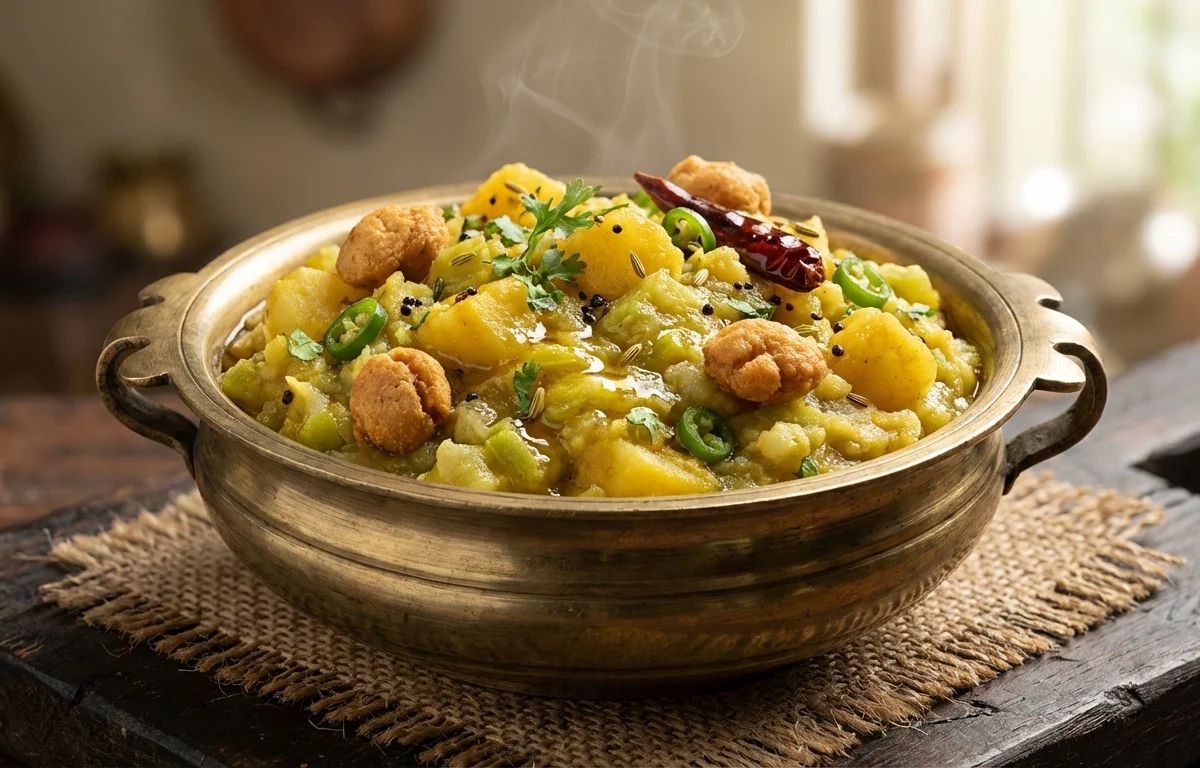
Lau Ghonto
A light Bengali bottle gourd sabzi cooked with potatoes, peas, and gentle spices until soft and lightly moist. It tastes delicate, homey, and comforting, making it a lovely side for dal, rice, or roti.
For 4 servings
- prep · ~15 min
Prepare the vegetables.
1.Peel the bottle gourd, remove any mature seeds if needed, and chop it finely.2.Peel the potato and cut it into small cubes.3.Chop the onion finely, grate the ginger, and slit the green chilies. - temper · ~1 min
Heat the oil and crackle the whole spices.
1.Heat mustard oil in a kadai over medium heat until it shimmers.2.Add the bay leaf and cumin seeds.3.Let the cumin sizzle for a few seconds until fragrant.TIPHeat mustard oil well first to soften its sharp raw flavor. - saute · ~5 min
Cook the onion, ginger, and chilies.
1.Add the chopped onion and cook until soft and lightly golden.2.Add the grated ginger and slit green chilies.3.Stir for about 1 minute until the raw smell fades. - saute · ~4 min
Add the potato and peas.
Add the potato cubes and green peas. Stir well and cook for 3 to 4 minutes so the potato starts to pick up color and the peas warm through.
- mix · ~2 min
Add the bottle gourd and powdered spices.
Add the chopped bottle gourd, turmeric powder, cumin powder, salt, and sugar. Mix well so the gourd is coated evenly with the spices and oil.
- simmer · ~15 min
Cover and cook until soft.
Cover the kadai and cook on low heat, stirring every few minutes. The bottle gourd will release plenty of water and cook in its own juices until soft and the potato is tender.
TIPDo not add water unless the pan looks very dry; Lau Ghonto cooks best in the moisture released by the gourd. - saute · ~4 min
Dry out the excess moisture.
Remove the lid and cook for a few more minutes, stirring gently, until the mixture turns lightly moist and semi-dry. The vegetables should be soft but not mushy.
- garnish · ~1 min
Finish with ghee and garam masala.
Add the ghee and a pinch of garam masala. Mix gently and cook for 30 seconds so the aroma blooms.
- serve
Serve hot.
Serve Lau Ghonto warm with steamed rice, dal, or roti.
What to keep in mind.
7 tips from the recipe — small details that make a real difference to the final dish.
- 1Chop the lau finely and evenly so it melts down uniformly without stringy bits.
- 2If the bottle gourd has large soft seeds, scoop them out first to keep the texture delicate.
- 3Let the mustard oil reach a shimmer before tempering; this mellows its pungency and gives a more authentic Bengali flavor.
- 4Do not add water at the start; lau releases a lot of moisture and too much liquid makes the ghonto soupy.
- 5Cook the potatoes for a few minutes before adding lau so they finish tender at the same time as the gourd.
- 6In the final drying stage, stir gently and often so the vegetables stay soft but don't mash into a paste.
- 7This tastes even better after a short rest, when the cumin, ginger, ghee, and garam masala settle into the lau.
Adapt it for your goals.
Niramish
Keep it fully satvik-style by skipping onion and relying on ginger, cumin, bay leaf, and green chili for a cleaner festive Bengali profile.
veganVegan
Replace the final ghee with a little extra mustard oil or omit it entirely for a fully plant-based finish.
shorshe lau ghontoShorshe-lau-ghonto
Add a small amount of mustard paste near the end for a sharper, more pungent Bengali mustard note.
boriBori
Fry Bengali bori separately and fold them in at the end for added texture and a traditional home-style touch.
Why this is on our healthy list.
Hydrating Vegetable Base
Bottle gourd is a light, water-rich vegetable, making this sabzi feel gentle and easy to eat.
Fiber From Mixed Vegetables
Lau, potato, peas, and onion together provide fiber that adds bulk and makes the dish satisfying.
Plant Nutrients From Peas and Spices
Green peas contribute plant-based nourishment, while ginger, cumin, and turmeric add beneficial phytonutrients and aroma.
Frequently asked questions
Bottle gourd releases a lot of liquid as it cooks. Avoid adding water, then uncover and cook longer at the end until it becomes lightly moist and semi-dry.



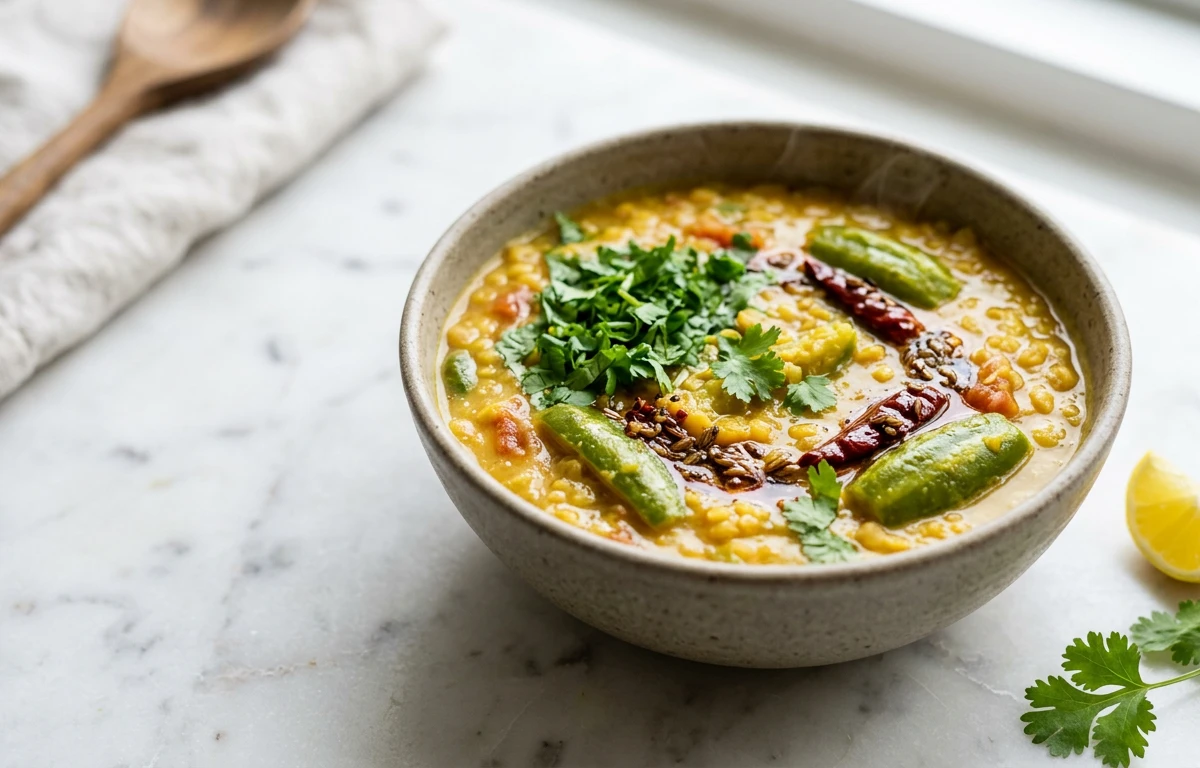
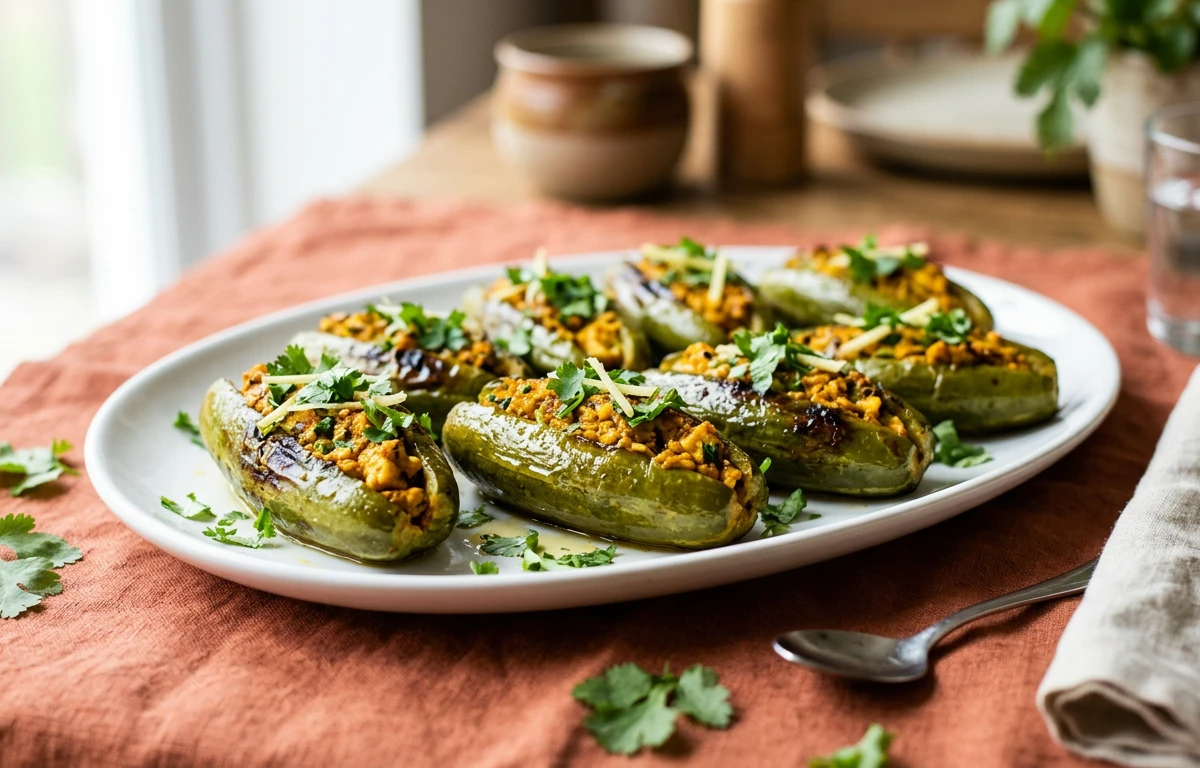
-curry.webp)
.webp)