
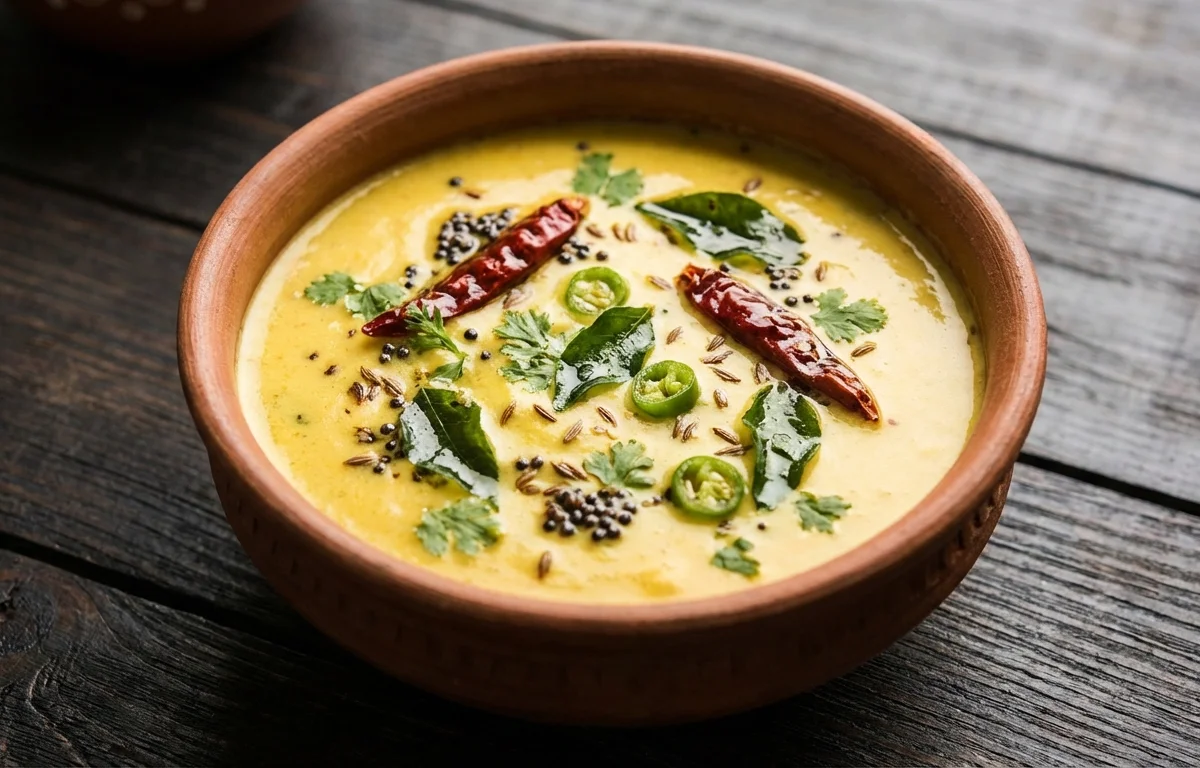
Marwari Kadhi
This Marwari-style kadhi is light, warming, and gently tangy, made without pakoras and simmered from yogurt and besan. A simple tempering of cumin, fenugreek, ginger, and chilies gives it the homestyle flavor Rajasthan is known for.
For 4 servings
- mix · ~5 min
Whisk the kadhi base.
1.Add yogurt and chickpea flour to a bowl.2.Whisk until smooth with no lumps.3.Pour in water little by little and whisk again.4.Add turmeric powder, red chili powder, and salt.TIPA smooth base keeps the kadhi silky and prevents the besan from clumping. - temper · ~2 min
Make the tempering.
1.Heat ghee in a deep pan over low to medium heat.2.Add cumin seeds and fenugreek seeds and let them crackle.3.Add asafoetida, grated ginger, and green chili.4.Cook for 30 to 40 seconds until fragrant.TIPKeep the heat moderate so the fenugreek seeds do not turn too dark and bitter. - simmer · ~25 min
Cook the kadhi slowly.
1.Pour the whisked yogurt mixture into the pan and stir well.2.Cook over medium heat, stirring often until it comes to a gentle boil.3.Lower the heat and simmer until the kadhi thickens slightly and the raw besan taste disappears.4.Stir every few minutes so the yogurt does not split at the bottom.TIPSlow simmering gives Marwari kadhi its light body and rounded tang. - garnish
Garnish with coriander leaves.
- serve
Serve the kadhi hot.
What to keep in mind.
7 tips from the recipe — small details that make a real difference to the final dish.
- 1Use slightly sour yogurt for the classic Marwari tang, but bring it to room temperature before cooking to reduce splitting.
- 2Whisk the besan and yogurt completely smooth before adding water; even tiny lumps stay noticeable in this thin kadhi.
- 3Toast fenugreek seeds only until aromatic and lightly deepened in color, or they can make the whole pot bitter.
- 4Stir frequently as the kadhi heats up, especially before the first boil, because yogurt-based gravies catch at the bottom quickly.
- 5Simmer until the raw besan smell is gone and the kadhi lightly coats the back of a spoon, not until it turns too thick.
- 6If the kadhi thickens after resting, loosen it with a splash of hot water and simmer briefly before serving.
- 7This kadhi tastes even better after 30 minutes of resting, when the cumin, ginger, and chili settle into the yogurt base.
Adapt it for your goals.
Vegan
Replace yogurt with a tangy plant-based curd and use oil instead of ghee for a dairy-free version with similar light texture.
jainJain
Skip ginger and asafoetida if needed, and rely on cumin, fenugreek, and green chili for a simple Jain-friendly flavor profile.
spicierSpicier
Add extra slit green chilies or a final ghee-red chili tadka if you want a sharper, hotter kadhi with more punch.
low oilLow-oil
Use less ghee and temper the spices carefully on low heat; the kadhi will stay light while retaining its signature tang.
Why this is on our healthy list.
Good Source of Protein
Yogurt and besan both contribute protein, making this simple kadhi more sustaining than a plain spiced broth.
Digestive Spice Support
Cumin, ginger, asafoetida, and fenugreek are traditional digestive spices that pair well with yogurt-based dishes.
Light Yet Comforting
Because it is made without pakoras and uses a thin yogurt-besan base, this Marwari kadhi feels lighter while still being satisfying.
Frequently asked questions
Usually the heat was too high or the mixture was not stirred enough as it heated. Cook it gradually, stir often, and use besan to help stabilize the yogurt.



.webp)

.webp)
.webp)