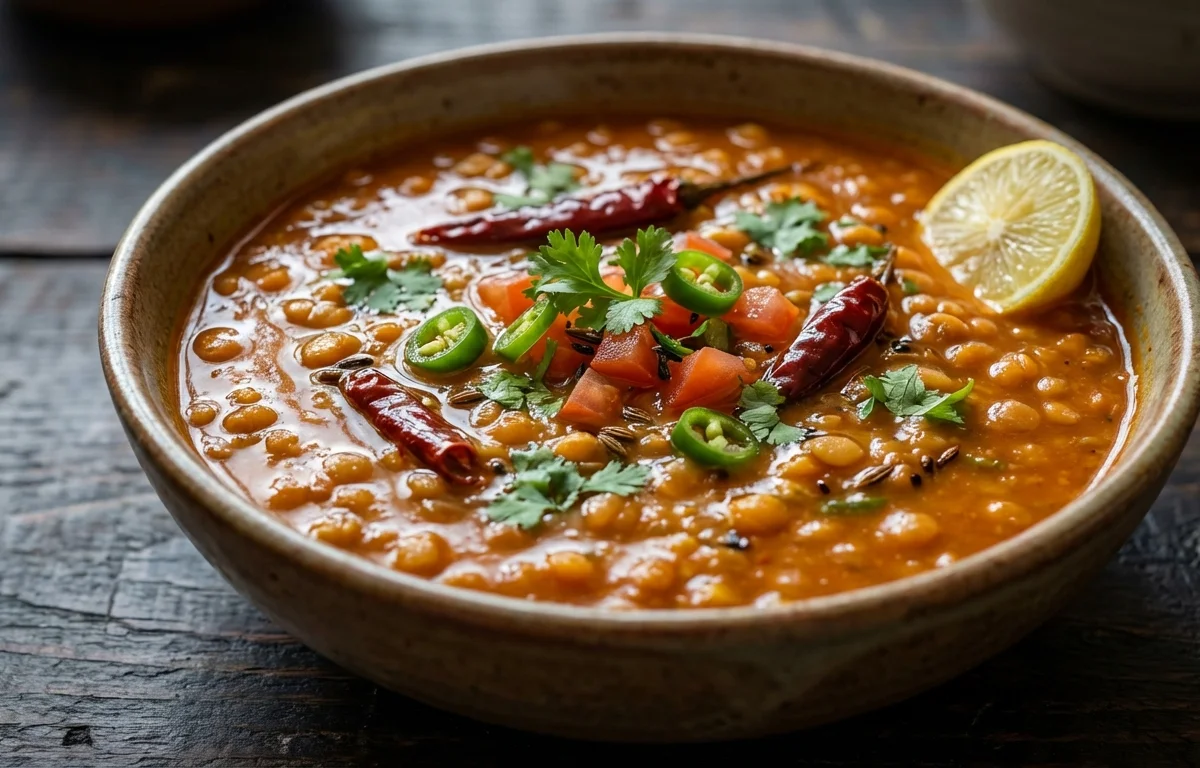
Masur Dail Tenga
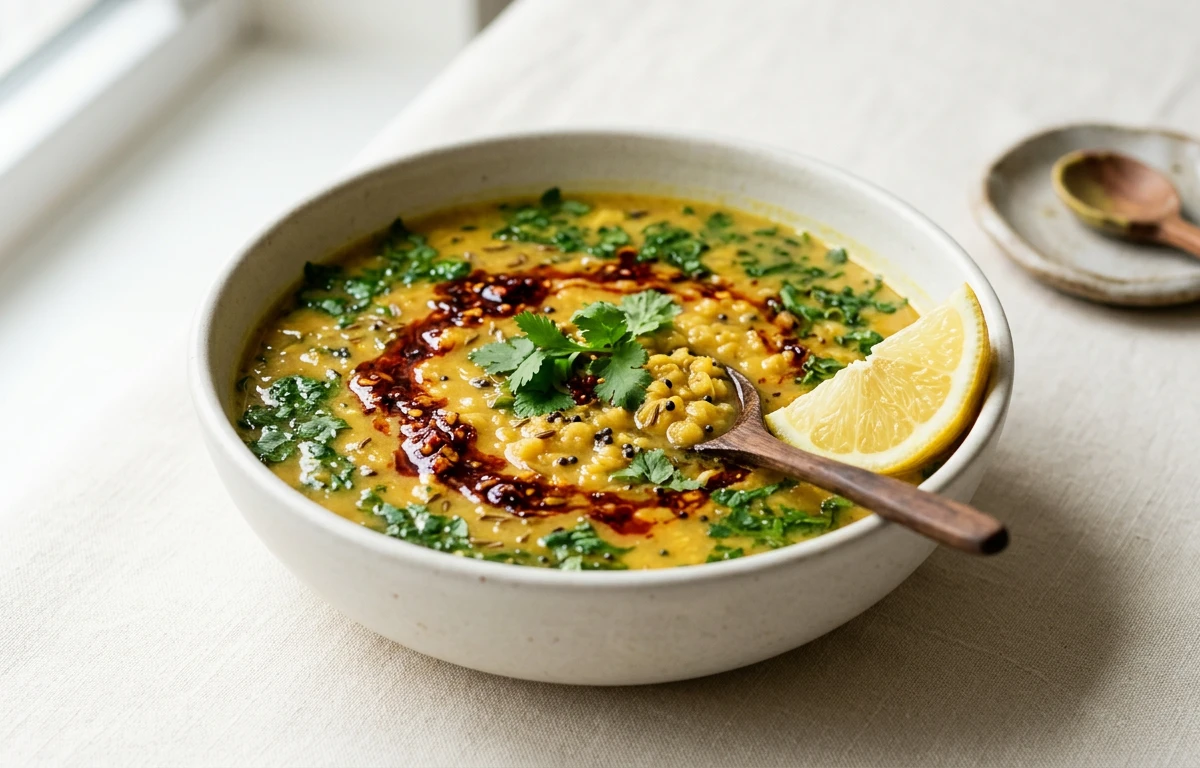
A light, tangy Assamese lentil curry made with red lentils, tomatoes, and a gentle tempering. It has a clean, comforting taste with a bright sour note that makes it especially good with plain rice.
For 4 servings
- prep · ~5 min
Rinse the lentils and prep the vegetables.
1.Rinse the masoor dal under running water until the water runs almost clear.2.Chop the tomatoes into small pieces.3.Lightly crush the ginger and slit the green chilies.TIPA good rinse keeps the dal cleaner tasting and helps it cook evenly. - boil · ~20 min
Cook the lentils with tomato and spices.
1.Add masoor dal, tomato, ginger, green chili, turmeric powder, salt, and water to a pot.2.Bring to a boil over medium-high heat.3.Lower the heat and cook uncovered until the lentils are soft and the tomatoes break down, about 18 to 20 minutes.4.Stir once or twice and skim off any foam if needed.TIPKeep the dal fairly light and fluid; this dish is meant to be thinner than a heavy dal. - temper · ~1 min
Make the tempering.
1.Heat the mustard oil in a small pan until it just starts to shimmer.2.Add panch phoron and let it sizzle until fragrant, about 20 to 30 seconds.3.Pour the hot tempering over the cooked dal.TIPDo not burn the panch phoron or the tempering will taste bitter. - simmer · ~3 min
Finish the tenga.
Stir the dal well and simmer for 2 to 3 minutes so the tempering blends in. Turn off the heat, then add lemon juice for the sour finish.
- garnish
Garnish with coriander leaves.
- serve
Serve hot with plain rice.
What to keep in mind.
6 tips from the recipe — small details that make a real difference to the final dish.
- 1Keep the dal slightly runny; Masur Dail Tenga is meant to be lighter than everyday thick dal.
- 2Add the lemon juice only after turning off the heat so the sourness stays bright and fresh.
- 3Let the tomatoes fully collapse into the lentils before tempering for a smoother, cleaner broth.
- 4Heat mustard oil until it just shimmers to mellow its raw sharpness without smoking it heavily.
- 5Pour the panch phoron tempering immediately over the hot dal so the spices bloom into the broth.
- 6If the dal thickens as it sits, loosen it with a splash of hot water before serving with rice.
Adapt it for your goals.
More-tangy
Increase the lemon juice slightly or add a little more tomato for a sharper, brighter tenga profile.
milderMilder
Use one green chili instead of two for a gentler heat while keeping the ginger and sour notes intact.
garlic temperingGarlic-tempering
Add a few sliced garlic cloves to the mustard oil before the panch phoron for a deeper, more robust finish.
no corianderNo-coriander
Skip the coriander leaves for a plainer, more traditional-feeling bowl if you prefer the tang and tempering to stand out.
Why this is on our healthy list.
Plant Protein from Lentils
Masoor dal brings satisfying plant-based protein and makes this light curry more filling when served with rice.
Fiber-Rich Comfort Dish
Red lentils and tomatoes contribute fiber, which supports satiety while keeping the meal simple and wholesome.
Gentle, Light Preparation
This recipe uses minimal oil and a thin broth, making it feel lighter than many richer dal preparations.
Antioxidant-Rich Ingredients
Tomatoes, ginger, turmeric, and green chili add natural plant compounds along with freshness and flavor.
Frequently asked questions
Yes, but mustard oil gives the dish much of its signature Assamese aroma. If needed, use a neutral oil, though the flavor will be less distinctive.