
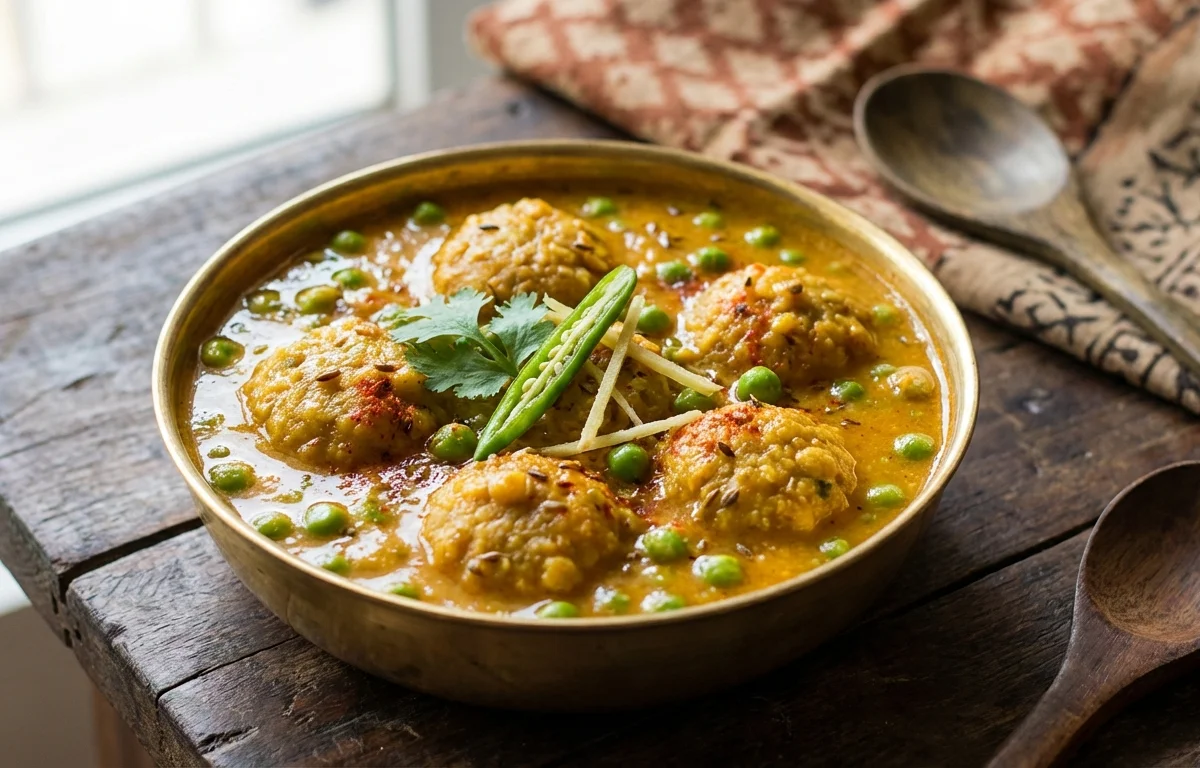
Matar Mangodi Sabzi
A homestyle Rajasthani sabzi where sun-dried moong dal mangodi cooks with sweet green peas in a lightly spiced tomato-onion masala. It is hearty, comforting, and made to pair with roti or plain rice.
For 4 servings
- prep
Prepare the vegetables and measure the spices.
1.Finely chop the onion and tomatoes.2.Slit the green chili and grate the ginger.3.Measure the peas, mangodi, spices, and water. - fry · ~3 min
Lightly fry the mangodi.
Heat 1 tbsp oil in a kadai over medium heat. Add the mangodi and fry for 2 to 3 minutes until lightly golden and fragrant, then take them out to a plate.
TIPKeep the heat medium so the mangodi toast evenly without turning bitter. - temper · ~1 min
Make the tempering.
1.Add the remaining 1 tbsp oil to the same kadai.2.Add cumin seeds and let them crackle for a few seconds.3.Add asafoetida and green chili. - saute · ~10 min
Cook the onion, ginger, and tomatoes.
1.Add the chopped onion and sauté until light golden, 4 to 5 minutes.2.Add grated ginger and cook for 30 seconds.3.Add chopped tomatoes, turmeric powder, red chili powder, and coriander powder.4.Cook until the tomatoes soften and the masala looks glossy, 4 to 5 minutes.TIPMash the tomatoes with the spoon as they cook for a smoother masala. - simmer · ~12 min
Cook the mangodi and peas.
Add the fried mangodi, green peas, salt, and water. Mix well, cover, and cook on low heat until the mangodi are tender and the peas are cooked through.
TIPIf the sabzi dries out before the mangodi soften, add a splash of water and continue cooking. - garnish
Finish with garam masala, amchur, and coriander leaves.
Uncover the sabzi and stir in garam masala and dry mango powder. Cook for 1 minute, then add chopped coriander leaves.
- serve
Serve hot.
Serve Matar Mangodi Sabzi hot with roti, paratha, or plain rice.
What to keep in mind.
8 tips from the recipe — small details that make a real difference to the final dish.
- 1Fry the mangodi only to light golden; dark browning can make them taste bitter after simmering.
- 2Use the same kadai after frying so the toasted mangodi flavor stays in the masala.
- 3Cook the onion just to light golden, not deep brown, to keep the sabzi's homestyle Rajasthani profile.
- 4Let the tomatoes turn glossy before adding water; this prevents a raw, sharp masala taste.
- 5If using frozen peas, add them straight from the freezer so they keep their shape and color.
- 6Simmer covered on low heat until the mangodi are tender at the center, then uncover briefly to adjust the gravy.
- 7Add amchur and garam masala at the end only, so their tang and aroma stay bright.
- 8This sabzi tastes even better after 15 to 20 minutes of resting, when the mangodi absorb the masala.
Adapt it for your goals.
No-onion-no-garlic
Skip onion and keep the ginger, tomato, hing, and spices for a simpler sattvic-style version with a lighter gravy.
spicierSpicier
Add an extra green chili or a little more red chili powder if you want the peas and mangodi in a sharper, hotter masala.
gravy styleGravy-style
Increase the water slightly and simmer a bit longer for a looser sabzi that pairs especially well with plain rice.
jainJain
Omit onion and ginger, rely on hing, tomato, cumin, and coriander powder for flavor while keeping the dish simple and comforting.
Why this is on our healthy list.
Plant-Based Protein
Mangodi made from moong dal adds lentil protein, making this sabzi more filling than a vegetable-only curry.
Fiber From Peas and Dal
Green peas and lentil mangodi contribute fiber that supports satiety and gives the dish a hearty texture.
Phytonutrients From Tomato and Spices
Tomatoes, ginger, cumin, coriander, and turmeric bring flavorful plant compounds along with everyday home-style nourishment.
Frequently asked questions
Yes, it is strongly recommended. Frying gives the mangodi a nuttier taste and helps them stay intact while they simmer in the gravy.


