
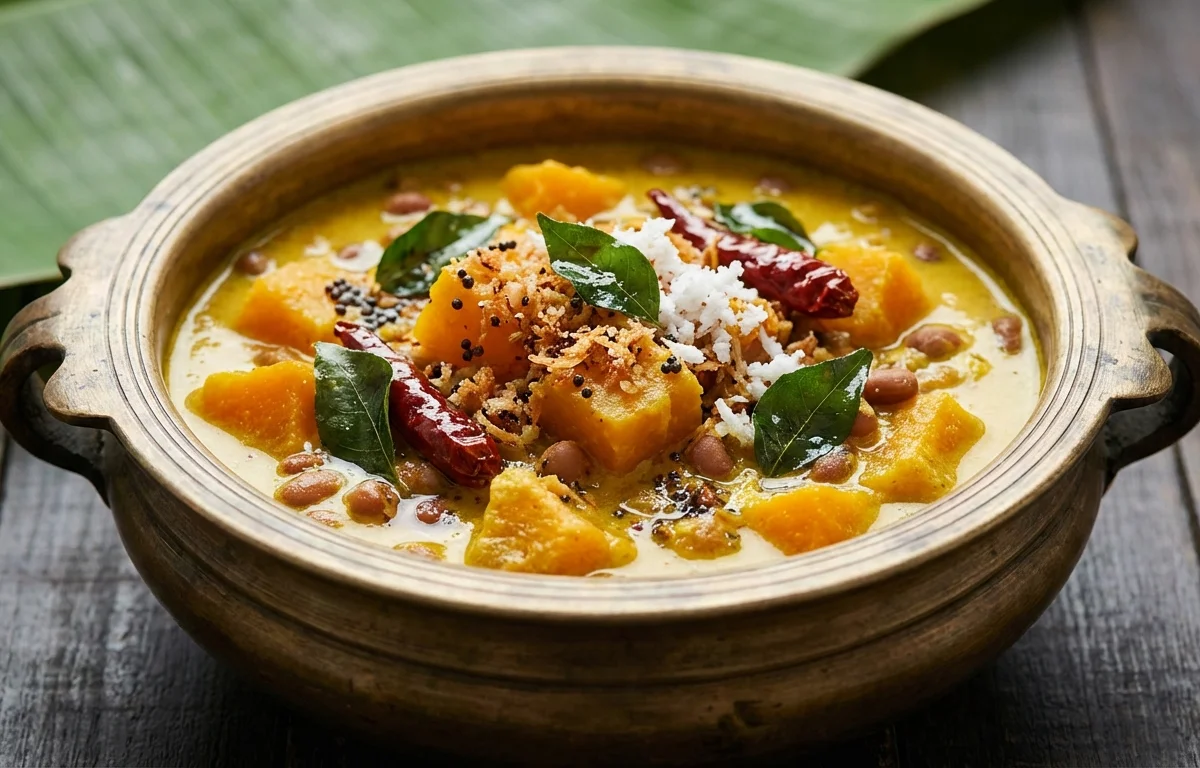
Mathanga Erissery
A comforting Kerala pumpkin curry with soft chunks of mathanga, creamy coconut, and a gentle kick from cumin and green chili. The final topping of fried coconut and curry leaves gives it a warm, nutty finish.
For 4 servings
- prep · ~10 min
Prepare the pumpkin and coconut paste.
1.Peel the pumpkin, remove the seeds, and cut it into medium cubes.2.Set aside 2 tbsp grated coconut for the final topping.3.Grind the remaining grated coconut with 1 green chili and 0.5 tsp cumin seeds to a coarse paste, using a little water if needed. - boil · ~15 min
Cook the pumpkin until soft.
1.Add the pumpkin to a pan with water, the remaining green chili, turmeric powder, and salt.2.Cover and cook over medium heat until the pumpkin turns soft but still holds its shape.3.Lightly mash a few pieces with the back of a spoon for a thicker texture.TIPDo not add too much water. Erissery should be thick and spoonable, not runny. - simmer · ~4 min
Mix in the coconut paste.
Add the ground coconut paste to the cooked pumpkin and stir gently. Simmer for 3 to 4 minutes on low heat until the raw coconut smell fades and the curry looks thick and well blended.
- temper · ~3 min
Make the tempering.
1.Heat coconut oil in a small pan over medium heat.2.Add mustard seeds and let them splutter.3.Add the remaining 0.5 tsp cumin seeds, curry leaves, and the reserved grated coconut.4.Cook until the coconut turns light golden and smells nutty.TIPStir the coconut often so it toasts evenly and does not burn. - assemble · ~1 min
Finish the erissery.
Pour the tempering over the pumpkin mixture and mix gently. Cook for 1 minute more so the flavors come together.
- serve
Serve warm with rice.
What to keep in mind.
7 tips from the recipe — small details that make a real difference to the final dish.
- 1Cut the pumpkin into even medium cubes so it softens uniformly without some pieces turning mushy.
- 2Use just enough water to cook the pumpkin; erissery should finish thick, not soupy.
- 3Grind the coconut paste coarse rather than silky smooth for the traditional rustic Kerala texture.
- 4Mash only a few pumpkin pieces after cooking to naturally thicken the curry while keeping visible chunks.
- 5After adding the coconut paste, keep the heat low and do not boil hard or the coconut can split and lose sweetness.
- 6Toast the reserved coconut until light golden, not deep brown, for a nutty topping that still tastes sweet.
- 7This curry tastes even better after resting 15 to 20 minutes, when the cumin, chili, and coconut settle in.
Adapt it for your goals.
With-red-beans
Add cooked vanpayar or red cowpeas for a more traditional festive-style erissery with extra texture and heartiness.
milderMilder
Reduce the green chili or remove the seeds for a gentler version that still keeps the coconut-cumin flavor forward.
with yamWith-yam
Replace part of the pumpkin with elephant yam for a more robust, earthy erissery often seen in Kerala sadya meals.
low oilLow-oil
Use less coconut oil in the tempering and dry-toast the final coconut carefully if you want a lighter everyday version.
Why this is on our healthy list.
Vegetable-Rich Comfort Dish
Pumpkin brings fiber and carotenoid-rich color, making this curry a nourishing way to include more vegetables in a meal.
Plant-Based Fats from Coconut
Coconut and coconut oil add satisfying richness, helping the dish feel filling even with very simple ingredients.
Digestive Spice Support
Cumin, curry leaves, and green chili contribute aroma and traditional digestive-friendly seasoning without heavy spice blends.
Frequently asked questions
It is not ideal here. This dish needs pumpkin cubes that hold their shape; canned pumpkin will make it more like a mash than a proper erissery.



.webp)
.webp)