Meen Peera
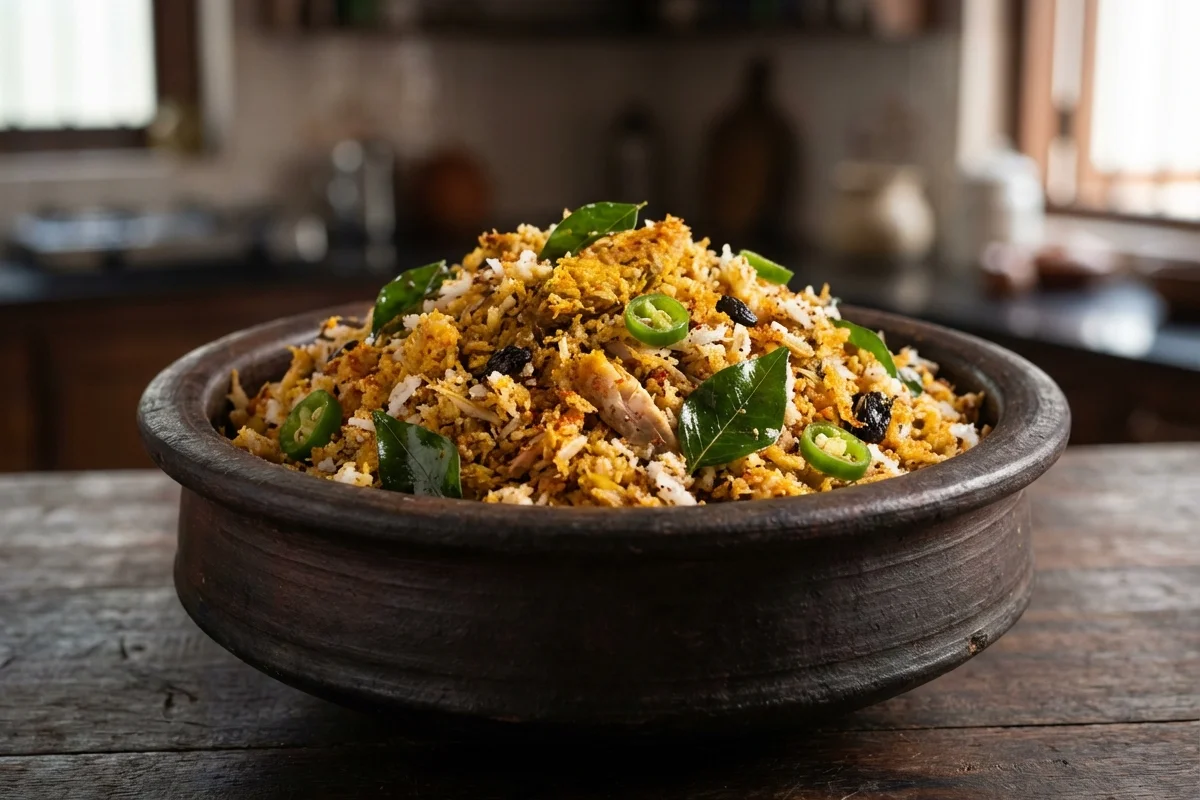
A homestyle Kerala fish curry made with small pieces of fish, grated coconut, green chili, and kudampuli. It cooks gently until the fish stays tender and the masala turns lightly moist, tangy, and deeply flavorful.
For 4 servings
- prep · ~10 min
Soak the kudampuli and ready the fish.
1.Soak the kudampuli in the water for 10 minutes.2.Rinse the fish pieces gently and set them aside.3.Slice the shallots, slit the green chili, and crush the ginger and garlic.TIPHandle the fish gently so the pieces stay whole while cooking. - mix · ~3 min
Mix the coconut masala.
1.Add grated coconut to a bowl.2.Mix in shallots, green chili, ginger, garlic, turmeric powder, red chili powder, and salt.3.Toss well with your fingers until the coconut is evenly coated with the spices. - assemble · ~3 min
Layer everything in the pan.
1.Spread half of the coconut mixture in a wide pan or earthen pot.2.Arrange the fish pieces in a single layer over it.3.Place the soaked kudampuli on top and cover with the remaining coconut mixture.4.Add curry leaves and drizzle the coconut oil over the top. - simmer · ~15 min
Cook the meen peera gently.
Set the pan over low heat, cover, and cook until the fish is just done and the coconut turns moist and aromatic, about 12 to 15 minutes. Shake the pan once or twice instead of stirring so the fish does not break.
TIPKeep the heat low; high heat can catch the coconut at the bottom before the fish cooks through. - rest · ~5 min
Rest the curry briefly.
Turn off the heat and let the dish rest for 5 minutes so the tangy and coconut flavors settle into the fish.
- serve
Serve hot.
Serve meen peera hot with plain rice.
What to keep in mind.
7 tips from the recipe — small details that make a real difference to the final dish.
- 1Use a wide pan or manchatti so the fish can sit in a single layer and cook evenly without breaking.
- 2Squeeze and tear the soaked kudampuli slightly before adding so its smoky sourness releases into the coconut.
- 3Mix the coconut masala with your fingers rather than a spoon to coat the shallots and spices evenly.
- 4Do not add extra water; meen peera should stay lightly moist, not loose like a gravy.
- 5Shake the pan gently once or twice during cooking instead of stirring, especially if using softer fish.
- 6The fish is done when it flakes at the thickest part and the coconut smells roasted and aromatic but still moist.
- 7Let it rest for 5 minutes after cooking; the kudampuli sharpness softens and the fish firms up for serving.
Adapt it for your goals.
Spicier
Increase green chilies or red chili powder for a hotter meen peera that still keeps its coconut-forward character.
low oilLow-oil
Reduce the coconut oil slightly and cook in a well-seasoned earthen pot; you keep the flavor profile while making it lighter.
sardineSardine
Use mathi or other small oily fish for a more robust coastal Kerala taste; handle very gently as they cook fast.
shallot heavyShallot-heavy
Add extra sliced shallots for a sweeter, softer masala that pairs especially well with stronger-tasting fish.
Why this is on our healthy list.
Protein-Rich Main Dish
Fish makes this a satisfying, protein-rich curry that can be paired simply with rice for a balanced meal.
Contains Healthy Aromatics
Ginger, garlic, curry leaves, and chilies add flavor complexity along with plant compounds used widely in traditional cooking.
Naturally Dairy-Free
The richness comes from fresh coconut rather than dairy, making the dish suitable for those avoiding milk products.
Frequently asked questions
Firm fish that holds its shape works best, since the pieces are cooked gently and should remain intact in the coconut masala.