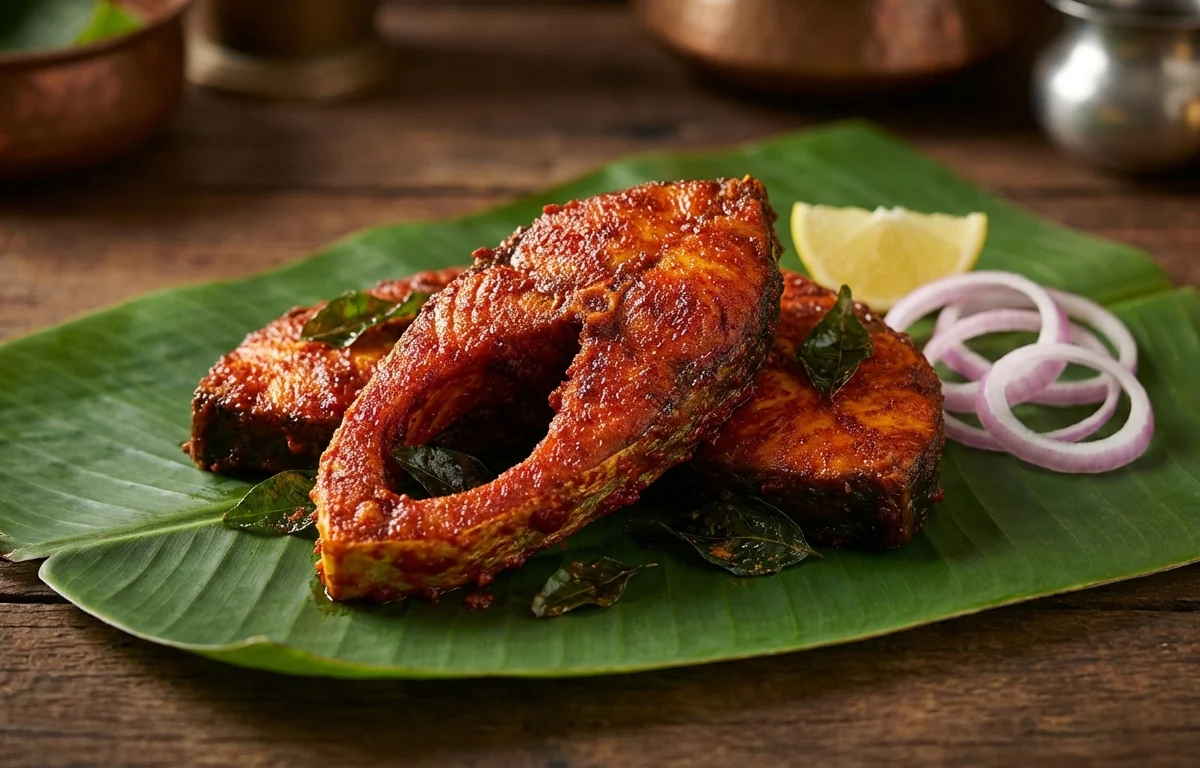
Meen Varuval
A classic South Indian fish fry with a bold masala crust, bright heat from chili, and a hit of lemon. Crisp at the edges and juicy inside, it pairs beautifully with rice, rasam, or a simple onion salad.
For 4 servings
- prep
Clean and pat the fish dry.
Rinse the fish quickly if needed, then pat it very well with a clean cloth or paper towel so the masala sticks evenly and the fish fries without spluttering.
- mix
Make the masala paste.
1.Add red chili powder, coriander powder, turmeric powder, black pepper, ginger-garlic paste, rice flour, salt, and lemon juice to a bowl.2.Mix into a thick paste.3.If needed, add 1 tsp water to help it come together.TIPKeep the paste thick, not runny, so it coats the fish well and forms a good crust. - rest · ~15 min
Coat the fish and rest it.
Rub the masala all over the fish slices on both sides. Let the fish rest for 15 minutes so the flavors settle in.
- fry · ~8 min
Shallow-fry the fish.
1.Heat oil in a wide pan over medium heat.2.Add curry leaves and let them sizzle for a few seconds.3.Place the fish pieces in a single layer without crowding the pan.4.Cook the first side for 3 to 4 minutes until browned and crisp at the edges.5.Turn gently and cook the second side for 3 to 4 minutes until the fish is cooked through.TIPUse medium heat throughout so the masala does not burn before the fish cooks. - serve
Serve the meen varuval hot.
Transfer to a plate and spoon over the fried curry leaves from the pan. Serve right away with rice and a squeeze of lemon if you like.
What to keep in mind.
7 tips from the recipe — small details that make a real difference to the final dish.
- 1Choose firm fish like seer, king fish, pomfret, or tilapia so the slices hold their shape while shallow-frying.
- 2Pat the fish extremely dry before coating; any surface moisture will loosen the masala and cause spluttering in the pan.
- 3Keep the masala paste thick and clingy so the rice flour forms a light crust instead of sliding off during frying.
- 4Rest the coated fish only about 15 minutes; much longer can draw out moisture and make the crust wet.
- 5Do not move the fish too early in the pan; let the first side set and brown before turning to avoid breaking the slices.
- 6Fry in a single layer with space around each piece so the edges crisp instead of steaming.
- 7If reheating leftovers, use a hot tawa or skillet rather than a microwave to bring back the crust.
Adapt it for your goals.
Low-oil
Pan-sear on a well-seasoned cast-iron tawa with just enough oil to coat the surface for a lighter version that still gets crisp edges.
extra spicyExtra-spicy
Increase red chili powder slightly and add a pinch more black pepper for a hotter, bolder fry that pairs especially well with plain rice.
air fryerAir-fryer
Brush the coated fish lightly with oil and air-fry until browned for an easier hands-off option with less splatter.
tawa styleTawa-style
Use a flat griddle and fry with a little extra oil for a more traditional roadside-style crust and deeper browning.
Why this is on our healthy list.
Protein-Rich Main Dish
Fish fillet makes this a satisfying, protein-forward dish that can be the centerpiece of a simple rice meal.
Moderate Oil Cooking
Because the fish is shallow-fried rather than deep-fried, it can deliver crisp texture without being submerged in oil.
Spice-Driven Flavor
Chili, coriander, turmeric, pepper, ginger, and garlic build strong flavor, reducing the need for heavy sauces or rich coatings.
Frequently asked questions
Firm, medium-thick fish slices work best because they stay intact in the pan. Seer fish, king fish, pomfret, tilapia, or other sturdy fillets are good options.