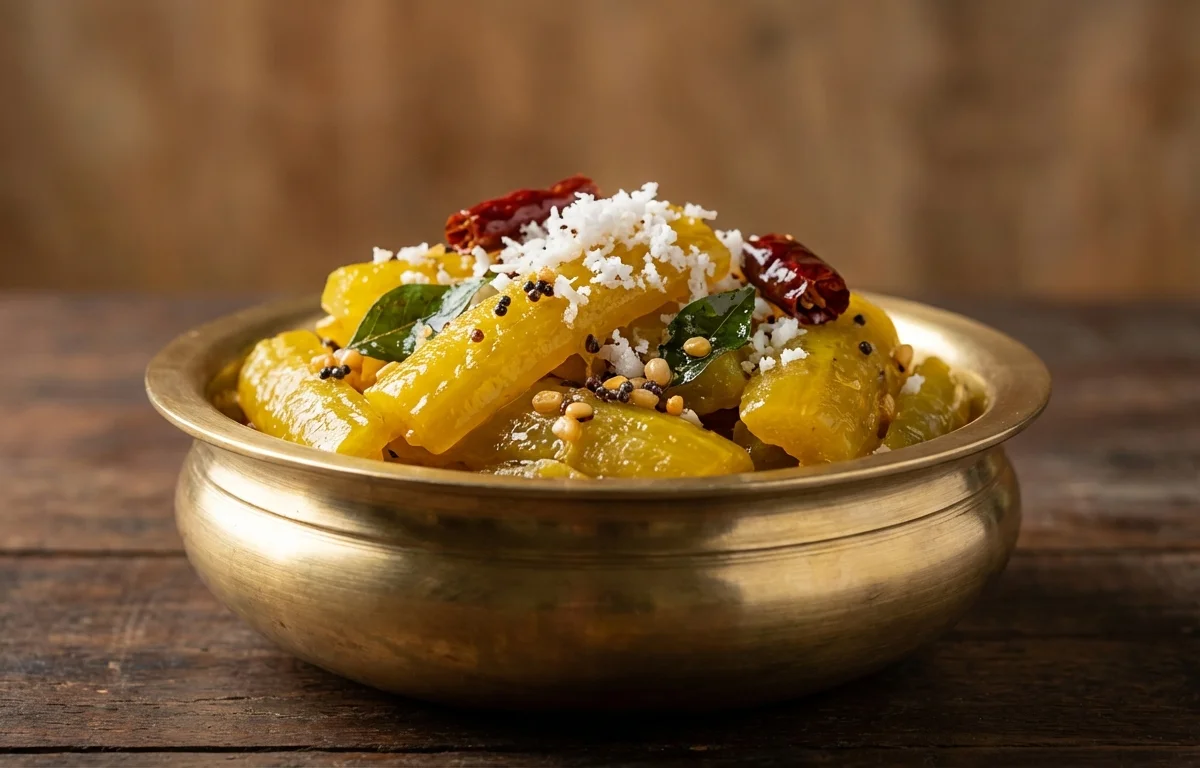
Mitke Sanga Upkari
A simple, comforting Konkani-style stir-fry that pairs tender drumsticks with creamy Chinese potato (sanga). Tempered with mustard seeds, curry leaves, and dried red chilies in coconut oil, this dry dish lets the natural flavor of the vegetables shine. A humble, everyday side that tastes best with steamed rice and dal.
For 4 servings
- prep
Prepare the drumsticks and Chinese potato.
1.Wash the drumsticks and scrape off the skin with a peeler.2.Cut drumsticks into 3-inch long pieces.3.Peel the Chinese potatoes, wash them, and cut into small cubes. - temper · ~2 min
Make the tempering.
1.Heat coconut oil in a heavy-bottomed pan over medium heat.2.Add mustard seeds and let them splutter completely.3.Add urad dal and sauté until it turns golden.4.Drop in the broken dried red chilies and curry leaves. Fry until fragrant.5.Add turmeric powder and give it a quick stir.TIPDon't let the urad dal burn — keep the heat medium and stir constantly. - saute · ~3 min
Sauté the vegetables.
1.Add the chopped drumstick and Chinese potato cubes to the pan.2.Sprinkle salt and mix well to coat the vegetables with the tempering.3.Sauté for 2 to 3 minutes until the vegetables start to look glossy.TIPStir gently to avoid breaking the Chinese potato cubes. - simmer · ~15 min
Cook until tender.
1.Add 4 tablespoons of water to the pan.2.Cover with a tight-fitting lid and reduce the heat to low.3.Let it cook for 12 to 15 minutes. Check once or twice and stir gently.4.Cook until the drumsticks and potatoes are tender and all water is absorbed.5.Turn off the heat.TIPIf the vegetables stick, add a tablespoon of water. The final dish must be dry. - garnish
Add fresh coconut and serve.
Sprinkle the freshly grated coconut over the cooked vegetables and fold it in gently. Transfer to a serving bowl.
What to keep in mind.
7 tips from the recipe — small details that make a real difference to the final dish.
- 1Use fresh, tender drumsticks for best results — older ones can be fibrous and tough.
- 2Peel drumsticks with a vegetable peeler to remove only the tough outer skin, leaving the green flesh intact.
- 3Cut Chinese potatoes into uniform 1-cm cubes for even cooking.
- 4Let the mustard seeds splutter fully before adding urad dal to build deep flavor.
- 5Check doneness by piercing drumstick pieces — they should be tender but not mushy.
- 6For a dry final dish, resist adding extra water beyond the 4 tablespoons specified.
- 7Fresh grated coconut is essential; desiccated coconut will not provide the same texture or subtle sweetness.
Adapt it for your goals.
No-coconut
Skip the fresh coconut garnish for a lighter version that lets the drumstick and Chinese potato flavors stand out even more.
spicySpicy
Add 1-2 more dried red chilies or a pinch of red chili powder for extra heat without changing the dish's texture.
veganVegan
This recipe is already vegan — no changes needed. Coconut oil and fresh coconut are entirely plant-based.
Why this is on our healthy list.
Rich in Dietary Fiber
Drumsticks and Chinese potato both provide good amounts of fiber, aiding digestion and promoting gut health.
Good Source of Vitamin C
Drumsticks are naturally high in vitamin C, which supports immune function and skin health.
Low in Fat
With only 2 teaspoons of coconut oil, this stir-fry is a light, low-fat side dish.
Packed with Antioxidants
Turmeric and curry leaves contain antioxidant compounds that help combat oxidative stress in the body.
Frequently asked questions
Yes, but thaw them completely and pat dry before cooking to avoid excess water and ensure a dry final dish.



.webp)